
Banyumas Education Office: Serious Handling Needed for Out-of-School Children
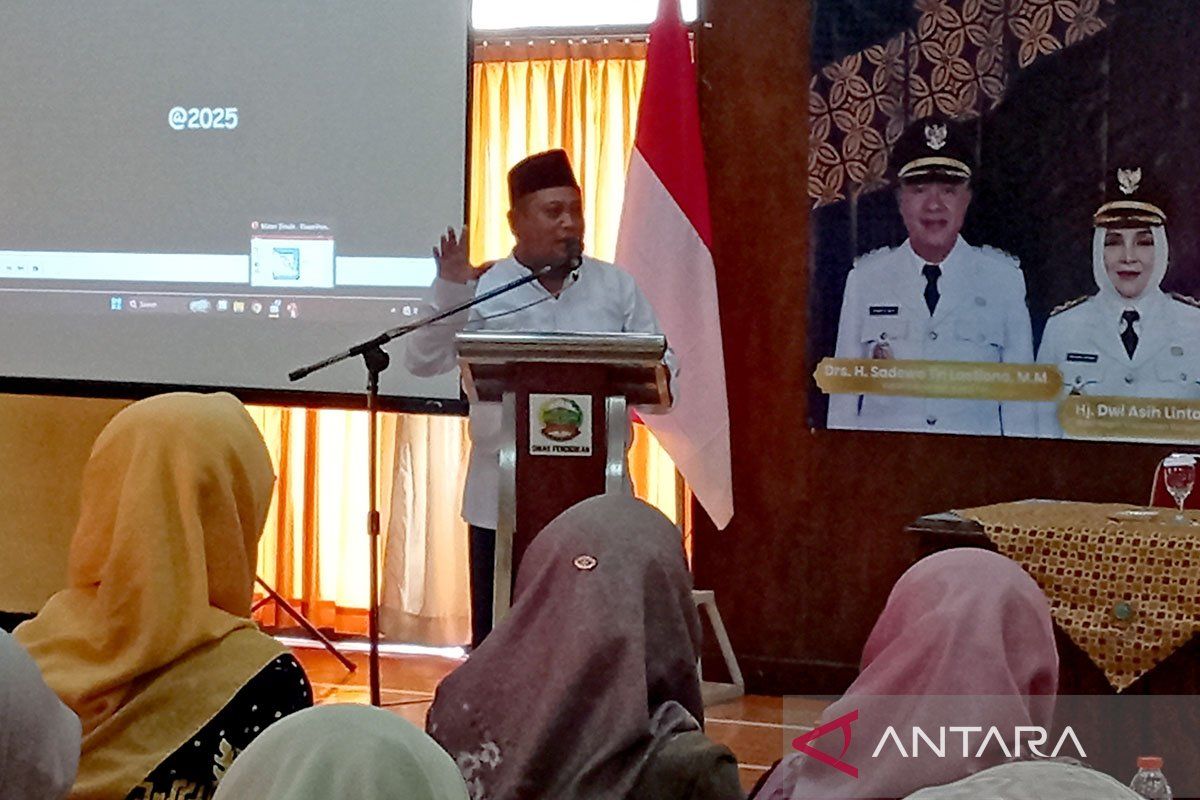
Purwokerto (ANTARA) - Acting Head of the Banyumas District Education Office, Amrin Ma’ruf, emphasised the need for serious handling of out-of-school children (ATS) in Banyumas, Central Java, as the number of such cases in the area has increased.
“The number of out-of-school children in Banyumas Regency has risen from around 13,000 to 15,000. This is certainly a shared concern and cannot be ignored,” he said while delivering a report at the Socialisation of Handling Out-of-School Children (ATS), Academic Ability Test (TKA), and New Student Admission System (SPMB) at the Gurinda Sarwa Mandala Building of the Banyumas District Education Office, Purwokerto, Central Java, on Friday.
He acknowledged various limitations in providing optimal education services to the community, so the Banyumas Education Office expressed apologies along with a commitment to continue making improvements.
According to him, the ATS issue does not only occur in underprivileged families but also affects various layers of society, thus requiring more inclusive education policies.
In addition, his side emphasised the importance of synergy between local government, educational units, and the community in ensuring that children can return to accessing education.
Meanwhile, in his remarks, Banyumas Regent Sadewo Tri Lastiono encouraged all parties to ensure that no school-age child is left out of education access.
“We must ensure that no child is missed or unmonitored. Everyone must receive the best education,” he said.
According to him, the role of teachers, supervisors, and village governments is very important in reaching those children through personal approaches to parents.
“Not only finding the children, but also providing understanding to parents about the importance of education,” he said.
When met after the event, the Regent revealed that the increase in ATS is partly triggered by a lack of parental support in encouraging children to attend school.
“Parents have sufficient ability to send their children to school, but the children do not go to school, they just hold their handphones, and the parents do not support them,” he said.
According to him, this condition shows the need for approaches not only to the children but also to the parents to be more concerned about education.
He said changes in parenting patterns also influence this, where some parents tend to be negligent towards their children’s activities, including when children do not attend school.
“In the past, if a child did not go to school, parents would look for them, now some are indifferent. The child plays with the handphone, the parents also play with the handphone,” he said.
Besides parenting factors, he acknowledged that most ATS come from underprivileged families and face education access constraints, including long distances to schools.
Regarding this, the Regent said the Banyumas Regency Government will prepare handling strategies, including intensifying public awareness programmes and conducting proactive outreach to remote areas.