
Banten Provincial Government Evaluates Free Nutritious Meal Programme Data
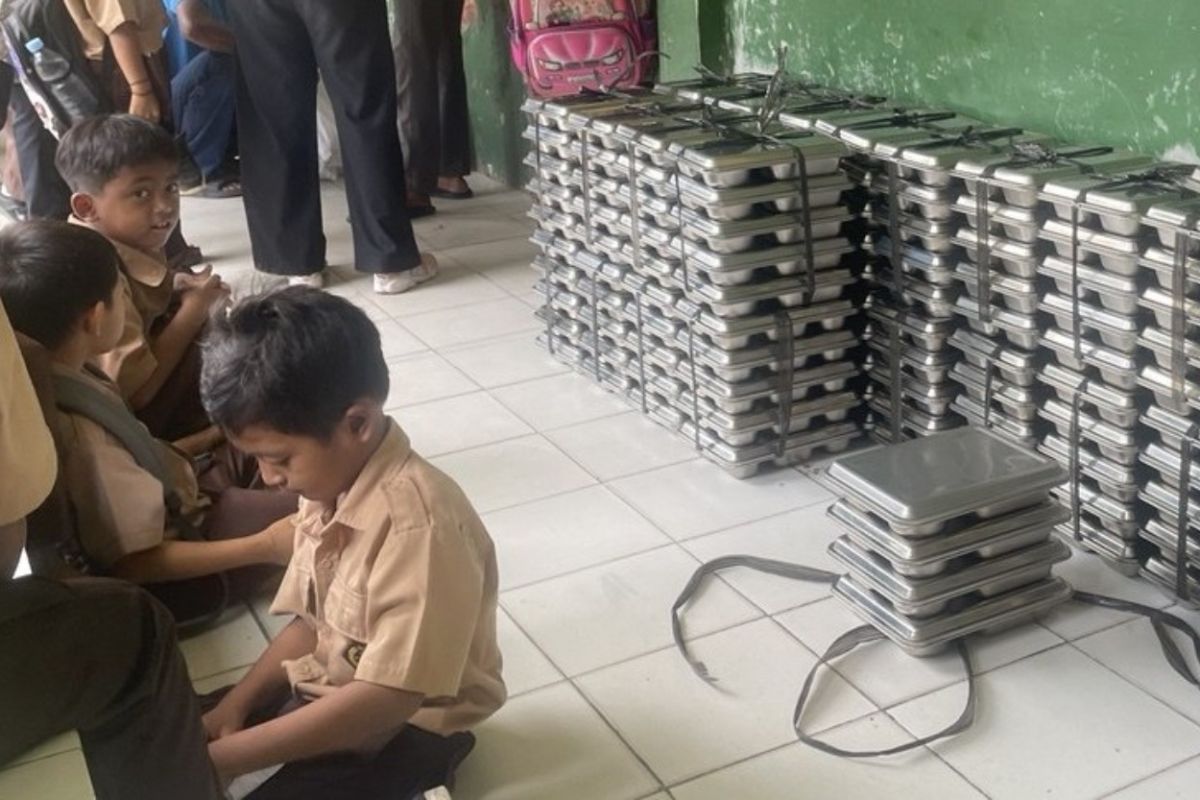
Serang (ANTARA) - The Banten Provincial Government is conducting a thorough evaluation of the implementation of the Free Nutritious Meal (MBG) programme during the school holidays to rectify distribution imbalances and improve the management of beneficiary data on the ground.
Komarudin, the Regional Assistant I of Banten Province and Deputy Vice Chairman of the Banten MBG Programme Task Force, stated in Serang on Friday that this evaluation aligns with efforts to adjust policy direction following leadership changes at the central government level.
The primary focus of this evaluation, he said, is to fix the chaotic state of beneficiary data.
Komarundin highlighted that several areas have received large allocations, while target groups in other regions have not been reached at all.
Through this evaluation process, the Banten Provincial Government plans to map and reorganise recipient priorities. While the MBG programme previously targeted students in general, the focus may shift towards groups deemed to be in the greatest need.
“We will re-examine who is actually most entitled to receive it. The direction of priority policy could shift towards toddlers, pregnant women, pre-school children or PAUD-TK, as well as communities in 3T regions (frontier, outermost, and least developed),” he said.
Furthermore, Komarudin revealed a discrepancy between the achievement of recipient targets and infrastructure development. To date, the number of MBG beneficiaries in Banten has only reached 2.9 million people, which is approximately 600,000 short of the initial target of 3.5 million people.
“Meanwhile, the number of operational MBG kitchens is actually in surplus, exceeding the target. From a construction target of 1,171 units, approximately 1,340 kitchens are currently standing,” he noted.
As a result of this unbalanced infrastructure planning, there are currently 63 MBG kitchens in Banten that are in a suspended status.
Komarudin emphasised that kitchens that are already operational could potentially be closed permanently if the new mapping of beneficiary needs shows a mismatch.
As a concrete improvement step, he encouraged more active involvement of local governments in the data collection process moving forward. This is because local governments are considered to have the most comprehensive understanding of the actual conditions and locations of the communities most in need of assistance within their respective regions.