
Bantargebang Waste Landfill Collapse Claims Lives; Greenpeace: This Is Not Mere Accident
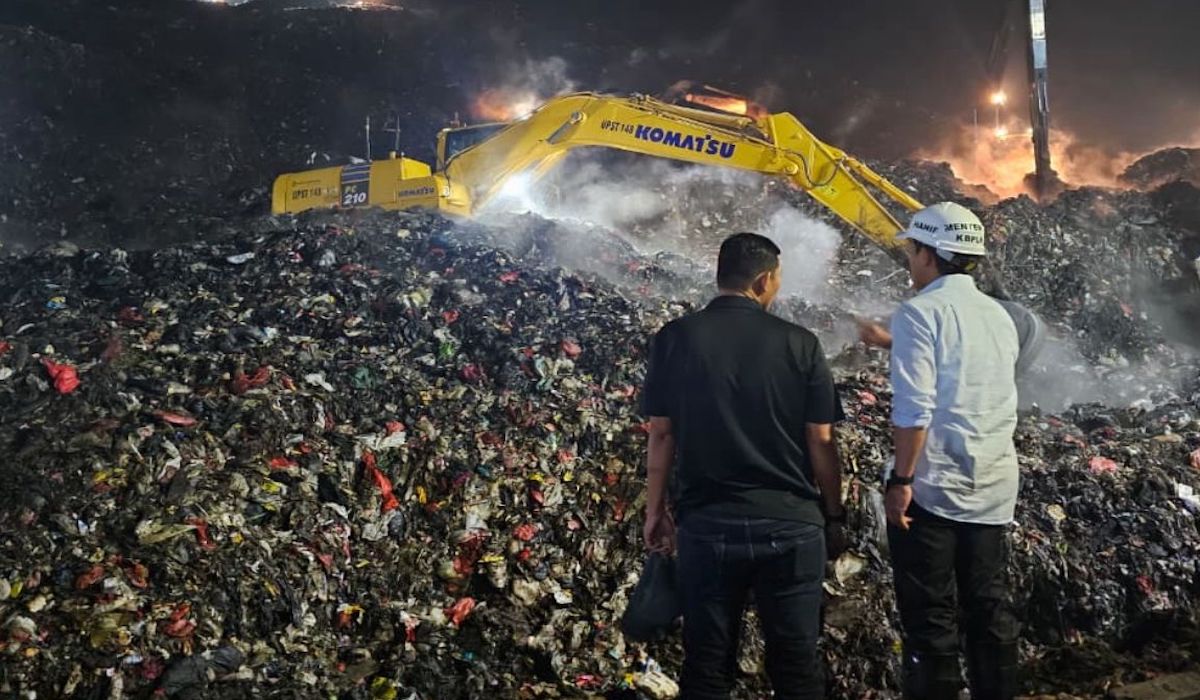
A tragic collapse has occurred once again at the Bantargebang Integrated Waste Processing Facility (TPST) in Bekasi. The deadly incident is viewed not merely as a technical accident, but as a reflection of fundamental problems within Jakarta’s waste management system, which remains entirely dependent on a single final disposal site.
Ibar Akbar, Campaign Officer at Greenpeace Indonesia, expressed deep condolences to those who lost their lives in the incident. He emphasised that the root cause lies in Jakarta’s inability to manage waste from its source.
“The root problem is that waste management in DKI Jakarta province remains heavily dependent on Bantargebang,” Ibar stated in his statement on Monday, 9 March.
According to Greenpeace’s analysis, the composition of waste from Jakarta sent to Bekasi has worsened the stability of the landfill pile. Approximately 40-50% of waste generated is organic or wet waste.
Every day, thousands of tonnes of unsorted organic waste enter Bantargebang. This increases the burden on the landfill and elevates methane gas levels and moisture that trigger potential collapses.
“There are workers and residents living in that area. They are the most at-risk and affected by the current waste management system,” Ibar added.
Responding to the Ministry of Environment’s plan to pursue legal action regarding negligence, Greenpeace acknowledged that such steps are necessary given the loss of life. However, enforcement alone is insufficient without fundamental changes to governance structures.
The government is currently promoting Refuse Derived Fuel (RDF) and Waste-to-Energy Power Plants (PSEL) as solutions. Yet Greenpeace offers critical observations on the limitations of these approaches.
The Bantargebang collapse in 2026 represents a crucial moment for the government to stop viewing the site merely as a disposal dump and instead recognise it as a living space that must be protected by a more humane and ecologically sound waste management system.
The Bekasi City Government conducted evacuation operations following the collapse at the Integrated Waste Processing Facility. Bekasi Mayor Tri Adhianto expressed concern over the incident.
Jakarta Governor Pramono Anung expressed surprise that workers at the Bantargebang facility were still working during high rainfall.
Search and rescue operations for victims of the waste landfill collapse at the Bantargebang Integrated Waste Processing Facility in Bekasi continue.
Governor Pramono Anung revealed serious impacts from the closure of Zone 4A at Bantargebang for Jakarta, with the provincial government handling 8,000 tonnes of daily waste.
The provincial government of DKI Jakarta conducted stabilisation work on the landfill zone at the Bantargebang facility following the collapse that claimed four lives.
Waste management in DKI Jakarta has once again become a matter of public concern.
Deputy Minister of Environment/Deputy Head of the Environmental Control Agency, Diaz Hendropriyono, assessed that national waste management performance still requires improvement.
Deputy Regent of Toba Audi Murphy O. Sitorus stated that implementing waste banks at each regional government organisation (OPD) represents one strategy for addressing waste management.
This initiative strengthens the source separation movement whilst encouraging community-based waste management at the neighbourhood association (RW) level.