
Bantargebang Landslide Triggers Waste Accumulation at Taman Sari Facility in West Jakarta
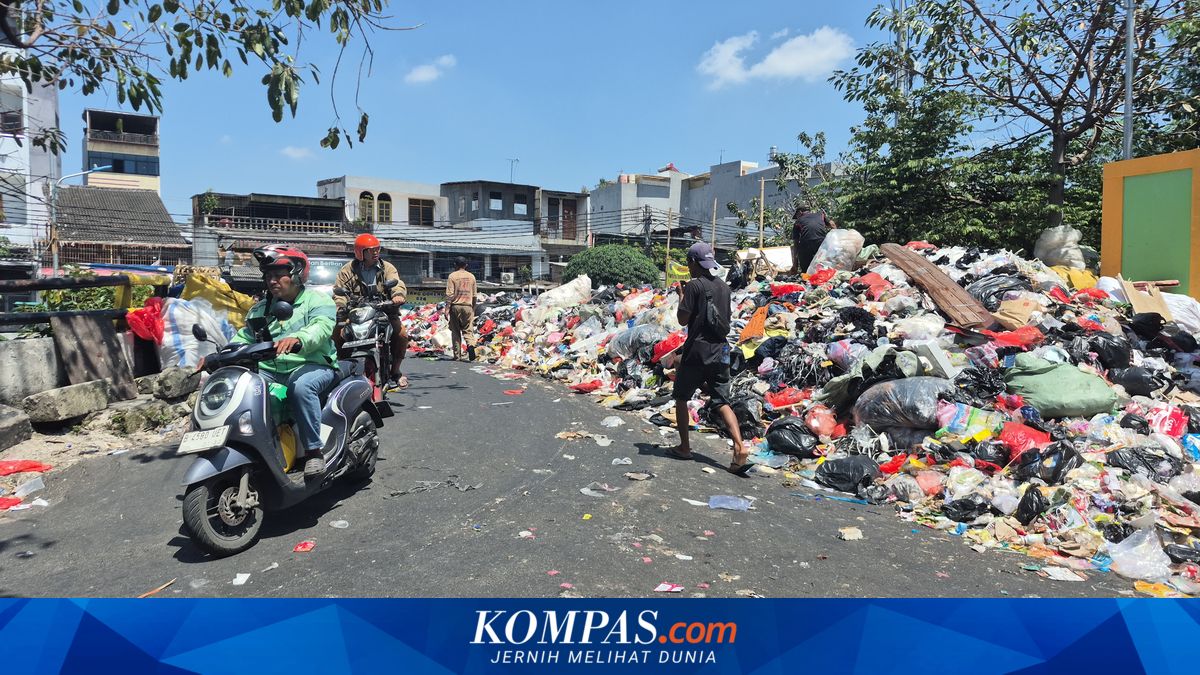
JAKARTA — A landslide at the Bantargebang Integrated Waste Processing Facility (TPST) has resulted in the accumulation of refuse outside the Hanura Reduce, Reuse, Recycle Processing Facility (TPS3R) on Hanura Ketapang Road, Krukut, Taman Sari, West Jakarta, on Saturday 14 March 2026.
The waste pile-up has occurred because waste collection operations to the Bantargebang facility have been significantly reduced over the past several days.
“The reason is because Bantargebang has had a landslide, it’s been about a week like this,” said Jupri (45), a waste worker interviewed at the site on Saturday.
Under normal circumstances, waste from the Hanura TPS3R is transported by three trucks operated by the Jakarta Environmental Services Department (DLH) each day. However, since the Bantargebang landslide, waste collection has been reduced to only one truck per day.
As a result, the volume of refuse at the Hanura TPS3R continues to increase and cannot be fully transported to the final disposal site. Waste has accumulated not only in front of the TPS3R but also extends across the Krukut canal bridge adjacent to the facility for approximately 50 metres. The height of the waste piles at the location reaches approximately one metre due to the volume of incoming waste exceeding what can be transported to Bantargebang.
Jupri hopes that waste collection operations will return to normal soon to prevent further accumulation and minimise disruption to the roadway.
“I hope things go smoothly, the streets become clean again, and we can work comfortably without disruption,” he said.
Workers noted that since a processing machine was installed at the TPS3R roughly a month ago, the facility’s storage capacity has been significantly reduced. Whilst the machine operates, it currently only processes plastic, limiting overall facility efficiency.
Before the machine was installed, all waste could be accommodated within the TPS3R area without spilling onto adjacent roads. However, following the machine’s installation, the internal space capacity of the TPS3R became more restricted, leaving it unable to contain large quantities of waste. Consequently, excess waste must be placed outside the TPS3R facility, spilling onto the adjacent roadway.
Another resident, Sukardi (38), reported similar observations, stating that waste accumulation along the roadside began when the processing machine was installed at the TPS3R approximately one month ago.
“Rubbish is overflowing because the machine has been inside for more than a month,” he said.