
Bantargebang Landslide Death Toll Prompts Commission B to Urge Jakarta Provincial Government to Implement Scheduled Waste Collection Days
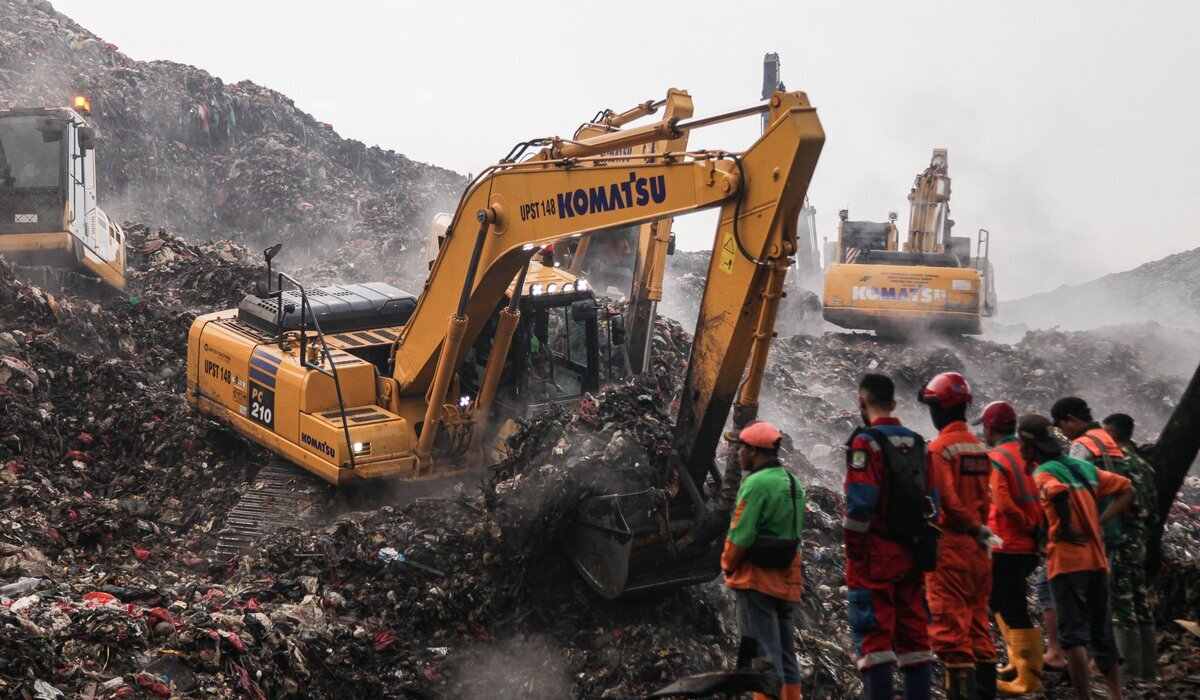
The Bantargebang tragedy serves as evidence of systemic failure.
JAKARTA Legislative Council (DPRD) Commission B member Francine Widjojo has urged Jakarta Provincial Government to implement breakthroughs in Jakarta’s waste management system following the Bantargebang landslide incident that claimed lives.
She believes the waste problem in Jakarta has reached a critical point. According to her, the capital’s continuously increasing waste volume could potentially cause disaster if not managed seriously.
“Waste can be a blessing, but it can also be a catastrophe. Starting from pollution, flooding, extreme climate change, to claiming lives as has recently occurred,” said Francine in a statement on Tuesday (10 March).
The member of the Indonesian Solidarity Party (PSI) faction stated that based on data from the National Waste Management Information System (SIPSN) of the Ministry of Environment, Jakarta generates 9,180 tonnes of waste per day throughout 2025.
Of this amount, nearly half comprises food waste at 49.87%, followed by plastic waste at 22.95%, as well as paper and cardboard waste at 17.24%.
Francine believes that if these three largest waste types are managed properly, then the volume of waste sent to the Bantargebang Integrated Waste Processing Centre (TPST) could be reduced significantly.
“Jakarta could actually reduce waste sent to Bantargebang by up to 90 per cent if food waste, plastic, and paper can be processed correctly,” she said.
One step she proposed was the implementation of a waste collection schedule based on waste type, similar to what is done in Japan. With this system, the public is encouraged to sort waste from their homes.
“Jakarta could emulate the concept of scheduled waste collection days. For example, Monday for plastic, Tuesday for paper, and so on. That way, waste will be automatically sorted from the source,” she explained.
According to Francine, Jakarta Provincial Government actually already possesses the legal basis for regulating waste collection schedules through Jakarta Provincial Regulation (Pergub) Number 77 of 2020.
However, this regulation is deemed to not yet provide detailed provisions for waste collection based on waste type.
Additionally, Francine also called on Jakarta Provincial Government to be more assertive in implementing single-use plastic reduction policies as regulated in Provincial Regulation Number 142 of 2019 and Provincial Regulation Number 55 of 2021, particularly in traditional markets managed by the local government and state-owned enterprises.
This is because markets are the second largest waste contributor in Jakarta at 13.7%, after household waste which reaches 56.67%.
“How can the public comply if the government, as the policy maker, itself still uses single-use plastic,” she stressed.
She even urged Jakarta Provincial Government to ban single-use plastic in government agencies and educational institutions, as has already been implemented in Bali.