
Banking Investment Credit Surges 20.85% in March 2026 - Babel Insight
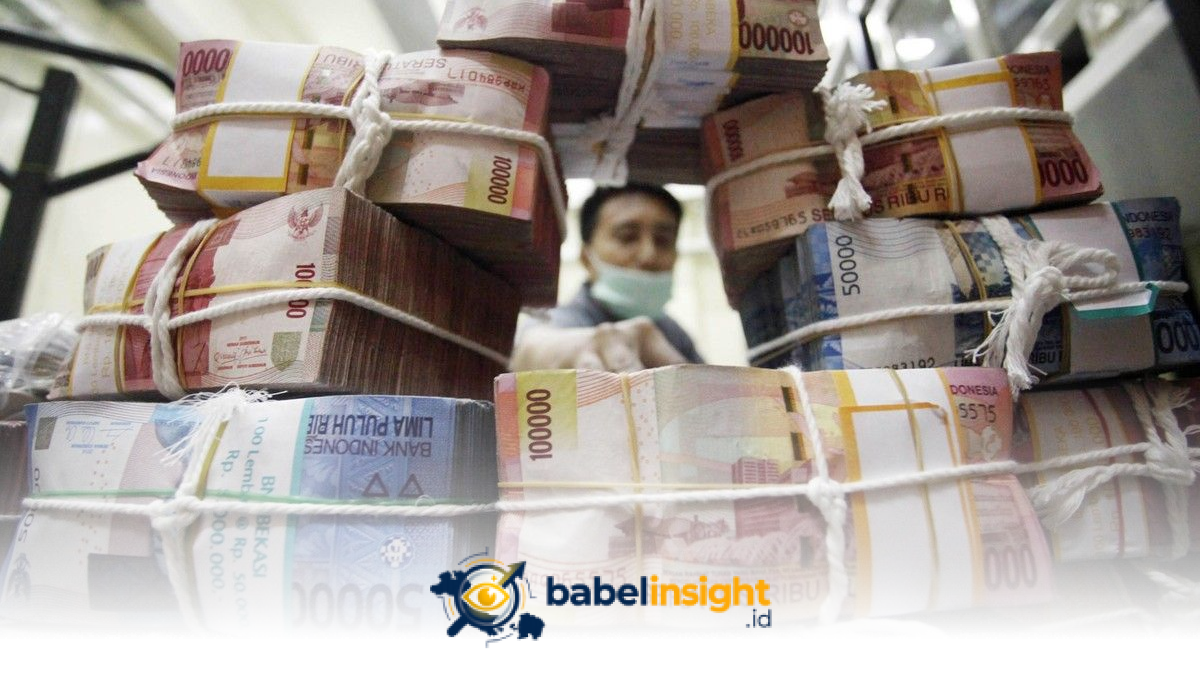
Bank Indonesia recorded a significant growth in investment credit distribution of 20.85% (yoy) in March 2026 amid heightened tensions in the Middle East conflict. This achievement became the main driver of total national banking credit growth, reaching 9.49% in the same period.
Senior Economist at the Institute for Development of Economics and Finance (Indef), Tauhid Ahmad, assessed that this trend indicates business actors’ preference for fixed assets. This explanation was given following the BI report showing an increase in investment in the non-manufacturing sector, as reported by Detik Finance on Saturday (2/5/2026).
“Actually, what is best for the economy is working capital. Because working capital is for raw materials, labour costs, auxiliary materials. Meanwhile, investment is mostly towards buildings and fixed assets. So, in the current situation, rather than letting the money idle in uncertain conditions, they choose to invest,” said Tauhid Ahmad.
Tauhid highlighted the importance of shifting the focus of investment to productive sectors. According to him, the government faces a major challenge in directing capital to the processing industry to provide broader economic impacts.
“If we look now, much of the investment is not in manufacturing but more in the services sector, buildings, land, retail shops, and so on. In my opinion, it should be towards building industries, factories; that is the most important,” stated Tauhid Ahmad.
In addition to the sector, the location of investment placement is also an important note for the government. The effectiveness of the provided industrial zones needs to be re-evaluated to make them more competitive for investors.
“I think the government must ensure that industrial zones are cheaper and more attractive compared to outside zones. Incentives can also be given more strongly,” explained Tauhid Ahmad.
Separately, Economist at the Center of Reform on Economics (CORE), Yusuf Rendy Manilet, explained that national strategic projects are the main driver of these figures. He mentioned that the downstreaming of flagship commodities such as nickel and copper requires very large capital.
“In addition, there are opportunities for industrial relocation from other countries entering Indonesia. On the banking side, liquidity is still loose, so there is wide room for credit distribution,” clarified Yusuf Rendy Manilet.
Although investment is growing rapidly, Yusuf noted the slow growth in other segments. Data shows working capital credit only grew 4.38%, while consumer credit stood at 5.88%.
“This signals that the expansion occurring is not yet accompanied by strong production activities and demand. Companies may have built capacity, but they are not fully confident to run production aggressively. There is a wait-and-see tendency,” said Yusuf Rendy Manilet.
The current banking focus is still seen as tending to avoid risks in labour-intensive sectors. This impacts employment absorption that has not yet been maximised from the existing credit growth.
“So the challenge is not just to encourage credit growth, but to ensure that the credit really flows to real economic activities and creates jobs,” concluded Yusuf Rendy Manilet.
Bank Indonesia projects overall credit growth for 2026 to remain stable. The growth figure is estimated to be in the range of 8% to 12%, supported by maintained demand and supply sides in banking.