
Bank Indonesia Recruits Top Young Talent Through Indonesia Digital Innovation Centre
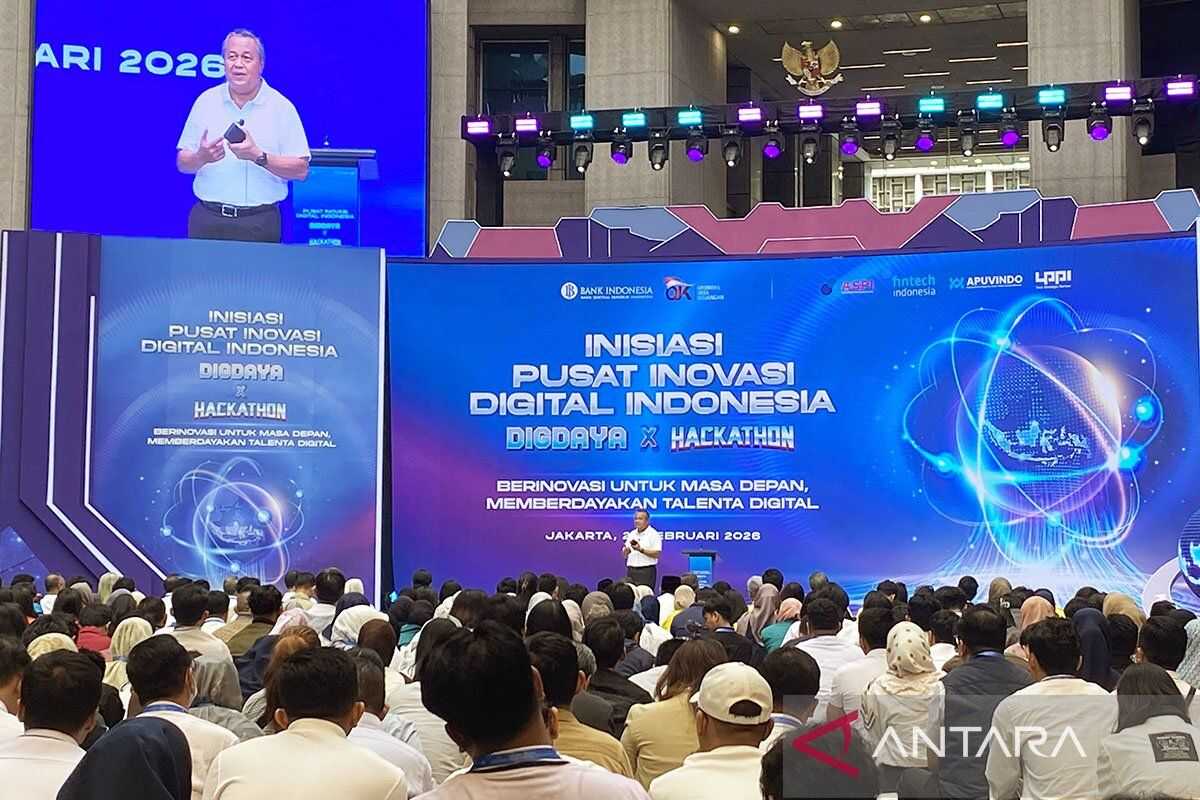
Jakarta (ANTARA) - Bank Indonesia (BI) is recruiting the nation’s best young talent through the Indonesia Digital Innovation Centre (PIDI) programme, which offers not only competitions but also structured training to ensure participants are prepared to meet industry demands.
PIDI is delivered through two programmes: Digdaya (Digital Talenta Berdaya dan Berkarya) and Hackathon. The initiative is a collaboration with the Financial Services Authority (OJK) and several related associations.
BI Governor Perry Warjiyo explained on Monday that the PIDI programme focuses on solutions to three key challenges: strengthening financial resilience and innovation; improving productivity, food security and job creation; and accelerating public services, the creative economy and digital services exports.
Digdaya serves as a capacity-building pathway through structured training and tiered certification to enhance the competence and professionalism of young digital talent.
Meanwhile, Hackathon functions as a national innovation laboratory — a collaborative space to test ideas, build prototypes and validate solutions based on real industry needs.
Perry encouraged young people to participate in the PIDI programme by submitting their visionary ideas. Proposal submissions opened on 23 February 2026, with registration available through the website www.pidi.id.
At the same event, BI’s Head of the Payment System Policy Department, Dicky Kartikoyono, stated that at least 800 teams would be selected in the initial phase.
Subsequently, teams or participants will undertake essential training on a self-paced basis and are expected to submit their second-stage proposals by 31 May 2026 at the latest. Participants completing the essential training will receive certificates.
From these projects, BI will then conduct further selection as part of the Hackathon competition.
The 800 proposals will be narrowed down to 480. The selected proposals will then undergo advanced training combining technical skills strengthening and business development through practitioner training classes.
Beyond technical digital training, participants will also receive entrepreneurship preparation, including strategies for developing startups. Dicky said this phase is designed to ensure participants are ready to immediately build and run startups.
“From those 480, we will select the 80 most ready proposals and directly connect them with investors. We hope these 80 will secure investment. And from those 80, we will choose the 10 best to receive awards at the FEKDI event,” Dicky explained.
BI hopes this initiative will provide a space for the younger generation to contribute directly to national digital economic development.
Through collaboration between authorities, the business community and the nation’s young talent, BI reaffirmed its commitment to building a strong, secure and globally competitive digital economic structure.