
Bank Indonesia Ready to Intervene to Protect Rupiah Amid Iran-Israel-US Conflict Escalation
A brutal and deadly assault by Israel and the United States on Iran on Saturday, 28 February shocked the world.
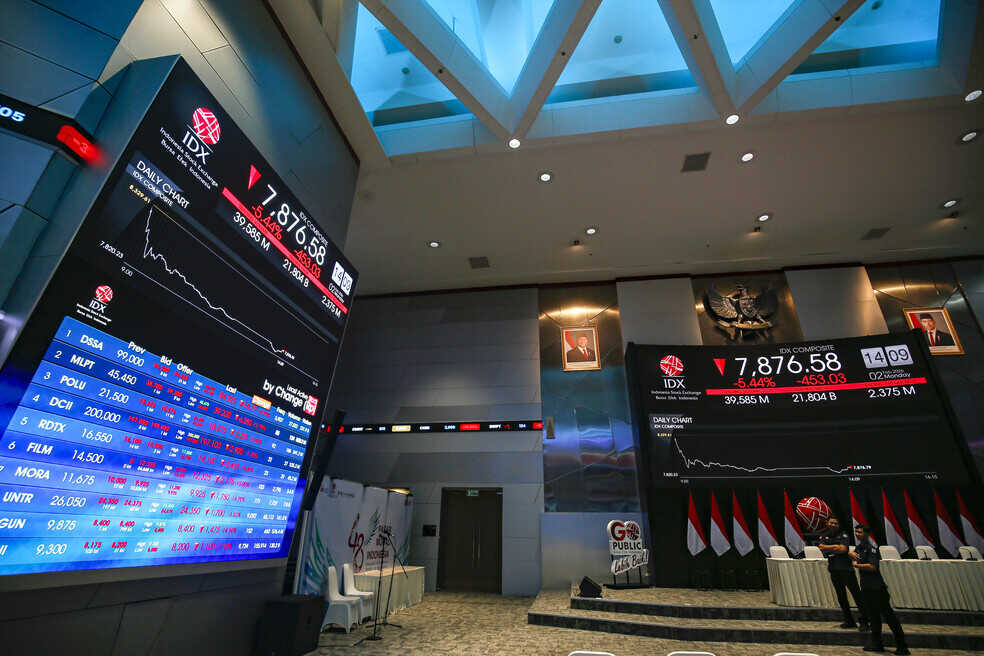
The escalation of Middle Eastern conflict following the American strike on Iran has triggered risk-off sentiment in global financial markets. Heightened tensions between Iran, Israel and the United States have increased geopolitical uncertainty, prompting global investors to redirect funds towards safe-haven assets such as US dollars and US Treasury securities, whilst pressuring emerging market currencies, including the rupiah.
In response to these developments, Erwin Gunawan Hutapea, head of the Monetary Management and Securities Asset Department at Bank Indonesia, affirmed that the monetary authority will continue to closely monitor market developments.
“In line with the escalation of Middle Eastern conflict following the US strike on Iran, which is driving risk-off sentiment in global financial markets, Bank Indonesia will continue to closely monitor market movements and respond appropriately, including ensuring that the rupiah exchange rate moves in accordance with its fundamentals,” he stated in a press release received on Monday, 2 March.
He stated that Bank Indonesia would remain present in the market to maintain exchange rate stability. Interventions are conducted through various instruments, both in offshore and domestic markets.
“Bank Indonesia will remain present in the market through interventions via both non-deliverable forward (NDF) transactions in foreign markets and spot transactions and domestic non-deliverable forward (DNDF) transactions in the domestic market,” he emphasised.
Beyond exchange rate stabilisation, Bank Indonesia will also optimise its policy mix to strengthen the transmission of interest rate policy to the real sector and financial system.
The Iran-Israel-US conflict is seen as having the potential to trigger a surge in global oil prices, which could add pressure to the rupiah as Indonesia remains a net energy importer. In conditions of deteriorating global sentiment, responsive central bank action becomes crucial to maintaining domestic financial market stability and market participant confidence.
PT Pertamina (Persero) has increased operational oversight in response to geopolitical dynamics in the Middle East region.
Separately, the Strait of Hormuz has come under scrutiny after the International Maritime Organization (IMO) issued a formal advisory to the global shipping community. Russia’s Ministry of Transport reported hundreds of cancelled flights on Russia-Middle East routes. A Reuters/Ipsos poll showed only 25% of Americans supported strikes on Iran, with rising fuel prices and military casualties posing threats to Trump’s position. The Indonesian government has urged Umrah pilgrims scheduled to depart in the near future to postpone their travel following the deteriorating security situation in the Middle East region.