
Bank Indonesia Promotes Financial Literacy and Welfare through New Initiative
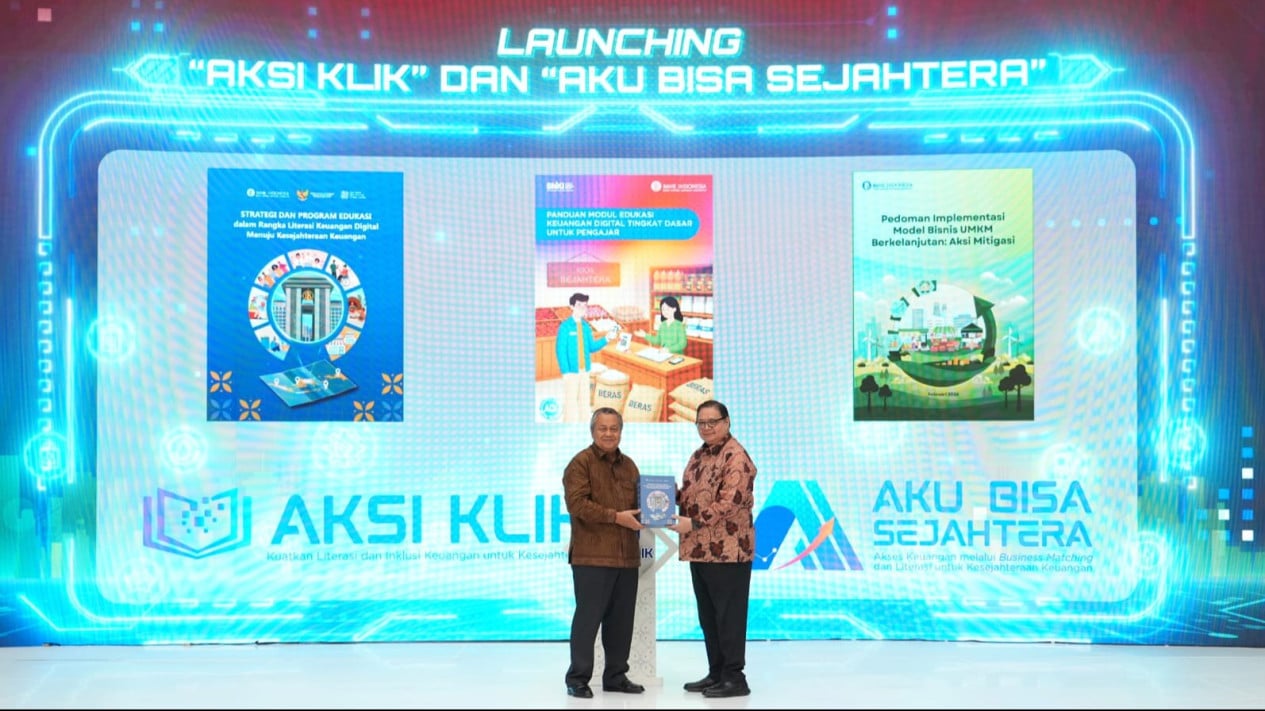
Bank Indonesia (BI) has partnered with the Coordinating Ministry for Economic Affairs and various institutions to launch Aksi Kuatkan Literasi dan Inklusi Keuangan untuk Kesejahteraan (AKSI KLIK) and Akses Keuangan melalui Business Matching dan Literasi untuk Kesejahteraan Keuangan (Aku Bisa Sejahtera) on Friday, 6 March 2026.
The initiative aims to accelerate improvements in digital financial literacy and inclusion, and to promote financial access for micro, small, and medium-sized enterprises (MSMEs).
BI Governor Perry Warjiyo stated that the programme represents cross-institutional collaboration to strengthen financial literacy amongst the public amid rapid digitisation of the financial sector. BI is partnering with the Coordinating Ministry for Economic Affairs under Airlangga Hartarto, who also chairs the National Council for Financial Inclusion (DNKI), alongside various other institutions to jointly improve the welfare of MSMEs and the people’s economy.
“This is a tightly coordinated initiative between the Coordinating Ministry for Economic Affairs under Airlangga Hartarto, who also chairs the National Council for Financial Inclusion, Bank Indonesia and various institutions working together to improve UMKM and people’s economy welfare,” Perry said at the launch event held at Grha Bhasvara Icchana, the BI building, on Friday, 6 March 2026.
The initiatives are based on the 2025 National Survey of Financial Literacy and Inclusion (SNLIK). The national financial inclusion rate has reached 92.74 per cent, but the financial literacy rate stands at only 66.46 per cent. According to Perry, increases in financial inclusion must progress alongside improvements in public literacy.
“Progress has been made year on year, but it must continue to improve,” Perry stated firmly.
Perry noted that financial literacy extends beyond opening digital bank accounts or using QRIS payment systems. The public must also understand the risks associated with financial products to protect themselves from various financial crimes such as illegal online lending.
He emphasised that acceleration of digital payment system digitalisation must be balanced with improved digital literacy. Currently, QRIS users number nearly 60 million, with approximately 50 million of these being MSME operators.
“Financial literacy is very important for society. Let us work together to improve literacy to support the achievement of government targets,” Perry continued.
During the event, BI formally published a digital financial literacy education strategy document, basic-level Digital Financial Services (DFS) modules, and guidelines for implementing sustainable MSME business models. The module comprises five main topics covering Money, Budgeting, Financial Transactions, Financial Service Products, and Risk Protection.