
Bank Indonesia Outlines 7 Programmes for Controlling Food Inflation in Java Region
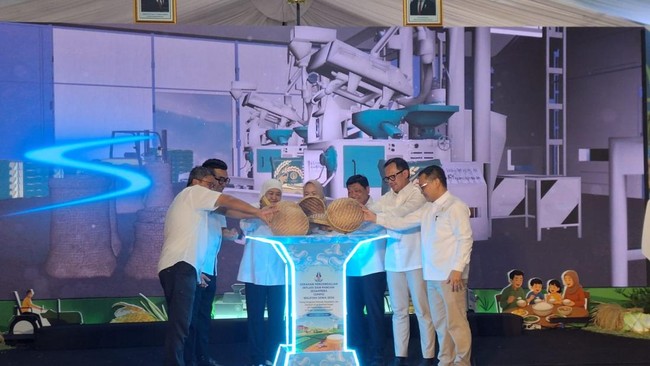
Bank Indonesia (BI), together with the Central Inflation Control Team (TPIP) and Regional Inflation Control Teams (TPID), launched the Food Prosperity Inflation Control Movement (GPIPS) in East Java. GPIPS 2026 focuses on two main aspects: strengthening productivity and ensuring smooth food distribution, to maintain price stability and national food resilience.
The three priority commodities targeted across all regions are rice, chillies, and shallots. Additional commodities are adjusted according to the characteristics of each area, from Sumatra, Java, Kalimantan, Sulawesi-Maluku-Papua, to Bali-Nusa Tenggara.
Bank Indonesia Deputy Governor Aida S. Budiman explained that GPIPS is implemented through seven programmes. First, Increasing Productivity through Optimisation of Good Agricultural Practices (GAP).
Then, Strengthening Food Commodity Resilience through Food Downstreaming and Enhancing Institutional Capacity of Farmers/Farmer Group Associations/Regional Public Companies as Offtakers. Followed by Optimising Inter-Regional Cooperation (KAD).
Next, Strengthening Food Distribution Facilitation (FDP), Optimising Market Operations/Cheap Markets, Strengthening Food Balance Sheets, and Enhancing Coordination and Communication for Controlling Inflation Expectations.
“Through GPIPS, food inflation control is not only focused on short-term price stabilisation, but also on strengthening production, post-harvest, and food distribution to support sustainable national food resilience,” stated Aida, during the GPIPS launch in East Java on Wednesday (13/5/2026).
It is known that GPIPS is an improvement on the previous National Food Inflation Control Movement (GNPIP), aimed at strengthening synergy between TPIP and TPID in maintaining price stability and bolstering national food resilience. Java was chosen considering that this region is a food production centre as well as the largest distribution hub in Indonesia, has a dominant food inflation weight, and plays an important role in shaping national food price expectations.
2025 production data shows East Java’s dominance in almost all major food commodities, namely rice, maize, bird’s eye chillies, and shallots. Additionally, East Java is the largest paddy producer with a contribution of 17.34% of national production, with a total output reaching 10.57 million tonnes.
“This dominance is also reflected in East Java being the number one producer for maize and bird’s eye chillies, while shallot production is in the second highest position nationally. This superiority positions East Java as the backbone of the government’s 2026 priority programmes in achieving rice and maize self-sufficiency,” explained Aida.