
Bank Indonesia Launches Inflation Control Movement in East Java
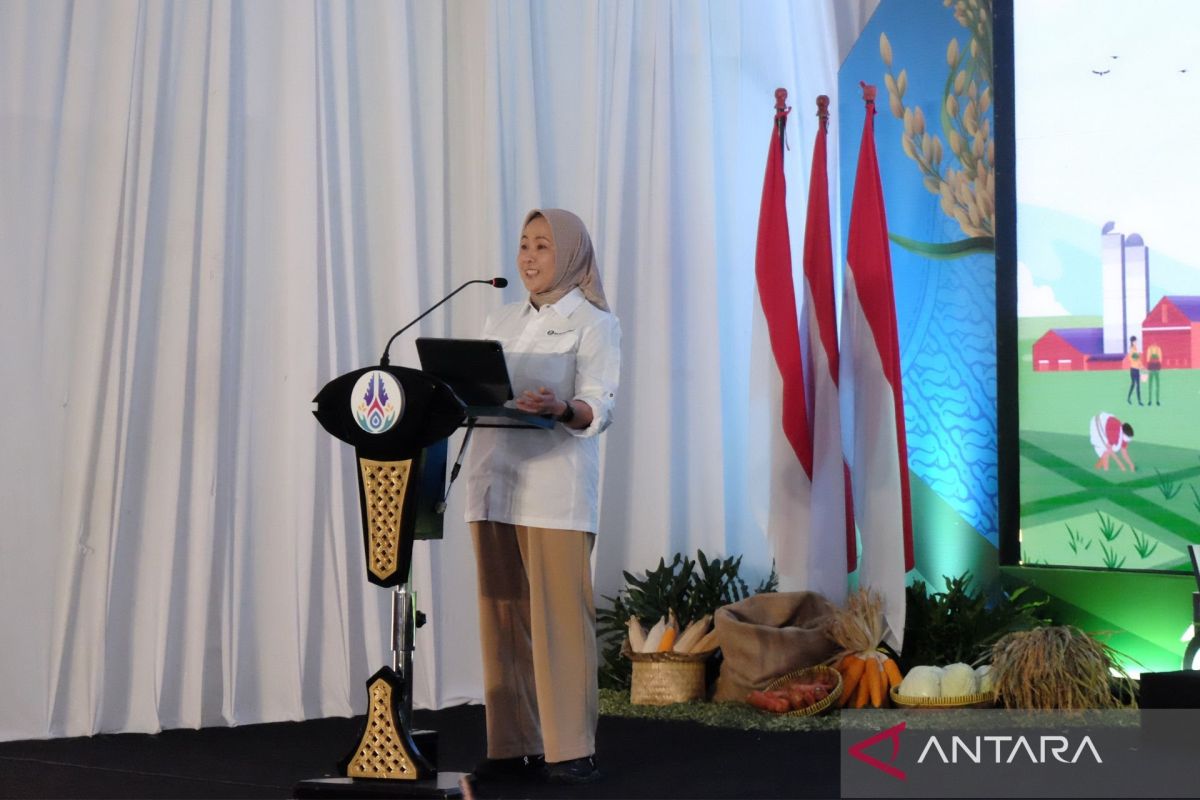
Bank Indonesia (BI) has launched the Gerakan Pengendalian Inflasi dan Pangan Sejahtera (GPIPS) for the Java Region 2026 in East Java through strengthening supply, distribution, and central-regional synergies.
Deputy Governor of Bank Indonesia Aida S. Budiman explained that GPIPS represents an enhancement of the Gerakan Nasional Pengendalian Inflasi Pangan (GNPIP), which focuses on improving the welfare of communities and farmers amid challenges from climate change and food fluctuations.
“What we aim to achieve is ensuring food security, energy security, and financial security in line with the government’s Astacita,” said Aida in her speech in Sidoarjo, East Java, on Wednesday.
She stated that the GPIPS strategy still refers to the four main aspects of inflation control: price affordability, supply availability, smooth distribution, and effective communication, with a focus on strengthening the aspects of food supply availability and distribution.
According to her, food commodities have a significant impact on low-income communities, who allocate 60 to 80 percent of their household income to food expenditure, making food price stability a primary concern for the government and BI.
In its implementation, Aida mentioned that GPIPS will be strengthened through synergies with the Central Inflation Control Team (TPIP) and the Regional Inflation Control Team (TPID).
She said GPIPS will be executed through seven flagship programmes aimed at building an integrated food business model from upstream to downstream, such as food downstreaming, as well as support for government programmes like the Merah Putih Village/Urban Ward Cooperative (KDKMP) and strengthening post-harvest processing.
She revealed that BI chose East Java as the launch location for GPIPS because it holds a strategic position as the national food granary as well as the distribution centre for the eastern Indonesia region. East Java is recorded as the main producer of rice, corn, chillies, sugarcane, and milk nationally.
Aida added that around 80 percent of food distribution for 19 provinces in the eastern Indonesia region is also supported from East Java, backed by Perum Bulog’s storage capacity reaching 22.81 percent of the national capacity.
“We chose Jatim also to borrow the patriotic spirit of the Suroboyo people in safeguarding Indonesia’s independence, to ensure that national food security becomes even stronger,” said Aida.