
Bank Indonesia Holds Interest Rates as US Dollar Stabilises at Rp16,975
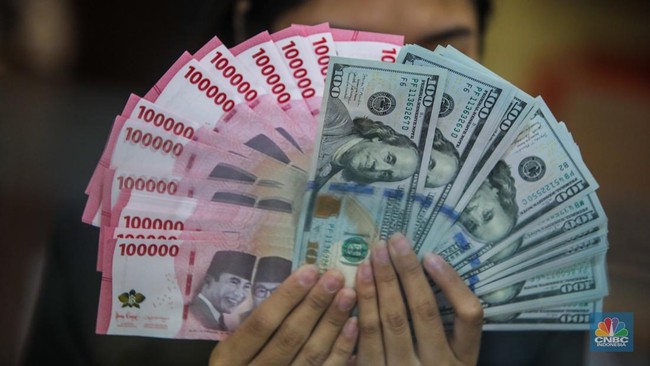
Jakarta, CNBC Indonesia — The rupiah successfully strengthened against the US dollar in trading today, Tuesday 17 March 2026, following Bank Indonesia’s (BI) decision to maintain its benchmark interest rate.
According to Refinitiv data, the rupiah closed trading in positive territory with modest gains of 0.06 per cent to the level of Rp16,975 per US dollar. This result reversed the previous trading position when the rupiah closed weaker at 0.30 per cent to the level of Rp16,985 per US dollar.
However, compared with this morning’s opening level, the rupiah’s gains were actually larger. The rupiah opened with gains of 0.12 per cent at the position of Rp16,865 per US dollar, though some of these gains were eroded by market close.
Meanwhile, the US dollar index (DXY) at 15.00 WIB was recorded strengthening 0.17 per cent to the level of 99.878.
The rupiah’s strengthening in today’s trading occurred after Bank Indonesia decided to maintain its benchmark interest rate at the Monetary Policy Committee meeting on 16–17 March 2026. BI maintained the BI Rate at 4.75 per cent, marking the sixth consecutive time the benchmark rate remained unchanged.
Additionally, BI also maintained the Deposit Facility rate at 3.75 per cent and the Lending Facility rate at 5.50 per cent.
BI Governor Perry Warjiyo stated that this decision was taken to strengthen rupiah stability amid deteriorating global conditions due to conflict, whilst keeping inflation aligned with targets for 2026–2027 and supporting economic growth.
Perry also emphasised that BI will continue to optimise its monetary policy mix to safeguard external resilience and economic stability. At the same time, payment system policy will remain directed at supporting economic activity, including through expanded transaction digitalisation and strengthening payment system infrastructure.
From external factors, the rupiah actually faces headwinds from US dollar strength in global markets. The dollar has strengthened again as investors pursue safe-haven assets amid escalating conflict in the Middle East.
The conflict, now in its third week, remains marked by attacks from both sides, whilst the Strait of Hormuz, which is vital for global energy supply routes, is reported to be largely closed. This situation is driving up energy prices and adding to market concerns about global inflation.
Rising oil prices have also prompted market participants to adjust expectations for global interest rates. This situation ultimately supports US dollar strength against most world currencies.
Despite US dollar index strength, the rupiah has remained able to hold in positive territory in today’s trading. This demonstrates that domestic sentiment, particularly from BI’s decision to maintain interest rates, has been sufficiently supportive of the rupiah’s movement.