
Bank Indonesia Holds Benchmark Interest Rate Amid Middle East Conflict Escalation
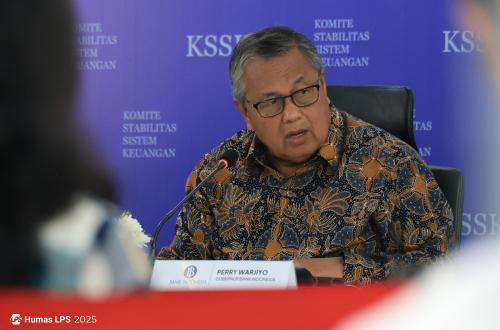
Bank Indonesia (BI) has decided not to reduce its benchmark interest rate (BI Rate) in the March 2026 Board of Governors meeting, amid increasing global uncertainty resulting from escalation of conflict in the Middle East.
BI Governor Perry Warjiyo stated that the option of reducing the benchmark rate has been removed from the latest policy statement. “The impact of the Middle East conflict means we are no longer conveying the possibility of reducing the interest rate. We will maintain the BI Rate,” Perry said during the Board of Governors press conference on Tuesday (17 March 2026).
According to him, this policy aims to safeguard the stability of the rupiah’s exchange rate through optimisation of monetary instruments, including market intervention and strengthening of foreign exchange reserves.
Indonesia’s foreign exchange reserves at the end of February 2026 stood at 151.9 billion US dollars, equivalent to 6.1 months of import financing or 5.9 months of imports and government external debt servicing—far exceeding international adequacy standards.
BI has also considered various scenarios regarding the impact of the conflict on the global economy. One such scenario is a slowdown in global economic growth, projected to decline to 3.1 per cent in 2026 from the previous 3.2 per cent.
On the other hand, global inflation is expected to increase from 3.8 per cent to 4.1 per cent, narrowing scope for global monetary policy easing, including the potential delay in reductions to the US Federal Funds Rate (Fed Funds Rate).
Other impacts are evident in global financial markets. Perry cited foreign capital outflows from developing countries, including Indonesia, owing to heightened uncertainty.
BI data showed net outflows of portfolio investment of 1.1 billion US dollars in March 2026. This condition also pressured the exchange rates of developing country currencies as the US dollar strengthened.
Additionally, increases in yields on US Treasury bonds have also driven higher bond yields in developing countries, including Indonesia.
“Optimisation of policy will depend on how far this conflict escalation continues,” Perry said.