
Bandung DPRD Special Committee Reminds Sexual Risk Regulation Must Not Violate Human Rights
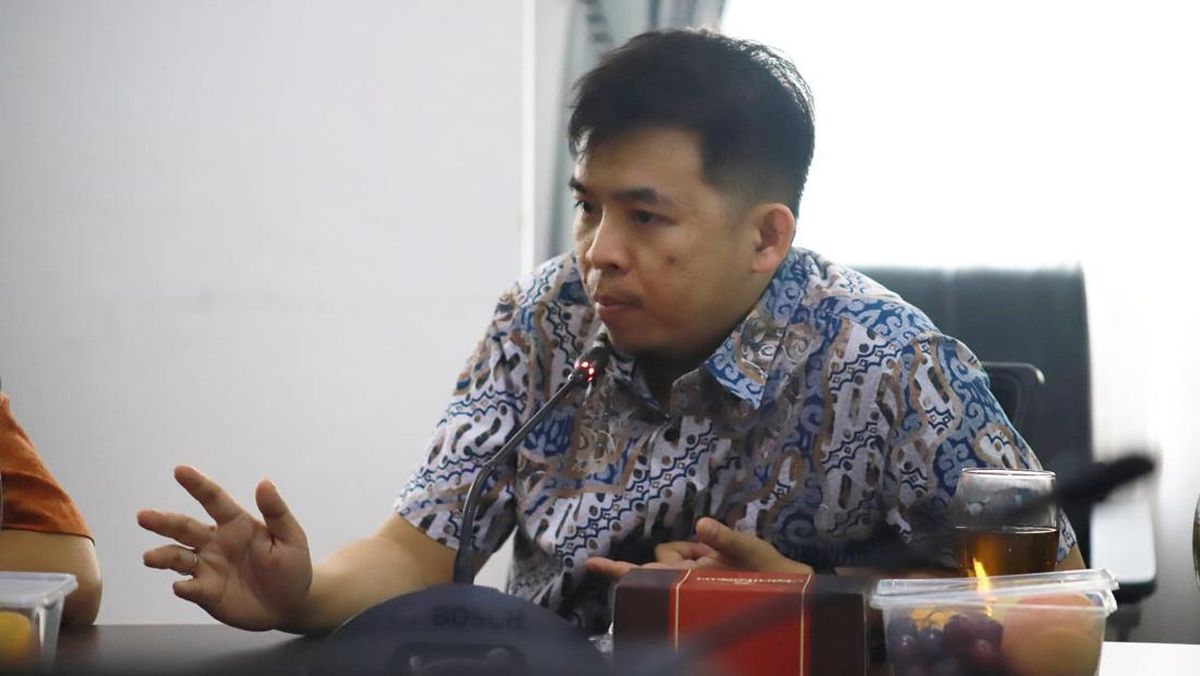
A member of the Special Committee (Pansus) 14 of the Bandung City Regional Parliament (DPRD), Yoel Yosafat, has emphasised that discussions on the draft regional regulation (Raperda) concerning the prevention and control of risky sexual behaviour and sexual deviation must remain within the proper framework.
According to Yoel, the discussion of this regulation has been directed from the outset towards strengthening public health protection, particularly in efforts to prevent sexually transmitted diseases and address cases of sexual violence that have recently increased.
“What we mean by staying within the proper framework is to remain focused on health protection and not be directed towards discrimination against certain groups,” said Yoel Yosafat, a member of Pansus 14 of Bandung City DPRD.
According to him, from the beginning the direction of discussion has been focused on strengthening health aspects, preventing sexually transmitted diseases, and addressing sexual violence that has recently become widespread.
He explained that during the discussion of the Raperda, various dynamics emerged within the special committee to expand the scope of the regulation, which then gave rise to differing opinions amongst committee members.
“Initially we wanted to strengthen health protection and reduce the incidence of sexually transmitted diseases. In the process, there were indeed proposals to expand the scope of the regulation. This is what then created differing views,” he said.
Yoel emphasised that the regulation being drafted must not violate human rights principles or be susceptible to legal challenges. He cautioned that the resulting regulation must have a strong legal foundation and not be discriminatory.
“We do not want to persecute anyone. What is being regulated are health aspects and risky behaviour. This regulation must not become problematic and be challenged at the Constitutional Court,” he insisted.
He also acknowledged that there is currently no specific regulation at the national level that addresses sexual orientation. Therefore, the most rational approach would be through public health management.
Even in Jakarta and Bali, which are considered to have freer lifestyles, the regulations do not address the issue of sexual orientation deviation.
“In Jakarta and Bali the focus remains on sexual health management,” he explained.
Therefore, if Bandung City wishes to address the issue of sexual orientation, according to him greater care is needed because it could be the first of its kind in Indonesia.
As a city with both religious character and metropolitan status, Bandung must be prudent in formulating regulations, in his view.
“We agree on preventing risky behaviour, but not hating the person. The principle must remain about treating people with dignity,” he emphasised.
Discussion of clause by clause continues. The special committee is targeting completion by next month at the latest, with the hope that the resulting regulation will serve as clear, implementable legal protection that does not cause discrimination.
Although the discussion has been somewhat difficult, they stated they will complete it within one or two months ahead.
“Although there are dynamics, the discussion continues to progress. We hope it will be completed soon. What is important is that this regulation can be well implemented,” he concluded.