
Bandung Designer Deden and Kisera Scarf Brand Captivate Fashion Show Stage Through Collaboration
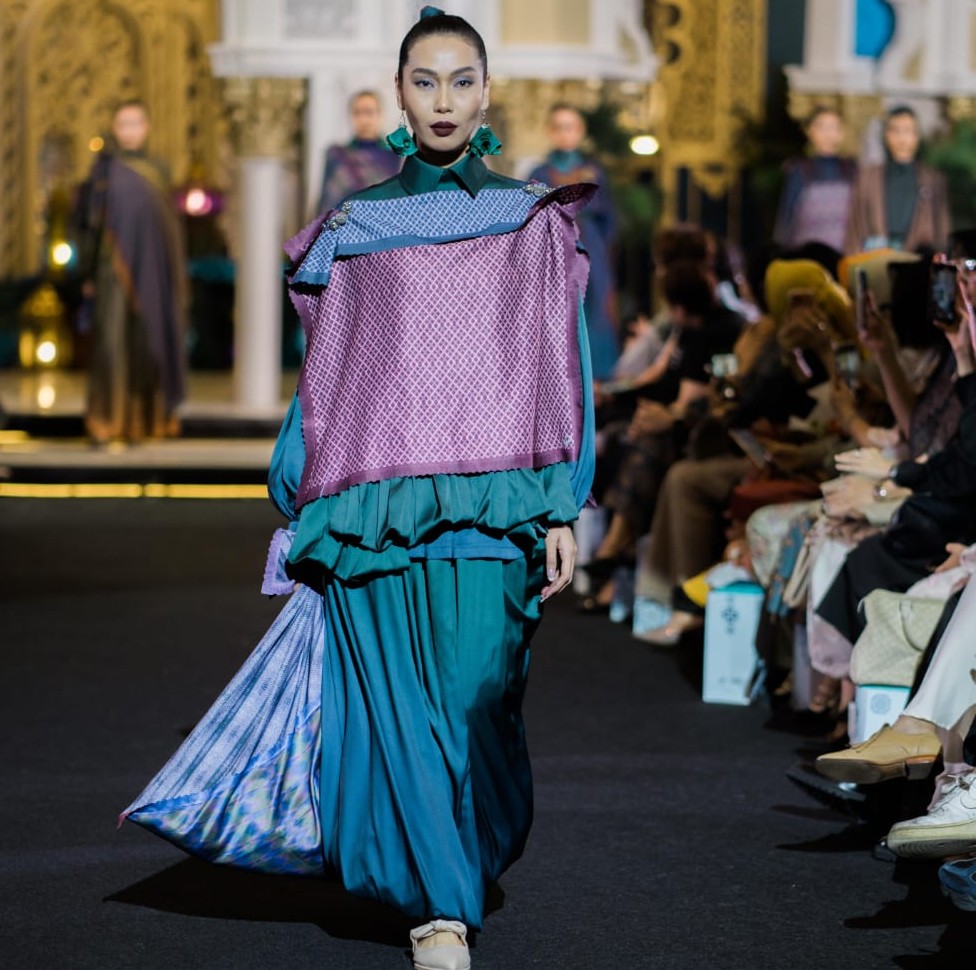
A collaboration between renowned Bandung designer Deden Siswanto and Kisera, a scarf brand also based in Bandung, garnered warm reception at a fashion show held at Central Park Jakarta on Saturday 7 March. Audiences were impressed to discover that the garments displayed on stage were constructed from multiple scarves assembled without being cut.
This innovation in Indonesia’s modest fashion industry introduces a fresh concept of creating garments from scarf sheets without cutting, presented at the fashion show.
The collaboration emerged from a vision to provide a new perspective on how headscarves and scarves are used in fashion. Traditionally, scarves have been viewed merely as fashion accessories. However, the material is recognised as having greater potential to be developed into the primary component of an outfit.
Kisera owner Ardhina Dwiyanti stated on Tuesday 10 March that the idea came from her desire to elevate scarves beyond being simple accessories in Muslim fashion. “Usually in fashion shows, headscarves are just supplementary. People focus more on the clothing design. But from the start, I wanted to make scarves not just an accessory, but part of fashion itself,” she explained.
According to Ardhina, through collaboration with designer Deden Siswanto, Kisera’s scarf sheets are transformed into various forms of garments using styling techniques and fabric combination without the need to cut. This concept presents a fresh appearance whilst strengthening sustainability values in fashion. The idea emerged when she was challenged to introduce something different in scarf processing.
“Usually scarves are only styled on the head or shoulders. But to become a complete garment, this is a concept that is still rarely used. So we tried to present something new,” she said.
Designer Deden Siswanto explained that the technique used in the collection is called the “mulas” technique, which involves forming garments by combining multiple scarves using pins or hooks without having to cut the fabric.
“People usually buy a single scarf just for a headscarf. But if they buy two or several pieces, it can actually be processed into garments. We create new patterns without cutting the fabric,” he emphasised.
In one collection, Deden even combined up to eight pashmina sheets to form a long outer garment or sleeveless robe. The composition of different colours and motifs produces richer visual dimensions.
“When viewed from a distance, people might just see it as clothing. But when they get closer, they realise it is actually composed of several scarves using a specific technique,” he added.
According to Deden, this concept also carries the spirit of sustainable fashion because it minimises fabric waste. Almost all material is utilised, including leftover material that is made into accessories such as flower-shaped belts or jewellery.
“The principle is zero waste. If there is leftover fabric, we use it again for accessories or clothing details,” he stated.
Beyond presenting design innovation, this collaboration also opens new opportunities for consumers to be more creative in utilising scarves. The public response to the collection was described as fairly positive. Many spectators were surprised to learn that the garments displayed on stage were actually composed of several scarves.
“Even the models asked, ‘Is this really a scarf?’ That shows that scarves can actually develop beyond being a mere clothing accessory,” he said.
Moving forward, this collaboration is expected to generate new concepts in modest fashion whilst encouraging designers to be more creative in utilising existing materials.