
Bandung City Government and Anti-Corruption Commission Strengthen Corruption Prevention with Focus on Three Key Areas
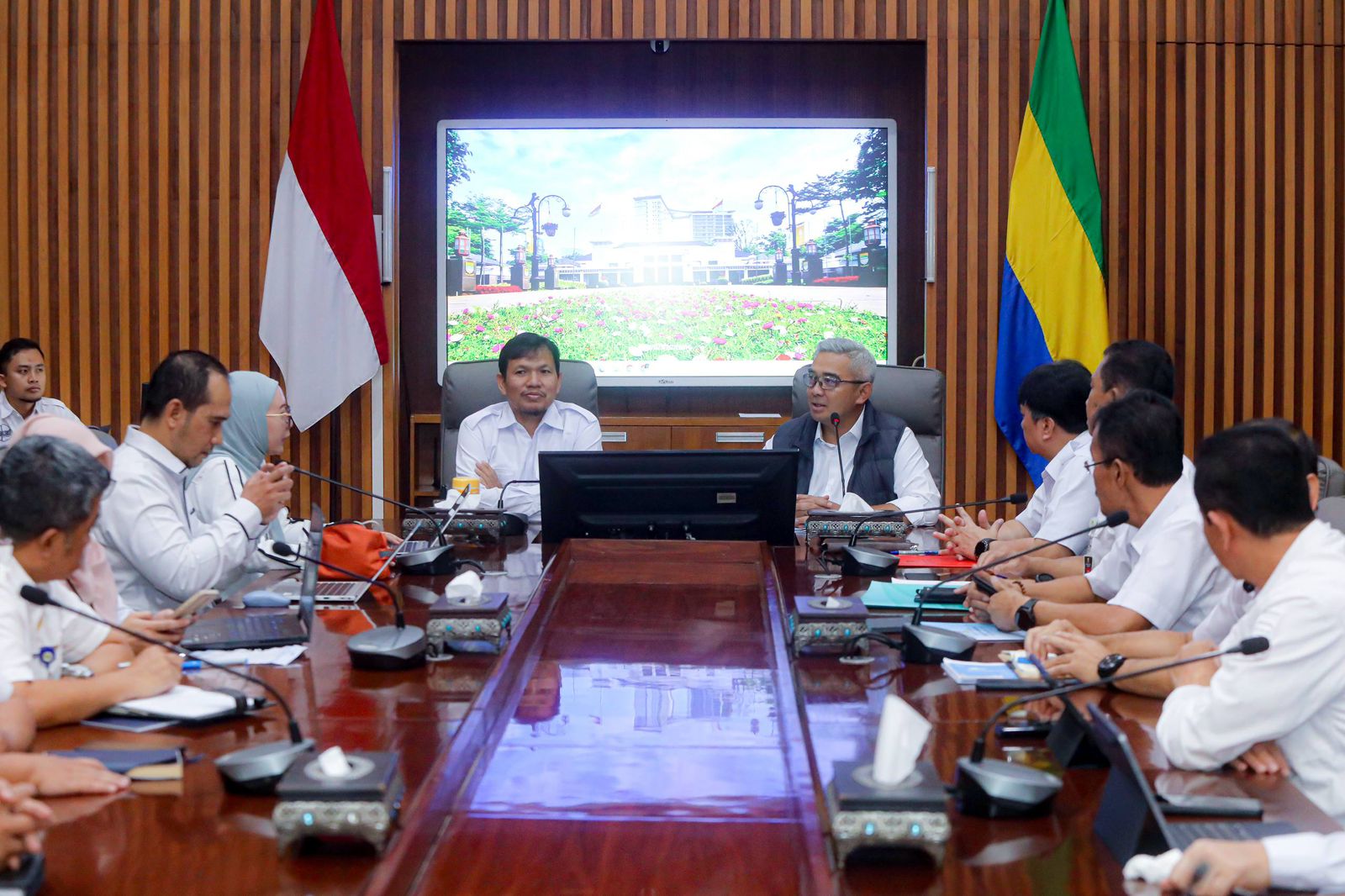
BANDUNG City Government (Pemkot) has strengthened corruption prevention efforts through coordination with the Anti-Corruption Commission (KPK) during a meeting to discuss 2026 budget planning and regional priority programmes at Bandung City Hall on Wednesday, 11 March.
Bandung Mayor Muhammad Farhan explained that collaboration with KPK is crucial for improving governance, particularly at the planning and implementation stages of development programmes. One recurring problem is weak oversight during programme implementation. He assessed that good planning will not yield maximum benefits if execution is not strictly monitored.
“From planning to implementation, oversight must not be lax. We must not allow good planning only to create problems and public complaints during implementation,” he said.
In the meeting, Farhan outlined three areas of joint focus with KPK. The first is development planning for strategic regional projects, including addressing priority road segments that are the city government’s focus.
The second area concerns management and preservation of regional assets, including the Teras Cihampelas area which has drawn public scrutiny.
The third area involves licensing and strengthening regional revenue. Farhan believes Bandung’s revenue potential is substantial but has not been optimally utilised. “Our revenue potential is very great. Therefore we must improve standard operating procedures and strengthen oversight,” he said.
According to Farhan, improving government accountability is important for restoring public trust. He acknowledged various legal issues that have occurred as a test for the city government to make improvements.
“We want to ensure regional development runs effectively and sustainably while eliminating the risk of corruption,” he said.
Meanwhile, KPK’s Corruption Prevention Task Force Head for Region II, Arief Nurcahyo, stated that this coordination is part of KPK’s efforts to strengthen corruption prevention systems in regional government. Several integrity indicators still show vulnerability to corruption potential. This is evident from the Integrity Assessment Survey (SPI) scores which remain below ideal levels.
“Bandung’s SPI remains in a vulnerable zone. This means there is still potential for corruption to occur, so oversight system strengthening is needed,” he said.
KPK also examined several vulnerable sectors including planning and budgeting, procurement of goods and services, management of regional assets, and optimisation of regional revenue. Additionally, KPK encouraged transparency in budget use, including in programmes originating from parliamentary (DPRD) main ideas proposals.
“Transparency, accountability and regulatory compliance are key to preventing corruption in regional government. Budget users bear full responsibility for implemented programmes. Therefore transparency and internal oversight must be properly executed,” he said.
Arief hopes this coordination will produce concrete steps in improving Bandung City Government’s governance and minimising corruption risk from the programme planning stage onwards.