
Bandung City DPRD Commission I Accelerates Refinement of Adaptive Civil Registry Regulation
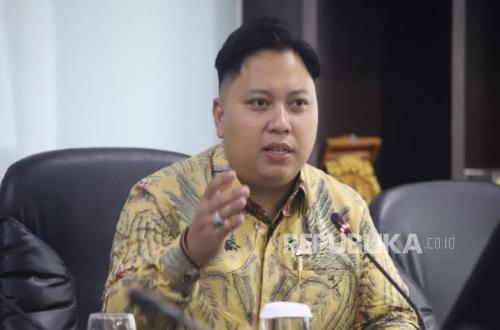
Bandung City DPRD Commission I is urging the refinement of the Regional Regulation (Perda) on civil registry administration to make it more adaptive to regulatory developments and societal needs.
This push emerged during a working meeting with the Bandung City Civil Registry and Population Affairs Office (Disdukcapil) and the academic manuscript drafting team on Wednesday (29/4/2026).
The meeting, chaired by the Chairman of Commission I of Bandung City DPRD, Radea Respati Paramudhita, discussed proposals for the Draft Regional Regulation (Raperda) for the second amendment to Perda Number 8 of 2012 on the Implementation of Civil Registry Administration.
Radea assessed that the current regulation is no longer fully relevant to the dynamics of public services. In the past decade, she said, dozens of new regulations in the field of civil registry administration have been issued that need to be accommodated in local policies.
“Civil registry administration is a basic service that directly relates to legal identity and the fulfilment of public rights. Therefore, local regulations must be able to follow national policy developments and the needs of residents,” stated Radea.
She explained that the DPRD-initiated Raperda is aimed at strengthening service quality through a more integrated, innovative, and accessible approach for the public. Thus, residents are expected to obtain civil registry services more quickly and efficiently.
According to Radea, the drafting of the new perda must produce a comprehensive, systematic legal foundation that is aligned with higher regulations. In addition, the regulation must provide legal certainty while improving the quality of public services.
Commission I, she continued, also encourages comparative studies with several other regions to enrich the substance of the rules. “We need to look at regulatory comparisons to take relevant points that suit the needs of Bandung City,” she said.
Radea added that local content and various real issues in society must be the main focus in drafting the perda. The resulting regulation, she said, should not only be normative but also applicable and responsive to field conditions.
In the meeting, Commission I also highlighted the importance of cross-sectoral service integration, including with health facilities, to support the implementation of Universal Health Coverage (UHC). Inter-agency synergy is seen as key to delivering fast and integrated public services.
In addition, she emphasised the need to strengthen socialisation to the public regarding various service innovations and legal provisions. “The substance of the rules must be conveyed in easy-to-understand language so that the public knows their rights and obligations,” she said.
Radea hopes that the various inputs from the working meeting can perfect the academic manuscript and the draft perda. Thus, the resulting regulation is truly implementable and supportive of the needs of Bandung City residents.