
Bandung City Council Pushes for Special Regulation to Prevent High-Risk Sexual Behaviour
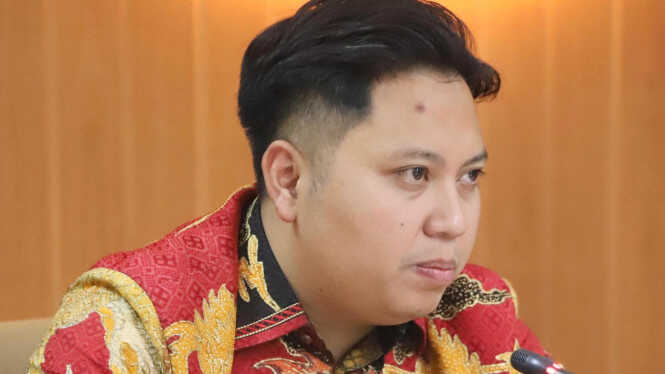
Bandung City Council is pushing for accelerated deliberation of a draft regional regulation (Raperda) on prevention and control of high-risk sexual behaviour. Through Special Committee 14 of Bandung City Council, chaired by Assoc. Prof. Dr. H. Radea Respati Paramudhita, S.H., M.H., discussions are currently underway on the Draft Regulation Concerning Prevention of High-Risk Sexual Behaviour and Sexual Deviation.
This step was taken following increased public aspirations and complaints regarding various phenomena in public spaces.
The chairperson of Special Committee 14 cited two key indicators of concern. First, there has been an increase in HIV cases in recent years. Second, there has been an emergence of behaviour deemed deviant and frequently occurring in public spaces.
“We see numerous public complaints. The indicators are clear—HIV cases are rising. On the other hand, various behaviours deemed inconsistent with social norms are emerging in the field,” the chairperson stated.
According to the chairperson, discussions on the draft regulation have already commenced. The Council has coordinated with Bandung City Health Department as the leading sector, as well as various organisations and other stakeholders involved in prevention and control efforts.
The chairperson emphasised that this regulation is not solely oriented towards enforcement, but rather focuses on prevention aspects.
“We should not only treat the problem. There must be preventive measures so that the public does not engage in high-risk behaviour,” the chairperson said.
In the draft under discussion, the roles of various parties will be clarified, including relevant departments and regulation enforcement personnel. Subsequently, Bandung City Civil Police will be authorised to restrict and halt activities deemed to violate provisions, particularly if conducted in public spaces.
However, if criminal elements are identified, handling will be transferred to law enforcement authorities.
“If still at the initial stage, restriction and coaching can be conducted. But if it enters the criminal domain, naturally it will be referred to the police,” the chairperson explained.
Additionally, the Council is encouraging the involvement of business operators and public space managers. Business establishments such as restaurants or cafés are requested not to facilitate activities deemed contrary to regulations. If violations occur, administrative sanctions up to business license revocation may be imposed.
Public outreach is also an important component. The Council has requested that relevant departments intensify education for the public, particularly young people, so they understand the boundaries of permitted behaviour. The chairperson hopes the draft regulation can be promptly passed and effectively implemented.