
Bandung: Capital of Sub-Culture and Spearhead of Indonesia's 'New Diplomacy'
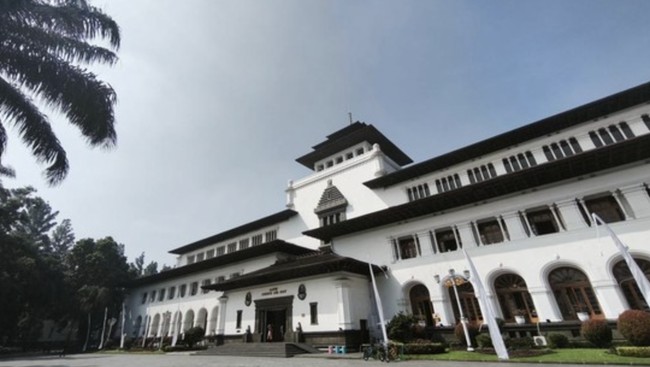
There are cities that serve as centres of power, and there are cities that serve as centres of consciousness. Bandung falls into the latter category. This is not because Bandung has escaped historical attention, but precisely because history has placed Bandung in a distinctive position: a space where ideas develop more rapidly than policies, and where cultural identities form long before Bandung receives official recognition from the state.
In contemporary discourse on Indonesia’s cultural geography and public diplomacy, Bandung deserves to be regarded not merely as a creative city in the clichéd sense, but as the true capital of sub-culture and as a living laboratory for what is now beginning to be known as new diplomacy in the Indonesian context.
The concept of sub-culture, as defined by Dick Hebdige in Subculture: The Meaning of Style (1979), refers to groups that construct their identities through practices and symbols that negotiate with, or even resist, dominant cultural currents.
Within this framework, Bandung does not merely have sub-cultures; Bandung is sub-culture itself on an urban scale. From the first distro shops on Jalan Trunojoyo in the late 1990s, from the metal and punk communities in Gang Tamim, to the visual arts collectives in Dago Pojok, Bandung has built a cultural ecosystem that does not await legitimisation from the centre.
If Jakarta is a state within a city, Bali is the image of Indonesia consumed by the world, and Yogyakarta is the reflective guardian of tradition, then Bandung moves outward towards global conversations through unofficial channels—and it is precisely because of this that it is more authentic.
It is impossible to discuss Bandung as a node of diplomacy without referencing April 1955. The Asia-Africa Conference at Gedung Merdeka was not merely a protocolar event between nations; the Asia-Africa Conference was the moment when the world order dominated by two major power blocs was first challenged by the collective voice of newly independent nations.
The Bandung Ten Principles laid down the foundations that later became the basis for the Non-Aligned Movement. Soekarno, as the chief architect of the conference, delivered an oration that remains one of the most stirring speeches in modern diplomatic history.
Soekarno stated that Bandung was created when God was smiling—a phrase that is not merely poetic praise, but a theo-political assertion that the meeting of nations in this city was the moral destiny of oppressed humanity.
Seven decades later, that spirit rolls on in a more fluid form, as described by Joseph Nye through the concept of soft power and by Jan Melissen in The New Public Diplomacy (2005) as diplomacy that no longer operates solely through intergovernmental channels, but through non-state actors, creative communities, and cross-border cultural networks.
To understand why Bandung’s potential has not been fully realised, there is no better mirror than Seoul. The Jongno district is managed as a living space that continuously dialogues between historical memory and the contemporary, while Garosugil began as a small bohemian enclave in the early 2000s before becoming a global cultural magnet without losing its character as a production space.
Chua Beng Huat, in East Asian Pop Culture: Analysing the Korean Wave (2008), argues that Korea’s greatness lies not only in the quality of its products, but in its ability to build an ecosystem where cultural production can occur on a massive scale without losing its authenticity.
Korea facilitated that process through the Korean Culture and Information Service and planned infrastructure investments. Bandung, with no less rich raw materials, does not receive similar facilities.
Nevertheless, as reminded by Doobo Shim in his study on Hallyu as a transnational phenomenon, the Korean Wave is a product of centralised industrial standardisation. Bandung’s strength lies at the opposite pole: too plural and too organic to be packaged in a neat format, and this paradox is precisely what makes Bandung more relevant to the model of new diplomacy that Indonesia needs.
What sharpens this irony is a fact that should serve as a starting point, not merely a footnote. Since 2015, Bandung has officially been a member of the UNESCO Creative Cities Network in the design category, an international recognition that places Bandung in a network with cities such as Berlin, Buenos Aires, and Nagoya.
This membership should serve as ready-to-use diplomatic infrastructure: networks, platforms, and global legitimacy that could strengthen the position of Bandung’s creative communities on the international stage. However, nearly a decade after that recognition, a fair question to ask is: what has truly changed?
Has that UNESCO membership strengthened the independent distro shops in Trunojoyo, opened markets for local designer collectives, or elevated the arts communities in Dago Pojok to broader global conversations? The honest answer is that the recognition exists more as administrative prestige than as a catalyst for real transformation. The international label has been achieved, but the engine has not been started.
It is here that a deeper question emerges, and that question touches on something structural in the way Indonesia conducts its diplomacy. Is the progressive wave of new diplomacy offered by Bandung stumbling over the pragmatism of Indonesia’s diplomacy itself?
Indonesia’s diplomacy has historically operated within the logic of measured state interests: trade, investment, regional stability, and conflict management. Within that logic, sub-cultural communities, k