
Bamsoet Pushes for New Regulation to Protect Online Transport Drivers
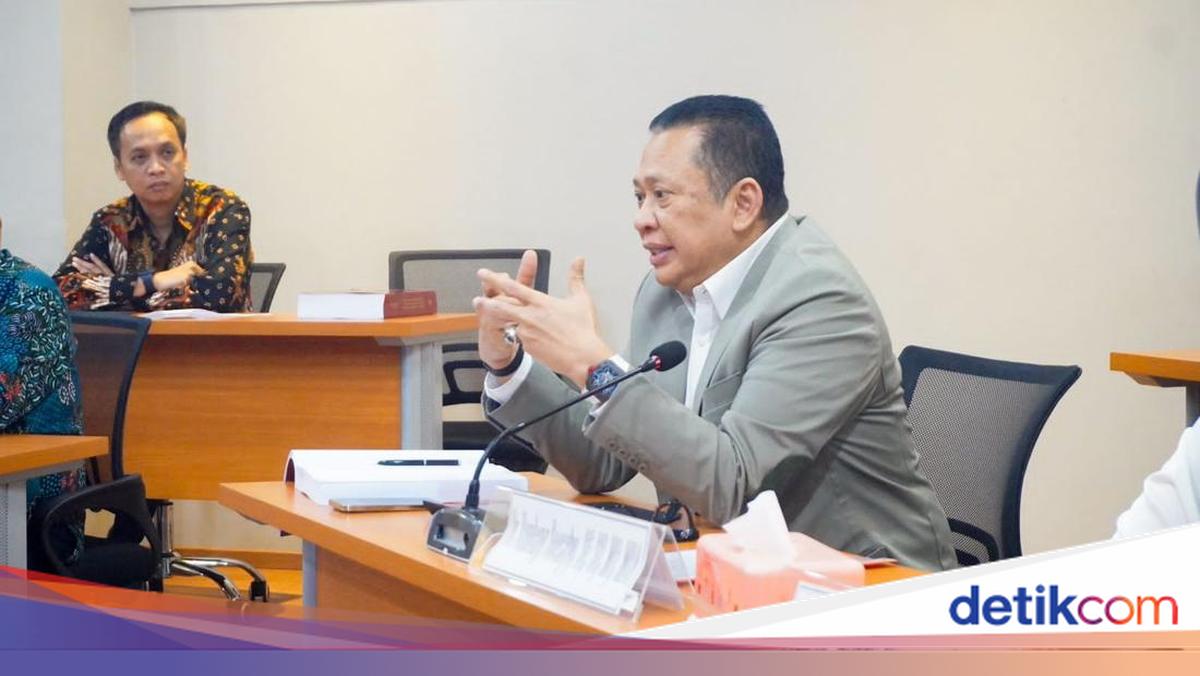
Bambang Soesatyo (Bamsoet), a member of Indonesia’s House of Representatives, Chair of the 15th People’s Consultative Assembly, and doctoral law lecturer at Borobudur University, Defence University, and Jayabaya University, has stressed the need for clearer and more comprehensive regulations to govern the working relationship between online transport application companies and drivers.
Amid rapid growth in Indonesia’s digital economy, millions of online transport drivers—who serve more than 88.3 million Indonesians—remain in a weak legal position because they are classified under a partnership scheme rather than as workers entitled to labour protection rights. Nevertheless, app-based transportation has become a key pillar of urban economic activity and a source of employment for millions.
“It is time to create regulations that provide legal certainty for online transport drivers. The partnership scheme currently used places drivers in a vulnerable position because they do not receive labour protection as ordinary workers do,” Bamsoet said in a written statement on Wednesday, 11 March 2026.
He made these remarks whilst examining a closed doctoral thesis defence for Borobudur University’s Doctoral Programme in Law, presented by Police Commissioner M. Adi Putra, at Borobudur University’s Jakarta campus on Tuesday, 10 March. Other examiners present included Prof. Ir. Bambang Bernantos, Prof. Dr. Faisal Santiago, Prof. Dr. Henny Nuraeny, Thesis Supervisor Prof. Dr. Suparji Ahmad, and Co-Supervisor Dr. Ahmad Redi.
The Chair of Indonesia’s 20th House of Representatives and Chair of the 7th Commission III of the House, explained that the online transport ecosystem in Indonesia has expanded rapidly over the past decade. The number of online transport driver partners has exceeded seven million and is distributed across various regions.
Drivers have become an integral part of the digital economy value chain supporting transport services, goods delivery, and food and micro, small, and medium-sized enterprise (MSME) product distribution. However, this development has not been matched by a strong regulatory framework, as the relationship between platforms and drivers is still based on partnership agreements.
“When an economic sector involves millions of people and affects the lives of the wider population, its regulation cannot rely solely on partnership agreements. The state must provide stronger regulations so that the relationship between app companies and drivers is fair,” Bamsoet said.
The Vice Chair of Golkar Party and Vice Chair of the Indonesian Chamber of Commerce and Industry (KADIN) pointed out that partnership relationships often leave drivers without certainty regarding income, social security, protection against workplace accidents, or dispute resolution mechanisms.
Many drivers must comply with various conditions set unilaterally by the platform, including tariff systems, commission distribution, and account suspension policies. This situation reveals an imbalance in the relationship between app companies and drivers, which in practice resembles an employment relationship, even though legally it is still categorised as a partnership.
“The relationship between platforms and drivers in practice contains elements of instruction, supervision, and wage systems controlled by the platform. Therefore, it needs to be evaluated whether partnership status is still relevant or whether it should be reoriented towards employee status,” Bamsoet stated.
The Vice Chair of the Defence National Dialogue Board of the Communication Forum of Retired Military and TNI-POLRI Children and Descendants (FKPPI) and Vice Chair of Pancasila Youth explained that several countries have taken progressive steps in protecting online transport drivers.
In 2021, the UK Supreme Court ruled that Uber drivers are workers entitled to minimum wage and paid leave. Spain has even implemented the “Riders Law”, which requires platform companies to hire food couriers as employees. In the Netherlands, Amsterdam courts also ruled that Uber drivers are workers entitled to wages, benefits, and overtime compensation.
Chile established two categories of digital platform workers since 2022: independent workers and platform-dependent workers, with the latter group receiving employee rights. New Zealand’s labour court similarly ruled that Uber drivers are workers. Meanwhile, Singapore and Malaysia are implementing various policies guaranteeing income standards and legal protections for online transport drivers.
“Many countries have recognised online transport drivers as workers entitled to labour protection. The UK, Spain, the Netherlands, Chile, New Zealand, Singapore, and Malaysia have taken concrete steps to guarantee drivers’ basic rights,” Bamsoet explained.
The Chair of the Padjadjaran University Doctoral Law Alumni Association emphasised that Indonesia must urgently develop a regulatory framework specifically governing employment relationships in the digital platform economy, including the possibility of granting worker status to online transport drivers.
With fair and clear regulation, the digital transport ecosystem can develop more healthily whilst ensuring the welfare of drivers who have been the backbone of the service.
“Digital economic transformation must proceed alongside protection for the workers who drive it. Fair regulation will create a healthy, sustainable online transport ecosystem, and provide certainty for drivers, app companies, and society,” Bamsoet concluded.