
Bamsoet: Proposal to Make Election Commission a Fourth Branch of Power Requires Deep Assessment
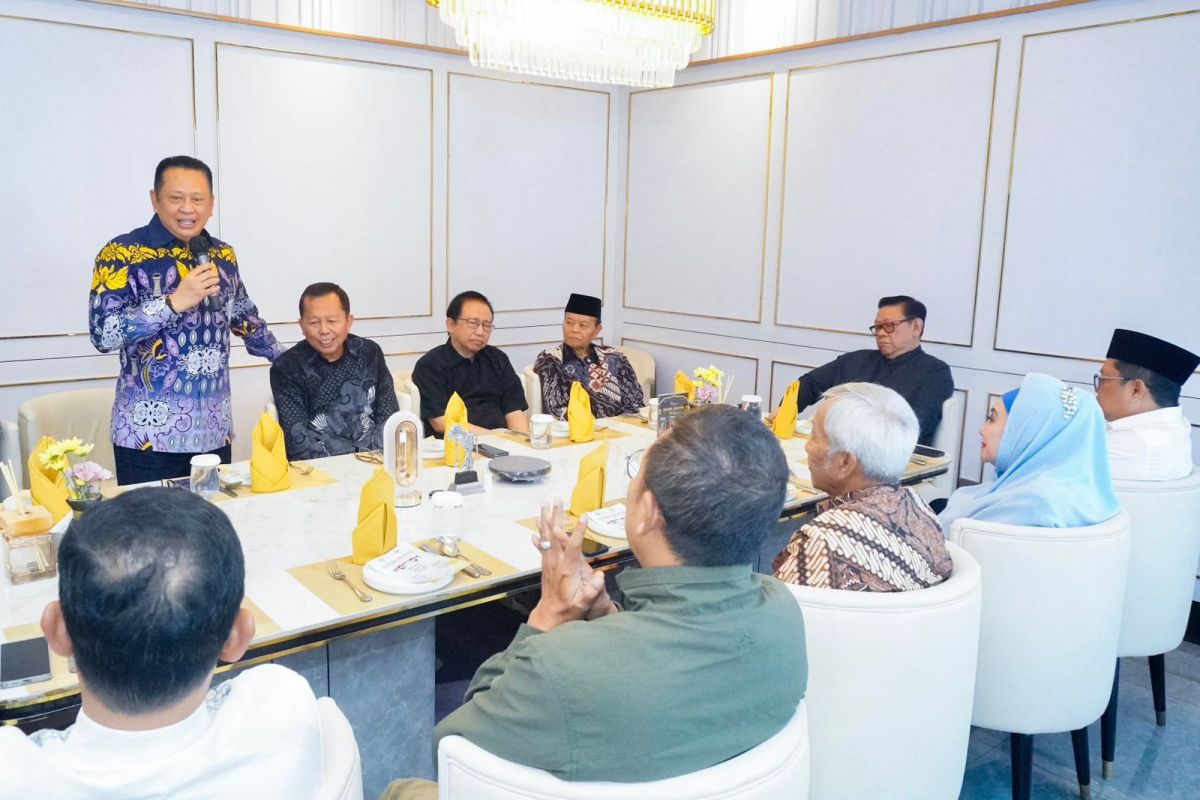
The idea of elevating the General Election Commission (KPU) to become the fourth branch of state power is academically interesting, but a careful assessment is first needed regarding whether there is indeed an urgent necessity to alter the design of state power distribution.
Jakarta (ANTARA) — Member of the Indonesian House of Representatives (DPR) RI Bambang Soesatyo has stated that the proposal to make the General Election Commission (KPU) into a fourth branch of state power is academically appealing but requires thorough and careful examination regarding its urgency.
According to him, caution is necessary because it concerns constitutional design and the balance of state power, which has thus far been based on the classical principle of Trias Politica, which divides three branches of state power into the executive, legislative, and judicial branches.
The proposal to make the KPU a fourth branch of state power was presented by constitutional law expert Prof. Jimly Asshiddiqie before members of Commission II of the Indonesian House of Representatives in Jakarta on Tuesday (10 March).
Soesatyo, whilst delivering a lecture to the Postgraduate Programme in Peace and Conflict Resolution at the Faculty of National Security of the Defence University (Unhan) on Friday (13 March), outlined his assessment regarding the proposal.
He noted that in-depth study is necessary given that in practice the three existing branches of state power still face many coordination problems, overlapping authorities, and competing interests. Since the amendment of the 1945 Constitution from 1999-2002, Indonesia’s constitutional system has undergone significant changes by strengthening the checks and balances mechanism between branches of state power.
The executive branch, he explained, is exercised by the president who is directly elected by the people, the legislative branch resides in the House of Representatives together with the People’s Consultative Assembly (MPR), whilst the judicial branch is exercised by judicial bodies such as the Supreme Court and Constitutional Court.
In practice, he continued, relations between these institutions frequently raise issues of overlapping authorities. Over the past two decades, we have witnessed many authority-related disputes between state institutions, he said, citing examples such as matters of law review, disputes over state institution authorities, and controversies over relations between law enforcement bodies. These conditions demonstrate that consolidation of the three existing branches of power still requires strengthening.
A postgraduate lecturer at Unhan, Soesatyo warned that changes to the structure of state power cannot be implemented simply. If the KPU is positioned as a new branch of power, the implications would be far-reaching, ranging from constitutional amendments, accountability mechanisms, to relations with other state institutions. Such changes would mean reopening the debate on amendments to the 1945 Constitution, which has thus far been the foundation of the constitutional system.
If the KPU becomes the fourth branch of power, the questions that follow would be numerous. Would other independent institutions such as the Corruption Eradication Commission (KPK), the Financial Services Authority (OJK), or Bank Indonesia also need to be placed within their own branch of power? If all independent institutions were incorporated into a new branch of power, the state structure could become increasingly complex.
The former Vice Chairman of the Indonesian Chamber of Commerce and Industry (KADIN) added that the main challenge for conducting elections in Indonesia currently relates more to the quality of election implementation, the integrity of election organisers, and the consolidation of the electoral system.
KPU data shows that the 2024 Indonesian general election involved 204 million registered voters and was one of the largest elections in the world, with more than 820,000 polling stations throughout Indonesia. This complexity, according to him, demands strengthening of professional and transparent election management.
The main focus should therefore be on improving the quality of election organisers, strengthening electoral regulations, and ensuring that organisers work independently and professionally, Soesatyo said. He concluded that whilst debate regarding a fourth branch of power is certainly important as an academic discourse, its implementation must be considered very carefully so as not to add further complexity to Indonesia’s constitutional system.