
Bamsoet: Kompolnas Must Be Positioned as an Independent Supervisory Institution
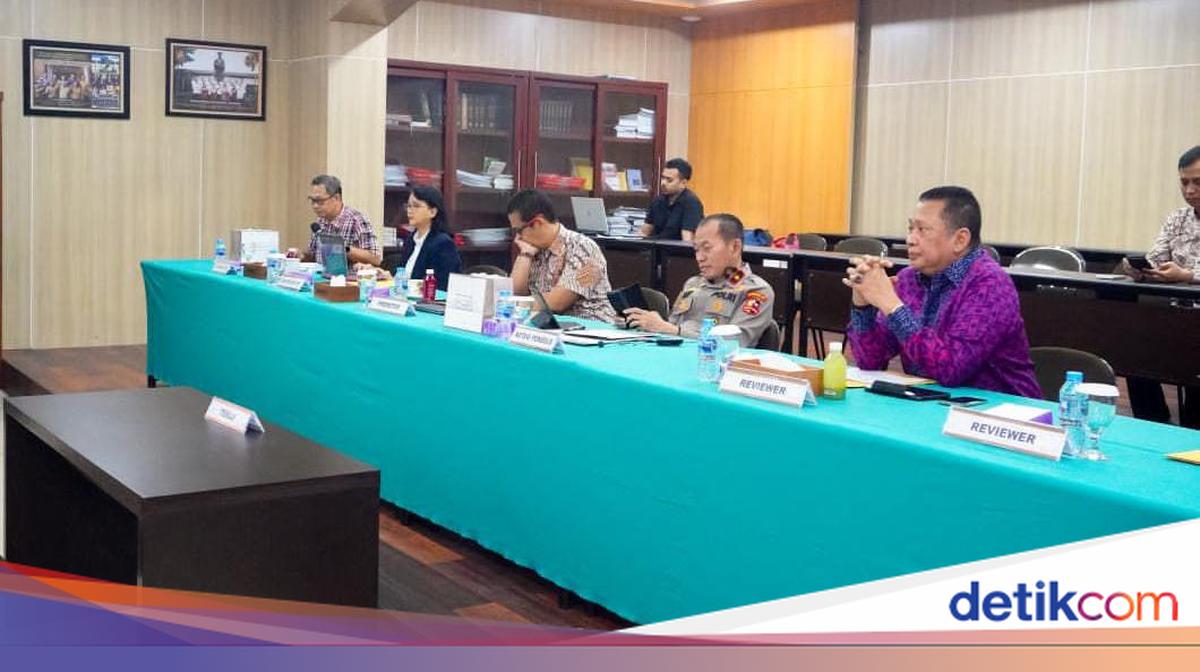
Member of the Indonesian House of Representatives, Bambang Soesatyo (Bamsoet), is advocating for the strengthening of the independence and institutional existence of the National Police Commission (Kompolnas). He considers this step an urgent need to ensure the accountability of the performance of the Republic of Indonesia National Police (Polri).
Amid the increasing complexity of Polri’s duties, from conventional law enforcement to handling cybercrime, Bamsoet assesses that an effective oversight mechanism is a primary prerequisite. This is important so that the extensive authority held by Polri continues to operate within the corridors of law and public interest.
“Kompolnas must be positioned as a truly independent oversight institution and become a strong check and balances instrument against Polri. With the extensive authority held by Polri, independent and credible oversight is a necessity in a democratic state,” said Bamsoet in his statement on Thursday (2/4/2026).
He conveyed this while serving as a Reviewer in the Doctoral Fitness Test Hearing for Police Science at the Indonesian Police College (PTIK) Training and Education Centre of Polri, Mohamad Rangga Afianto, at the PTIK Jakarta Campus Building today.
This 15th Chairman of the People’s Consultative Assembly (MPR RI) also highlighted the institutional governance of Kompolnas, which still leaves ambiguities regarding independence. He assesses that the presence of government elements in the membership structure is potentially influencing the objectivity of oversight.
In a healthy democratic system, Bamsoet emphasised that oversight institutions ideally stand with a clear distance from the supervised object. In this way, they can work professionally without intervention.
“As long as there is still direct government involvement in Kompolnas membership, its independence will always be questioned. This must be improved so that Kompolnas truly becomes an objective oversight body trusted by the public,” said Bamsoet.
This Postgraduate Lecturer at the National Defence University (UNHAN) added that practices in various countries show that strong police oversight institutions generally have a high level of independence, both from the executive and the police institution itself.
In the UK, for example, continued Bamsoet, the existence of the Independent Office for Police Conduct (IOPC) provides broader investigative authority compared to Kompolnas in Indonesia. Similar patterns are seen in several other countries that have given stronger mandates to external oversight institutions.
“We can learn from international practices. Many countries have given stronger authority to police oversight institutions, including in investigation and enforcement. This becomes an important reference for strengthening Kompolnas,” explained Bamsoet.
Bamsoet also urged that the authority of Kompolnas, which has so far been recommendatory, be reviewed. Because in many cases, the issued recommendations do not have strong binding power, thus limiting the effectiveness of oversight.
“The authority of Kompolnas must not stop at recommendations. There must be strengthening so that those recommendations have coercive power, especially in cases of legal violations involving police apparatus,” concluded Bamsoet.