
Bali Students Sweep International Robo Soccer Titles at Codeavour 7.0
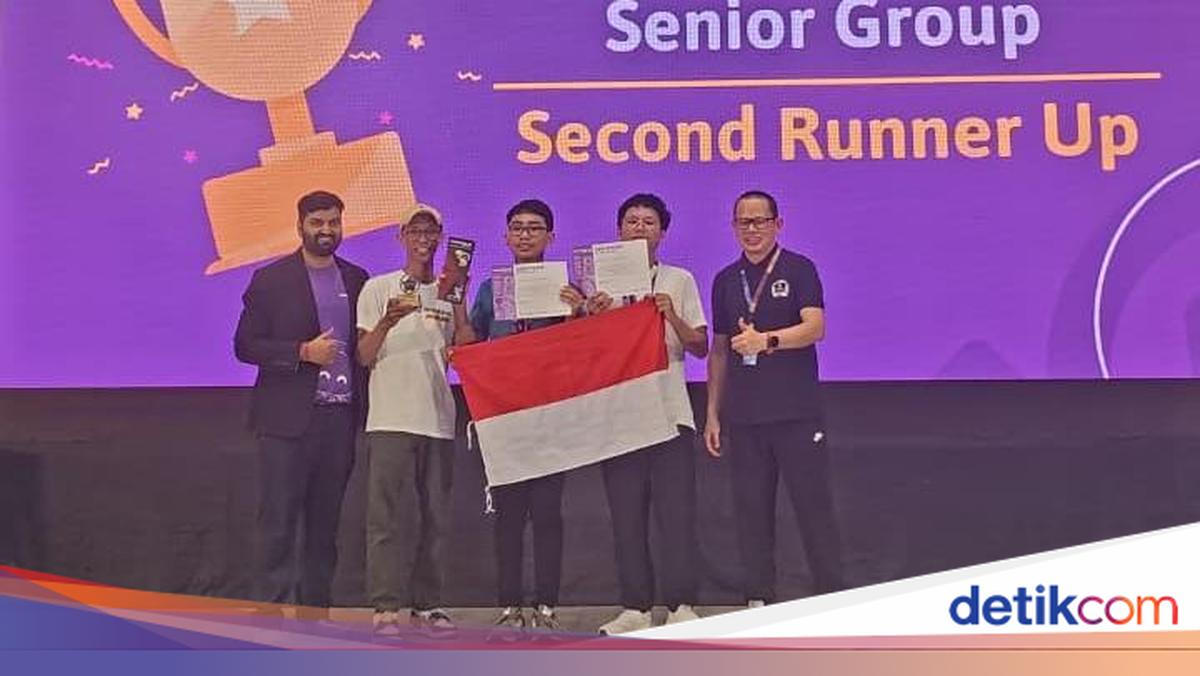
Six students from Bali swept the Robo Soccer category at the international Codeavour 7.0 International Showdown at BINUS University Alam Sutera in Jakarta. The prestigious competition in coding, artificial intelligence (AI), and robotics was attended by more than 1,500 participants from various countries.
The event took place on 16-17 May 2026. The Bali students, coached by Koding Akademi, competed in Track 3, the special category for robot soccer development, which for the first time was contested at Codeavour.
Founder of Koding Akademi, AA Gde Rai Adi P Sanjaya, said he was proud of the achievements by Bali students. According to him, the achievement demonstrates that Bali students can compete with participants from major cities as well as other countries.
“This is not just the six students’ achievement, but tangible evidence that Bali’s youths have significant ability and potential in technology. They progressed and excelled because of hard work, the coaching process, and extraordinary dedication,” said Agung Adi in a statement on Thursday (21 May 2026).
In the event, the duo Victor Nera Umardicha and Zachary Griffin Handoko from SMA Santo Yoseph Denpasar won second place in the Robo Soccer Senior category. Then, Putu Wirahadi Putra from SMAN 1 Sukawati together with I Gusti Made Priya Abhiseka Nareswara from SMPN 1 Gianyar secured third place.
Next, the pair Jeremy Huan En Yu from Santosa Intercultural School and Gde Erland Dewantara Kurniawan from Bali Public School also clinched second place in the Robo Soccer Junior category. Not only were participants required to master coding and AI, but participants also had to design robots that are fast, sturdy, and agile in the arena.
Agung Adi said the participants had undergone intensive preparation before competing. This included refining the coding, strengthening the robot hardware, and simulating match strategies against international opponents. Moreover, they also underwent mental coaching and confidence-building.
According to Agung Adi, the rapid development of technology makes teaching coding and AI important to introduce from school age. He said coding not only teaches technical skills but also builds logical, creative thinking and problem-solving abilities.
“We want to build an ecosystem where Bali’s young people can grow and dare to showcase their abilities at the global level. Our hope is that they return home with the confidence that they can stand eye-to-eye with students from around the world,” he added.
Team mentor, Vieri Nurgracie Al Ayyubi, said that Bali participants have an edge because they were equipped with robotics fundamentals from the start of their studies. “The advantage of Bali’s youths is that they already understand the fundamentals of robotics and coding, making them better prepared to configure the robot and develop strategies during the competition,” he said.
Diketahui, the final round was tightly contested. The Bali team faced international opponents using robots with four drive motors, while the Bali team’s robot used only two motors.
Nevertheless, the achievement demonstrates the growing interest of Bali’s younger generation in technology, robotics, and AI. If coding was previously seen as a niche field for aspiring programmers, it is now viewed as a vehicle for creativity, innovation, and the development of the young generation as they face the digital era.