
Bali Health Department warns of rubbish burning dangers to respiratory health
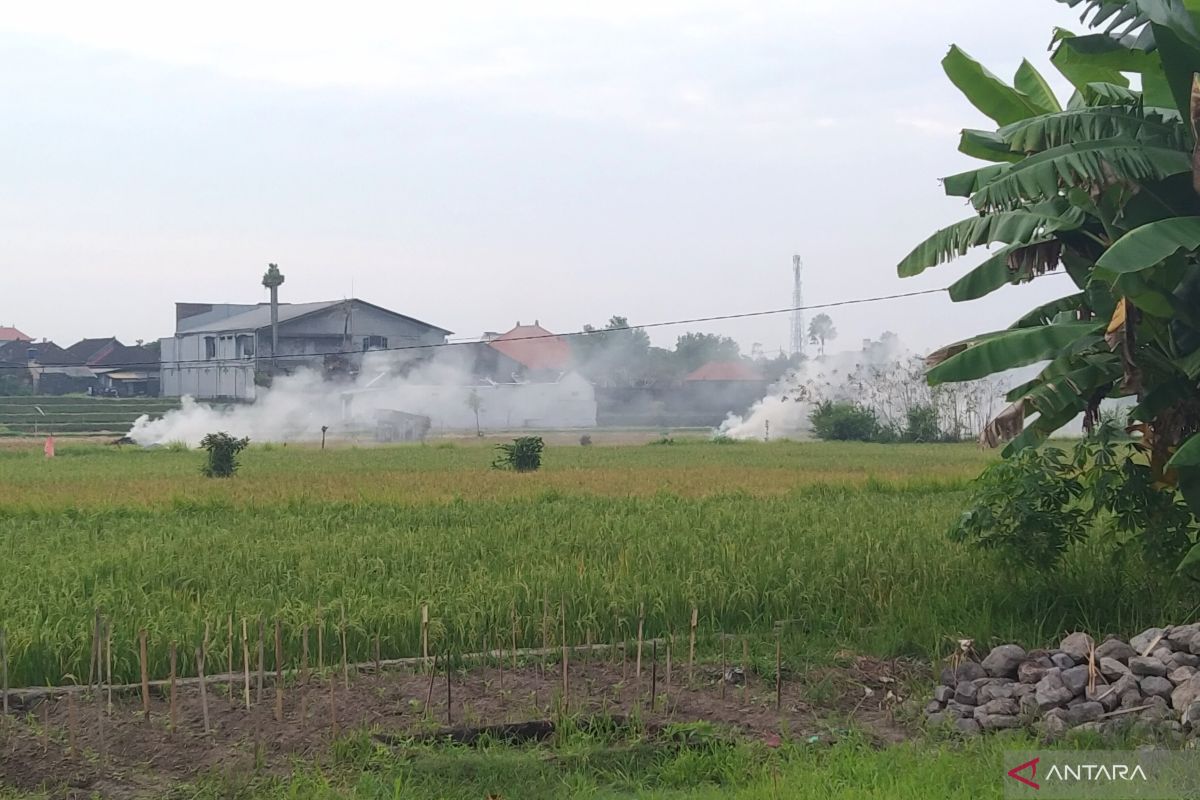
Denpasar (ANTARA) - The Bali Health Department (Dinkes) has reminded the public of the dangers of smoke from rubbish burning to respiratory health amid the prevalence of illegal burning in Denpasar and Badung.
“Smoke from this burning contains a mixture of harmful gases and small PM2.5 particles that can be inhaled into the lungs, impacting acute and chronic respiratory disorders,” said the Head of the Disease Prevention and Control Division of the Bali Health Department, I Gusti Ayu Raka Susanti.
“If from burning plastic rubbish, it can produce nitrogen oxide, sulphur dioxide, volatile organic chemicals (VOC), not to mention benzo[a]pyrene and polyaromatic hydrocarbons, both of which have been proven to cause cancer,” she said in Denpasar on Wednesday.
Meanwhile, in Denpasar and Badung, rubbish burning is rampant in homes and open spaces, particularly since Wednesday (1/4), when the Ministry of Environment and Forestry stipulated that the Suwung landfill only accepts residual waste.
As a result of this waste restriction, much of the public’s rubbish is not collected by self-managed services, due to being overwhelmed with sorting and storing organic waste, leading to phenomena such as dumping rubbish into rivers and burning it in homes or open land.
Regarding such actions, the Bali Health Department states there is a high potential for people inhaling the burning results to experience acute respiratory tract infections (ISPA).
“ISPA is very possible, because respiratory complaints are one of the causes of air pollution, so it is advised to use masks and avoid smoke exposure,” said Raka Susanti.
“Burning wooden rubbish and branches can cause serious negative health impacts on humans, so every rubbish burning, whether plastic or wood and branches, still poses health impacts,” she said.
The emergence of symptoms due to burning smoke varies, with the Bali Health Department noting that the more frequent and abundant the smoke inhaled, the quicker respiratory disease symptoms will appear.
To this end, they continue to monitor ISPA conditions in Bali, especially since ISPA is one of the diseases with outbreak potential, thus always monitored for any case increases through the Early Warning and Response System (SKDR).
She said that up to now, there has been no surge in cases, so there are no daily reports from the lowest-level health facilities.
Referring to data from the Bali Health Department, there were 89,843 cases of acute respiratory illness in the January-March 2026 period, an increase compared to the same period the previous year with 86,030 cases.
On average, in one month, health facilities in Bali find 29,900 ISPA cases, and up to now, the condition is stated as no surge, still within the average scope.
“This April, reports from districts/cities have not yet come in, because there has been no significant increase, unless there is a very significant increase, then it will be immediately reported for us to conduct an investigation,” said Raka Susanti.