
Bali cattle population declines, provincial government tightens outbound shipments from the island
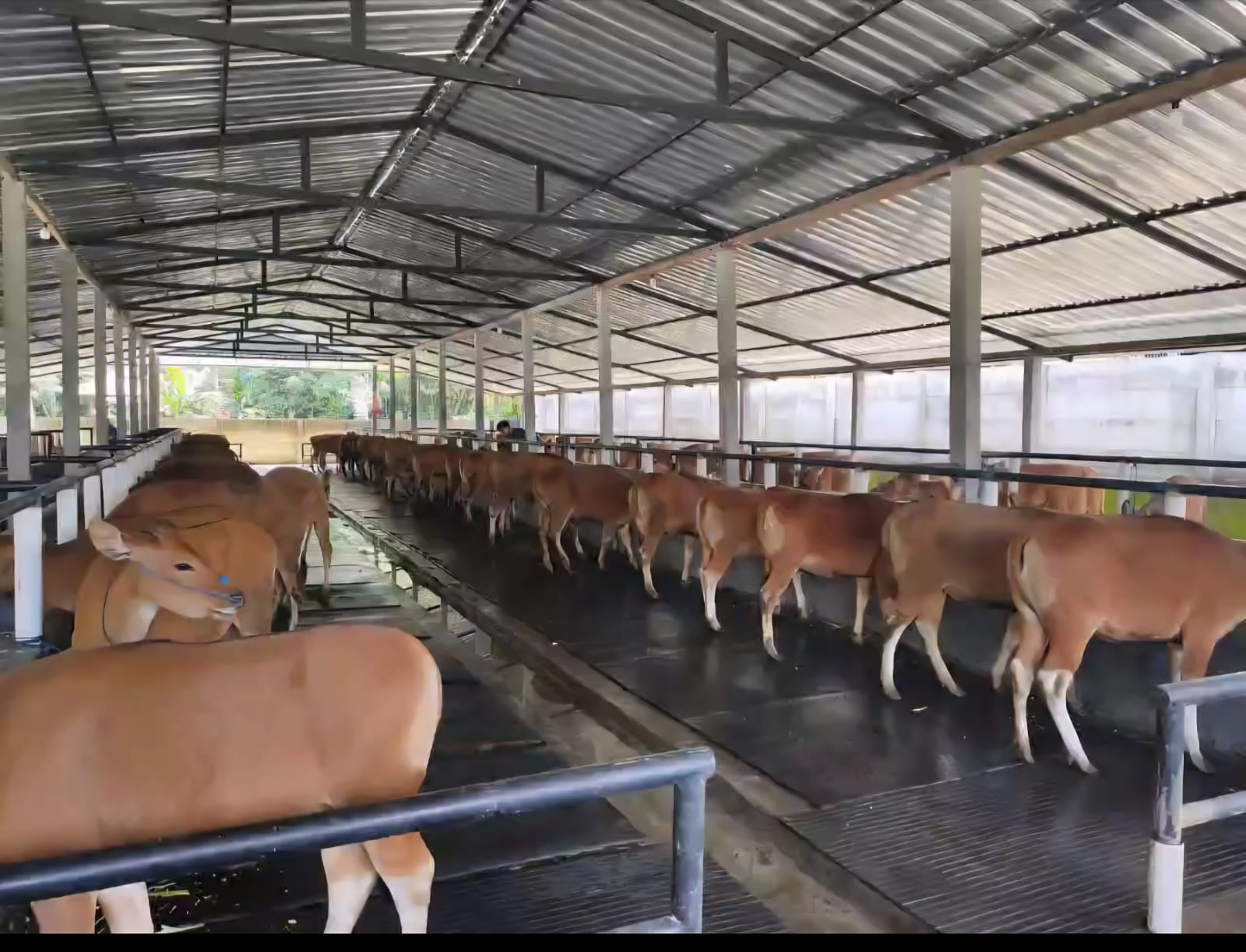
The Bali Provincial Government has begun tightening oversight of outbound shipments of Bali cattle from the island in response to the trend of declining local livestock populations in recent years. The regulation of cattle export quotas is now being tightened through population analysis to safeguard the sustainability of Bali cattle as a flagship germplasm resource, while protecting the needs of local farmers.
The head of the Bali Provincial Office of Agriculture and Food Security, Wayan Sunada, stressed that each Bali cattle export quota is set based on a comprehensive population calculation. The government factors in the number of male and female cattle, birth rates, and even the livestock mortality rate before deciding how many cattle may leave Bali.
“The Bali cattle export quota is set by the Governor of Bali based on population analysis to maintain herd balance,” said Wayan Sunada, on Monday (18 May).
The statement came after complaints from several farmers and operators of cattle shipping businesses who did not receive export quotas. The situation occurred because the additional quotas opened by the government ran out quickly.
According to Sunada, the entire process of applying for cattle shipment permits is conducted digitally through the national livestock traffic application owned by the central government. The system applies verification based on the order in which documents are submitted.
“As soon as quotas are added, applicants who are ready immediately upload the required documents. The system will verify in the order in which the applications were submitted,” he said.
Consequently, applicants who are slow to upload documents risk not obtaining quotas because the available capacity has already been filled. This situation demonstrates strong demand for Bali cattle from outside the region, particularly ahead of the needs of the sacrificial animal market and meat supplies.
CHALLENGE OF PROTECTING THE POPULATION
On the other hand, local governments face the challenge of preserving the Bali cattle population, which in recent years has fluctuated and tended to decline. Data from the Bali Provincial Office of Agriculture and Food Security shows that in 2021 the Bali cattle population reached 558,463 head. However in 2022 the number fell drastically to 380,559 head, down by about 177,904 head.
Although it briefly rose to 391,455 head in 2023 and 396,717 head in 2024, the population again declined in 2025 to 392,160 head. That decline is a serious concern for the regional government as Bali cattle are among the leading livestock commodities and form an identity of farming on the Island of the Gods.
Sunada explained that quota control is necessary so that the local population is not exhausted due to high external demand. In addition to protecting the population, the policy also aims to ensure the availability of breeding stock remains secure for local breeders.
“This quota regulation is important to ensure the sustainability of Bali cattle and that the needs of farmers in the region are not disrupted,” he said.
Based on the latest population analysis, the Bali Provincial Government has determined that up to 53,500 head of cattle can be exported from Bali. Initially the quota was set at 50,000 head, with a reserve of 3,500 head prepared until December 2025. Subsequently, on 29 April 2026 the government added another 3,500 head to the quota. Following that, a further new quota of 3,000 head was issued, and the government is currently proposing a further addition of 3,000 head.
Nevertheless, the government ensures that all quota additions are based on livestock population analyses. The Bali provincial government does not want high market demand to threaten the sustainability of Bali cattle in their home region.
For Bali, Bali cattle are not merely an economic commodity. This local breed has long been a key part of the rural farming sector and is known for its resilience and high-quality meat. Therefore, controlling livestock movement is a strategic step to balance market needs with population conservation.
Amid rising national meat demand, local governments now face the challenge of keeping Bali cattle as a strength of local farming rather than seeing their population decline due to high outflow to other regions.