
Bali Becomes a Magnet for Global Property Investment
Indonesia continues to strengthen its position as a global investment destination, driven by stable economic growth and increasingly rapid infrastructure development. The tourism and property sectors have become the main magnets for foreign investors in recent years.
The Ministry of Investment and Downstreaming/BKPM records that international capital flows are largely directed towards regions with developing tourism infrastructure, such as Bali. The high interest from investors is not only triggered by market potential but also by the Indonesian government’s active steps in global economic diplomacy.
Throughout 2025, Indonesia has been involved in various international forums, from the World Economic Forum in Davos to investment forums in Abu Dhabi. Several bilateral meetings, including between President Prabowo Subianto and French President Emmanuel Macron, have resulted in strategic agreements in the fields of economy and infrastructure. These steps are seen as capable of reducing investment risks while creating a more stable business climate.
As a result, investment flows into the real estate and tourism sectors have increased significantly. Data from the Central Statistics Agency (BPS) shows that the number of foreign tourist visits reached 15.39 million throughout 2025, which has also driven demand for property and tourism infrastructure.
Co-Founder of Seven Sky Villas, Dormidonov Alexander Yurievich, stated that the increase in tourists creates a multiplier effect in the economy.
“Development projects not only improve infrastructure quality but also open up jobs and encourage growth in the services sector,” he said on Tuesday (31/3).
The construction sector itself currently absorbs more than 8 million workers with growth of around 5%-6% per year.
In addition to creating direct employment, property development also triggers growth in the local economic ecosystem, including SMEs, retail, transportation, and creative services.
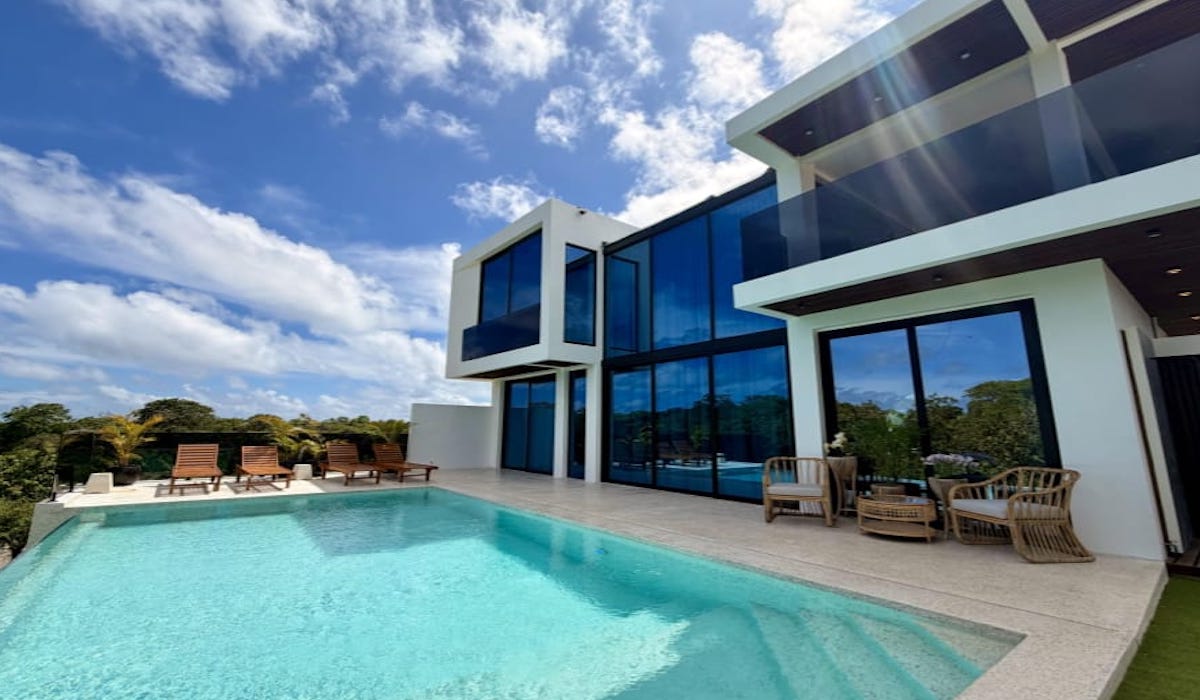
One of the projects currently being developed is OctaSun Residence in South Bali by Seven Sky Villas.
This complex has 26 premium villas with five-star hotel-equivalent facilities, such as a spa, fitness area, co-working space, and professional concierge services.
According to the developer, properties in Bali have an annual return potential of around 12%-15%, with an average occupancy rate of 76%-78% and up to 90% during peak season.
In fact, property values can increase by up to 25%-30% during the construction period, with an investment payback period of around 6-7 years.
On a macro level, this trend is supported by Indonesia’s consistent economic growth of around 5% per year, making it the largest economy in Southeast Asia.
With a combination of economic stability, government support, and large market potential, Indonesia, particularly Bali, is projected to remain a primary destination for global investment in the tourism and property sectors.