
Balen: From Rebel Figure to Prime Minister of Nepal
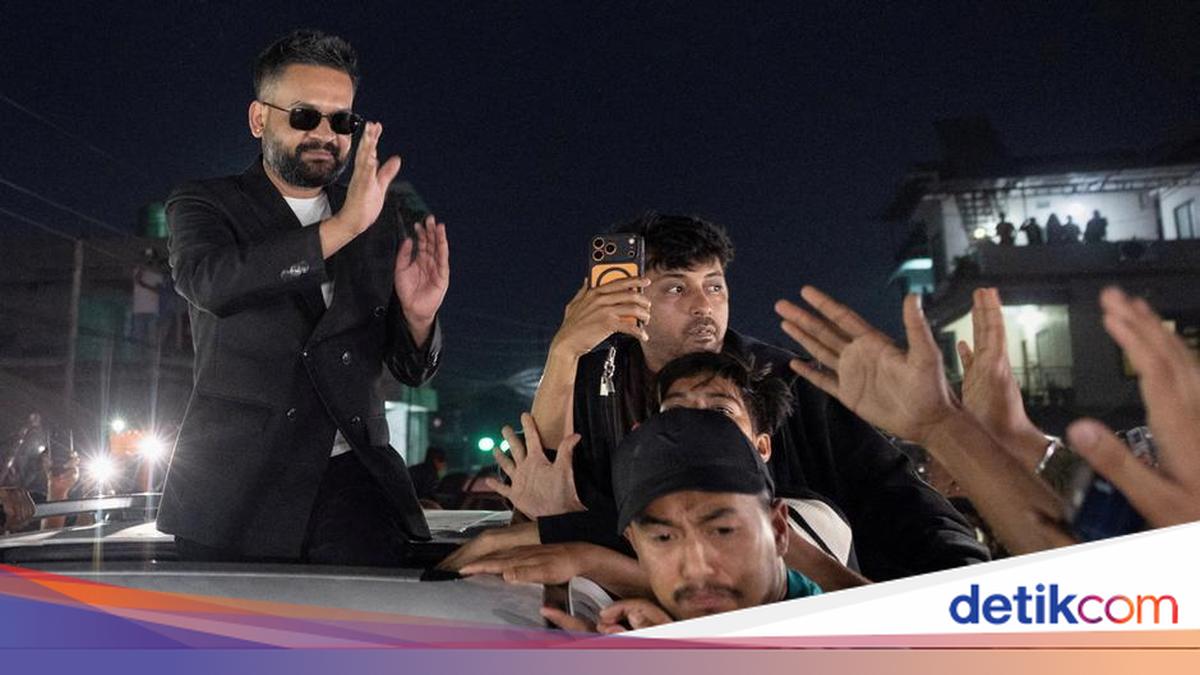
Thousands of people took to the streets in Damak, Jhapa District in eastern Nepal on the evening of 7 March. They ran following a car moving slowly through an atmosphere filled with joy, celebration, and hope.
Their cheers grew louder each time the man standing through the sunroof raised his hand or greeted the crowd with clasped palms.
“Balen! Balen! Balen!” they shouted.
At the centre of this euphoria was Balendra Shah, better known as Balen. At 35 years old, the former Mayor of Kathmandu emerged as one of Nepal’s most unexpected national political figures. For many, he is a prospective Prime Minister of Nepal.
On Friday (13 March), Nepal’s Election Commission confirmed a landslide victory for Balen and his party, the Rastriya Swatantra Party (RSP).
His ascent to the national stage was far from conventional.
Maximum victory for a minimalist candidate
Balen Shah’s success was marked by an unusual strategy: minimal public speaking. He rarely appeared in public or engaged in lengthy interactions with the media. When speaking, he chose his words very carefully, an approach analysts considered a deliberate campaign tactic.
Dressed entirely in black with signature black sunglasses, Balen travelled to various constituencies to meet voters directly. Sometimes he drove himself to campaign locations. On other occasions, he walked among his supporters. He waved, shook hands, listened to citizens, and tasted local cuisine. However, he consistently avoided lengthy speeches and grand promises.
Aside from a few campaigns, his public appearances were typically brief. When addressing crowds, Balen relied on local dialect or short statements to build connections with voters.
Election results demonstrated that this minimalist approach succeeded. Balen and his party achieved a landslide victory. From 275 parliamentary seats in Nepal, the RSP won 182 seats.
For many voters, what mattered was not only who Balen was, but also that he was not part of the old elite often regarded as corrupt and self-serving.
“Balen has given hope to young people; he has earned their trust. He is not involved in Nepal’s corruption,” said one voter to DW.
Even in victory, Balen maintained his quiet demeanor. Standing through his vehicle’s sunroof, he clasped his hands as a sign of gratitude. He then held up a poster reading: “You deserve congratulations. This victory belongs to you.”
The Balen Effect
A structural engineer by profession and poet and rapper by passion, Balen joined the RSP shortly before the election and quickly became one of the party’s senior leaders. The party even announced him as its Prime Minister candidate.
Analysts said his personal popularity was a determining factor.
“The RSP’s landslide victory was largely centred on Balen,” said political analyst Krishna Khanal to DW.
“Once the party presented him as a Prime Minister candidate, the impact on voters was very strong,” Khanal continued.
Nepal’s political landscape had actually changed well before voting took place. In September, a nationwide “Gen Z movement” triggered by anger at corruption and poor governance forced the then Prime Minister, KP Sharma Oli, to resign. President Ram Chandra Paudel subsequently appointed a caretaker government as his replacement.
At that time, many activists initially encouraged Balen to lead the caretaker government.
“However, when he instead supported former Chief Justice Sushila Karki, his popularity increased further,” said Khanal.
This move was viewed as a tactical manoeuvre that allowed Balen to avoid direct leadership roles and focus on the election.
Challenging the dominance of old factions
Many observers expected Balen to run as a parliamentary candidate from Kathmandu, where he had built strong support during his tenure as mayor. However, he instead announced his candidacy from Jhapa 5 constituency, approximately 330 kilometres east of the capital.
For several decades, the district had been known as the political base of former Prime Minister KP Sharma Oli. Before this election, Oli had contested seven elections in various Jhapa constituencies, winning six of them. He also served four times as Prime Minister of Nepal.
However, the political landscape changed following Gen Z protests.
When votes were counted, Balen won decisively with 68,348 votes, defeating Oli who received 18,734 votes.
According to analyst Krishna Khanal, the result confirmed growing public frustration with mainstream political forces. “People are tired of old parties because of their poor performance and the corrupt image attached to them,” he said.
A short political journey
Compared with senior political figures in Nepal, Balen’s rise has been remarkably rapid. He entered electoral politics during local elections in 2022, running as an independent candidate for Mayor of Kathmandu. Defeating candidates from major parties, he won and became Kathmandu’s first independent mayor.
During his tenure, several initiatives received public recognition, including reforms in community schools, scholarship programmes, parking management, and efforts to preserve archaeological heritage sites.
However, a performance report from the National Natural Resources and Fiscal Commission ranked Kathmandu at the bottom amongst six metropolitan cities in Nepal, based on indicators such as budget management and administrative efficiency. Nevertheless, analysts noted that Balen’s hands-on leadership style helped maintain his appeal with the public.
“Many young voters judge politicians not [solely on their background],” the article concluded, though the final section was incomplete in the original text.