
Bakrie & Brothers Posts Nearly 50 Per Cent Profit Growth in 2025, Supported by This
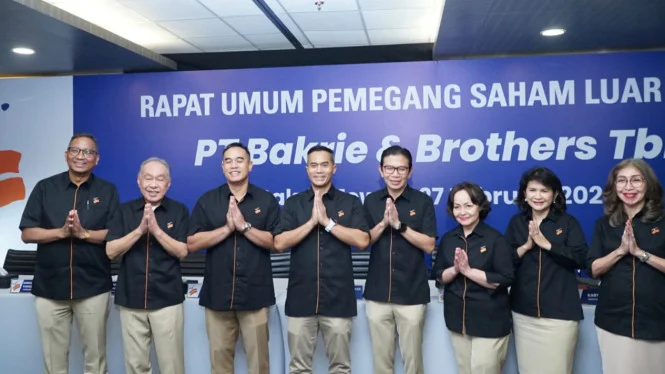
PT Bakrie & Brothers Tbk (BNBR) recorded net profit growth of nearly 50 per cent on a year-on-year basis in 2025. This increase was driven by solid performance from the company’s subsidiaries, particularly in the electric mobility, infrastructure, and steel industries.
Throughout 2025, net profit surged 49.6 per cent to Rp 502.74 billion from Rp 336.04 billion in the previous year. Meanwhile, the company’s net revenue stood at Rp 3.74 trillion, down slightly 3.28 per cent year-on-year compared to the previous year.
Chief Executive Officer of BNBR, Anindya N. Bakrie, stated that the profit surge was due to the successful acquisition of 90 per cent of the Cimanggis-Cibitung Tollway. However, this acquisition resulted in an increase in the company’s debt.
“On one hand, BNBR’s profit rose 50 per cent to Rp 500 billion in 2025. The year 2025 was also a good year because we successfully acquired a 90 per cent stake in Cimanggis-Cibitung Tollways,” said Anin following an Extraordinary General Meeting of Shareholders (RUPSLB) in Jakarta on Friday, 27 February 2026.
Chief Financial Officer of BNBR, Roy Hendrajanto M. Sakti, highlighted the solid performance of the company amid uncertain global economic conditions.
Electric Vehicle Sector Becomes Growth Engine
BNBR’s revenue contributions stem from several main business lines. PT Bakrie Metal Industries (BMI) Group was the largest contributor with revenue of Rp 2.18 trillion.
The second position was held by a subsidiary in the electric vehicle sector, PT VKTR Teknologi Mobilitas Tbk (VKTR), contributing Rp 1.08 trillion in 2025. This growth was driven by the implementation of electric buses, electric commercial vehicles, and stable contributions from the automotive components business.
VKTR managed to maintain positive performance despite the slowdown in the national automotive market. The company focused on the commercial vehicle segment supported by the logistics, industrial, and infrastructure sectors. Going forward, VKTR targets significant growth through 2030 in line with the acceleration of national transport electrification.
The company is also actively collaborating with various parties, including public transport operators such as TransJakarta, ministries, regional governments, state-owned enterprises, and the private sector. Additionally, VKTR is expanding the utilisation of electric vehicles in the logistics, mining, construction, plantation, and waste management sectors based on Waste-to-Energy (WtE) technology.