
Bakom: Communicating programmes is as important as programme implementation
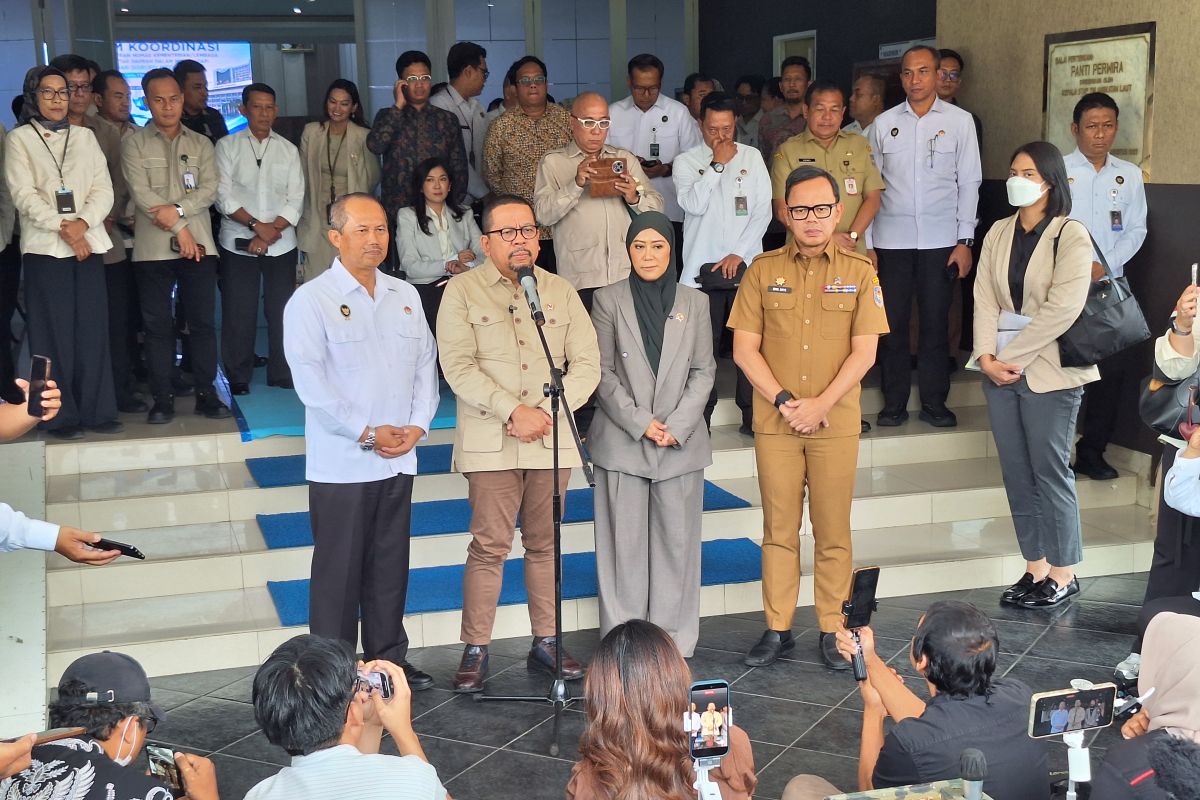
Jakarta (ANTARA) - The Head of the Indonesian Government Communications Agency (Bakom), Muhammad Qodari, has asserted that the communication of government policies and programmes is just as important as the implementation of those programmes and policies themselves.
“Communicating a programme is as important as the programme itself. Therefore, programme communication must be carried out so that support for these programmes improves and the results are more optimal,” said Qodlar during the ‘Public Relations Coordination Body (Bakohumas) Coordination Forum’ in Jakarta on Tuesday.
Qodari stated that Bakom RI serves as the coordinator for government communications, which necessitates support from the public relations communities within ministries, agencies, and local governments.
According to him, the government’s public relations network, which is spread across Indonesia, possesses significant strength if coordinated and utilised optimally.
“This public relations community, if all its components are totalled nationally, is actually quite large, comprising over 8,000 elements, and we will coordinate them more optimally,” he said.
He noted that the rapid flow of information and the development of social media mean that the government cannot simply wait for specific moments to convey information regarding policies and programmes.
The government must maintain a routine communication agenda to ensure that public information spaces are continuously filled with various updates regarding government activities and programmes.
“In this current era, with such a heavy flow of information and the existence of social media, the government cannot wait; it must have a routine schedule and a communication agenda that keeps these information spaces continuously occupied,” said Qodari.
He added that the information provided should also demonstrate how government programmes deliver a tangible impact to the community.
In this way, government programmes are not merely understood as policies or programmes on paper, but possess a face that represents the people experiencing the benefits.
“This ensures that programmes are not just programmes, but that they have a face. Whose face? The face of the Indonesian people, the face of the Indonesian nation, the face of our children, and those who feel the benefits of the programmes organised by the government,” Qodari concluded.