
Bahrain, Pearl Seeker in the Heart of the Persian Gulf
Pearl diving: A maritime heritage
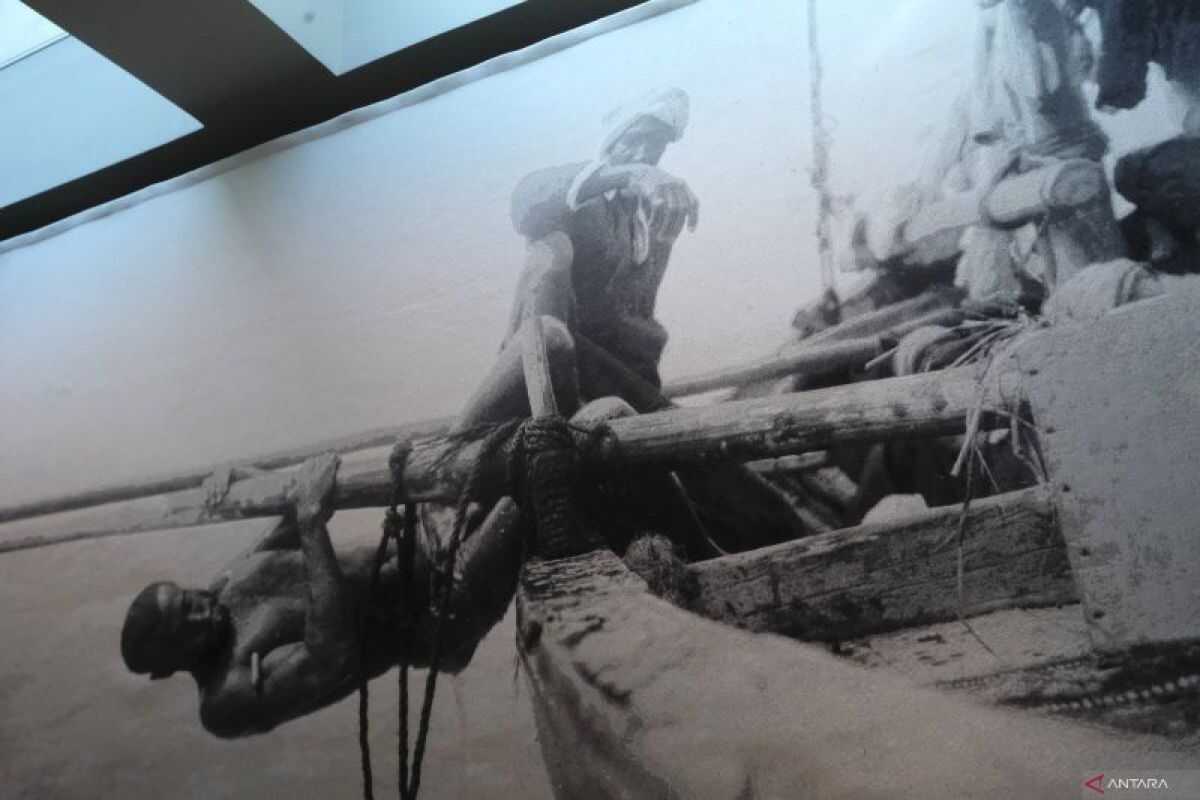
A verse displayed on the wall of an old house in Muharraq, Bahrain, captures the essence of the pearl diving tradition: “From the depth of the sea I have risen, O Lord, twice times ten I went down below. The date palm peg it held my nose, the weights on the rope, they anchored my toes.” These rhyming verses are excerpts from mawwāl, traditional songs sung by pearl divers whilst navigating the waters of the Persian Gulf.
Beyond accompanying voyages, these songs reflected the harsh realities of the divers’ lives when the pearl industry served as Bahrain’s primary economic support. Today, the profession of pearl diver—known in Arabic as ghawwās—endures not merely as traditional labour but as a living expression of cultural identity and testament to an economic era predating oil discovery, when the nation’s prosperity flowed from the depths of the sea.
Abbas Al-Faraj, a 41-year-old tour guide from Bahrain’s Ministry of Tourism, stands before a large black-and-white photograph in what is now a museum, pointing to images of pearl divers whilst explaining to journalists: “My ancestors dived without oxygen tanks. They relied solely on their breath-holding capacity and simple equipment they made themselves.”
Al-Faraj is himself a pearl diver from a generational diving family, part of a cohort that depended entirely on the sea. His story is not unique. Before oil, nearly the entire nation relied on maritime livelihoods.
Pearling Path, a quarter in Muharraq, now serves as a living museum of Bahrain’s pearl industry history. Houses constructed from coral stone bonded with clay, their pale brown hues blending with desert sand, line narrow alleyways once frequented by pearl merchants. Today, these passages bustle with tourists retracing the footsteps of history.
Pearl as economic foundation
Centuries before becoming known as an oil-producing nation, Bahrain built its wealth on pearls. By 1877, pearls accounted for approximately three-quarters of Bahrain’s total exports. By 1905, Bahrain managed nearly half of the Persian Gulf’s pearl trade, its strategic location on trading routes between Iraq and India making it a crucial hub for this global commodity market.
Each summer, thousands of divers set sail seeking pearls in Persian Gulf waters. The industry supported a complex social structure: ship captains (nakhuda), divers (ghawwās), rope-pullers (saib), and merchants (tawash).
“Pearls represent one of the most difficult yet profitable commodities to trade,” Al-Faraj explains. “What merchants sought was something exceptionally rare.”