
Bahlil Urges Public to Conserve Energy Consumption—Use Public Transport
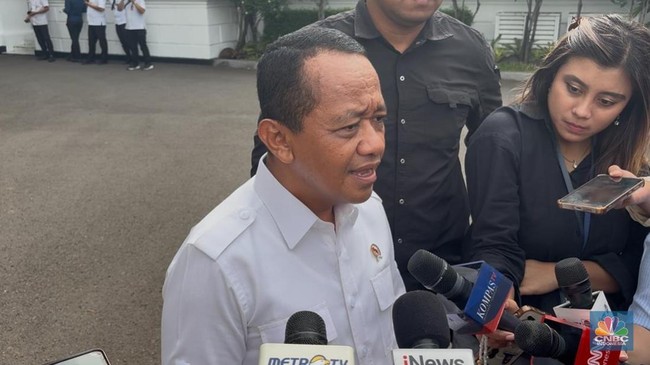
Jakarta — The government is urging the public to use energy wisely, particularly amid global oil and gas supply disruptions caused by conflicts in the Middle East region.
Energy and Mineral Resources Minister Bahlil Lahadalia has asked the public to conserve energy consumption amid this uncertain situation.
“We need public support. Why? If something isn’t essential, don’t use it. For example, electricity. If you don’t need everything switched on, turn it off and save. If it’s air conditioning, don’t use it. Besides, you’re paying more for it anyway—that’s subsidised energy we’re using,” he said on the Energy Ministry’s Bukan Abuleke podcast.
The ministry also asked the public to use public transport when travelling. This is also part of efforts to improve domestic energy consumption efficiency.
“If you can use public transport, don’t use a private car. Personally, sometimes if I’m just going to the office, I don’t drive anywhere unnecessarily. Let’s be smart about saving. Saving leads to prosperity. Extravagance leads to hardship,” he added.
For context, several neighbouring countries have already implemented energy-saving policies, such as Thailand, Philippines, and Vietnam.
Thailand
The Thai government has asked its civil servants to work from home if possible as part of national energy-saving measures.
Authorities have also requested government offices to raise air conditioning settings to 26 degrees Celsius to reduce electricity consumption.
“The government wants all sectors to use resources wisely and effectively,” the Thai government said in an official statement.
The government has also asked officials to avoid overseas travel during this period of energy uncertainty.
These measures were taken after the Thai government last week confirmed it had secured sufficient oil supplies for approximately two months ahead.
However, to protect energy reserves, Thailand has also decided to temporarily halt oil exports.
Philippines
Philippine President Ferdinand Marcos Jr. has announced the implementation of a four-day working week in several Philippine executive branch offices starting 9 March.
Marcos said this move is part of the government’s efforts to save energy and reduce fuel consumption as global oil prices surge following conflicts in oil-producing regions.
“From the government’s side, starting Monday, 9 March, we will temporarily implement a four-day working week in some executive branch offices. This does not include offices providing emergency or essential services, such as police, fire departments, and offices providing frontline services to the public,” Marcos said.
He also ordered all government agencies to undertake significant energy-saving measures.
“In addition, I have directed all government agencies to save and reduce electricity consumption and oil fuel spending by 10 to 20 per cent,” he said.
Besides reducing working days, Marcos also temporarily banned official travel and government activities deemed non-urgent, including meetings that could actually be held within offices.
Several government institutions have even begun preparing additional measures. Starting 13 March, the Philippine Department of Trade and Industry will shift its office operations in Makati City to remote working systems.
For the private sector, alternative work arrangements were actually already permitted through the Telecommuting Act passed in 2018.
Vietnam
Meanwhile, in Vietnam, the government has taken a different approach by eliminating tariffs on certain imported oil products.
The policy, which took effect on Monday, is intended to prevent potential fuel shortages whilst stabilising the domestic market.
The Vietnamese government has also encouraged companies to allow employees to work from home if possible.
According to the government statement on its official website, this move is expected to reduce fuel consumption.
Additionally, the government in Hanoi has also urged the public to reduce private vehicle use and switch to public transport, cycling, or car-sharing.
Despite various measures being taken, the impact of energy disruptions is still being felt in Vietnam.
Unleaded petrol prices in the country have surged more than 20 per cent since the conflict between the United States and Israel against Iran began more than a week ago.
The price surge has sparked long queues at several fuel stations.
In the capital Hanoi, thousands of motorcycle riders were seen queuing to buy petrol on Tuesday.
So far, Vietnam has managed to avoid widespread fuel shortages.
However, government media reported that dozens of small-scale fuel stations have begun temporarily closing operations or reducing service hours due to dwindling supplies.