
Bahlil to Speed up Conversion of Gasoline Motorcycles to Electric Motorcycles: Here's the Programme's Track Record
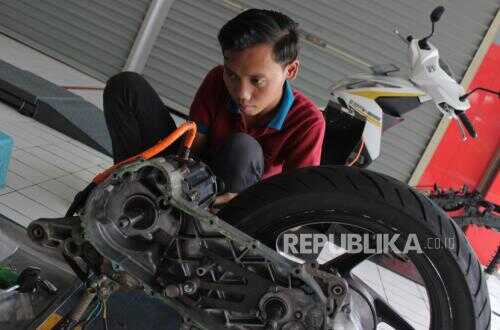
The government is pursuing an accelerated shift to electric vehicles through a strategy to convert conventional motorcycles to electric. The move is part of the national energy transition. Moreover, energy crisis risks loom due to disruptions to oil trade in the Strait of Hormuz resulting from the US–Israel conflict with Iran. Energy and Mineral Resources Minister Bahlil Lahadalia, who also chairs the Energy Transition Task Force, is preparing a phased plan to implement motor vehicle conversions to electric. This mostly targets motorcycles, which number around 120 million in Indonesia. ‘Our motor vehicles—about 120 million petrol-powered motorcycles—will be gradually converted to electric,’ Bahlil said in a statement at the State Palace, Jakarta, on Thursday (5 March 2026). Then, what is the track record of the electric motorcycle conversion programme that has been running in recent years? Bahlil said that each year around 200,000 motorcycles have been converted from petrol to electric. Looking ahead, the programme is expected to accelerate as technology advances and costs for conversions fall. ‘Now cheaper technology is available, so perhaps around Rp 5–6 million. The cheaper it gets,’ he said. Since 2023, the government has also launched an incentive programme to carry out electric motorcycle conversions. However, the disbursement of subsidies has remained relatively small. According to Republika’s reporting, the Director General of New and Renewable Energy and Energy Conservation (EBTKE) at the Ministry of Energy and Mineral Resources, Eniya Listiani Dewi, said that in 2024 the government distributed 1,111 electric motorcycle conversion incentives, up from 145 in 2023. The ESDM Ministry disclosed that electric motorcycle conversions also yield savings in fuel purchases for users. One motorcycle using 1 litre of petrol can travel about 35 kilometres and emits 2.5 kg CO2. If using Pertamax petrol with an assumed price per litre around Rp 13,700 and 1 kWh of electricity at Rp 2,400, savings of up to Rp 11,300 can be achieved. The government is still assessing the possibility of reintroducing incentives for electric vehicles amid global economic uncertainty. The policy could widen the budget deficit and thus requires careful consideration. Finance Minister Purbaya Yudhi Sadewa said the government has not yet decided on EV incentives, noting the move is highly dependent on the fiscal position. ‘It could happen. But the deficit would widen. So we first calculate how much room there is in the deficit cap,’ he said during a Ramadan Iftar gathering at the Ministry of Finance, Jakarta, on Friday (6/3/2026). He explained that budgetary pressures are significant, particularly from the potential rise in energy prices due to geopolitical tensions in the Middle East. In addition, export slowdowns are other factors to consider. ‘We must be careful because there is pressure from fuel prices as well. Export declines may also be affected. So we first calculate how big the impact is on the deficit,’ he said. According to Purbaya, if the impact on the deficit is not too large, the government could still consider granting the incentives. ‘If not too big, we could balance it and it could be done,’ he said.