
Bahlil Says Indonesia Has Begun Importing US Oil, Preparing 90-Day Storage Amid Turmoil
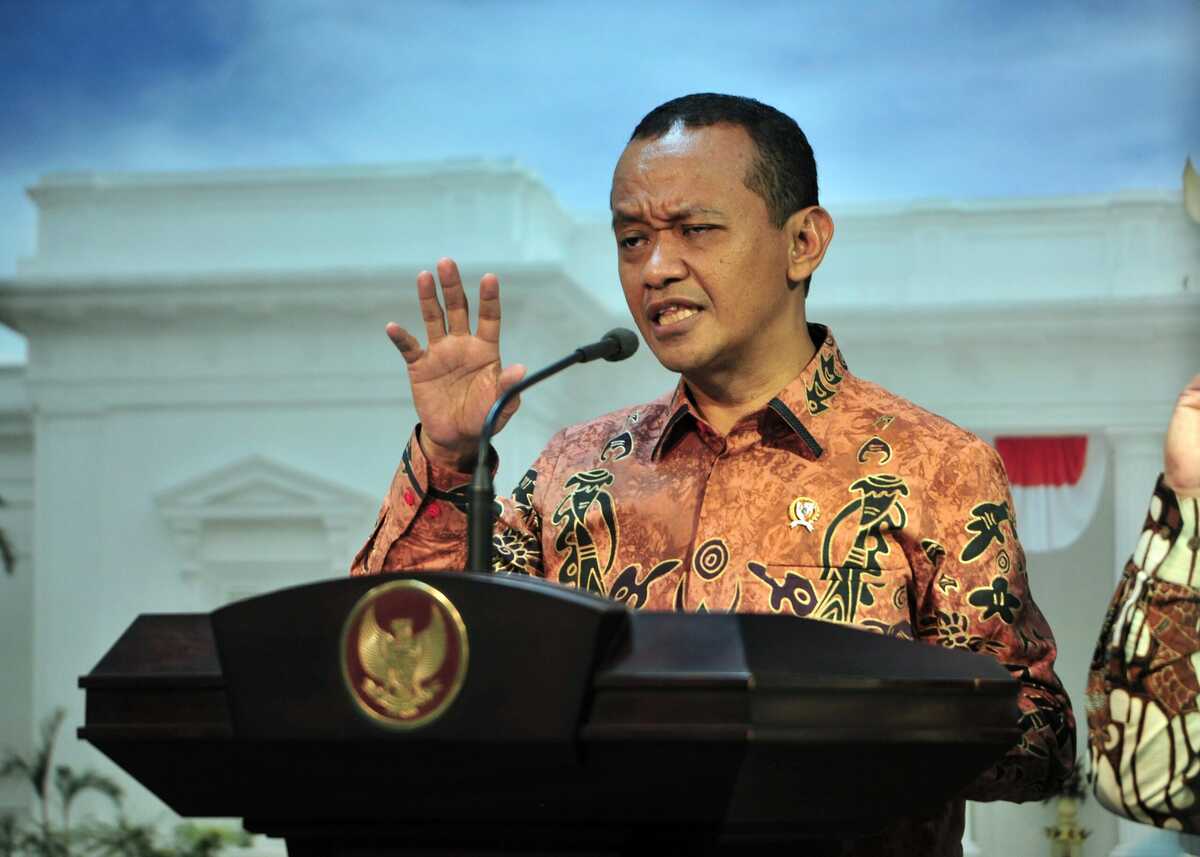
Indonesian Energy and Mineral Resources Minister Bahlil Lahadalia says crude oil imports from the United States are being phased in as part of a strategy to diversify imports, which have previously come largely from the Middle East. ‘It’s already starting to happen. Gradually, yes, gradually,’ Bahlil said after a breaking-of-fast gathering at the Ministry of Energy and Mineral Resources in Jakarta, quoted on Thursday (5 March).
He noted that the import diversification process cannot be implemented all at once because Indonesia still has limited crude storage capacity. At present, the national storage capacity is deemed insufficient to accommodate large supplies quickly. Therefore, alongside diversifying import sources, the government is accelerating the construction of new crude oil storage facilities to strengthen national energy resilience.
Bahlil explained that the government aims to increase Indonesia’s oil reserve capacity substantially from the current level, which can only sustain around 25–26 days, to up to 90 days or about three months, in line with international standards.
‘I’ve reported to the President and the President has given directions to proceed with construction as soon as possible. For what? We need survival,’ said Bahlil, referring to President Prabowo Subianto’s directive.
The government has also secured investors for a storage project planned to be located on Sumatra Island. The project is currently at the feasibility study stage before moving to construction.
Bahlil targets that construction of the storage facilities can commence this year.
The policy comes amid rising geopolitical tensions in the Middle East, particularly following the open conflict between the United States and Israel with Iran, which raised concerns about global energy supply stability.
On Saturday (28 February), the United States and Israel launched a series of strikes against a number of targets in Iran, including Tehran. The strikes reportedly caused damage and civilian casualties.
Iran then responded by launching missile attacks into Israeli territory as well as American military facilities in the Middle East.
The situation further heated after U.S. President Donald Trump stated that Iran’s Supreme Leader Ali Khamenei had been killed in the joint attack. The news was later confirmed by Iran’s state television.
Amid the escalation, Iranian media also reported that the Strait of Hormuz had effectively been closed, although there has been no official announcement of a total blockade.
The Strait of Hormuz is a vital global energy trade route handling about a fifth of global oil trade, and large shipments of liquefied natural gas are sent from Gulf states such as Qatar and the United Arab Emirates.
It is estimated that around 20 percent of the world’s daily oil consumption, or about 20 million barrels, passes along this route, so any disruption in the region could trigger significant volatility in the global energy market.
In this context, the Indonesian government is seeking to reinforce national energy resilience so as not to be overly vulnerable to global geopolitical dynamics that could disrupt supply and energy prices.