
Bahlil Reveals Indonesia's Oil Supply Conditions Amid Middle East Tensions
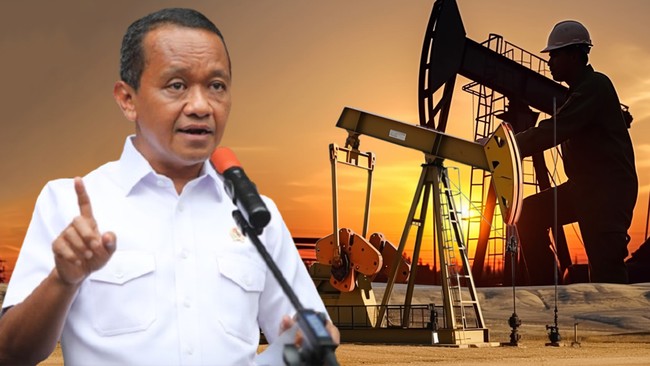
Jakarta — Energy and Mineral Resources Minister Bahlil Lahadalia has outlined Indonesia’s oil supply conditions amid heightened geopolitical tensions in the Middle East, particularly following the closure of the Strait of Hormuz due to the Iran-Israel conflict involving the United States.
Bahlil explained that the Strait of Hormuz is a vital global energy trade route, with approximately 21 million barrels of oil transiting daily. A portion of crude oil imported by Indonesia from the Middle East also travels through this strategic corridor.
Indonesia’s current crude oil production stands at around 605,000 barrels per day, whilst domestic consumption reaches 1.6 million barrels daily. This means Indonesia must import approximately one million barrels of oil daily to meet domestic demand.
The government is taking various measures to reduce import dependence, particularly for diesel fuel. Current national diesel demand reaches approximately 39 million kilolitres annually. However, with the development of domestic refineries, particularly since the Refinery Development Master Plan (RDMP) in Balikpapan began operations in January 2026, combined with the mandatory B40 biodiesel policy, Indonesia no longer needs to import diesel.
Diesel supply is now secure as it can be produced domestically, eliminating reliance on imports. However, for petrol, Indonesia still requires significant imports. Total national petrol demand reaches approximately 40 million kilolitres annually. Before the Balikpapan RDMP project began operations, domestic petrol production reached only around 14.5 million kilolitres. With the RDMP now operational, production has increased by 5.5 million kilolitres, bringing domestic production to 20 million kilolitres, with the remaining 20 million kilolitres imported.
Regarding crude oil imports, Indonesia sources from various countries including Angola, the Middle East, the United States, Brazil, Australia, and others. Crude oil imports from the Middle East account for only 20 to 25 percent of total national needs. Notably, Indonesia does not import finished petroleum products from the Middle East; it imports crude oil which is then processed domestically before distribution.
With the Strait of Hormuz closure, the government has proactively shifted to sourcing crude oil from alternative suppliers including the United States, Angola, African nations, and Latin America — some of which involve Pertamina operations — to mitigate the 20-25 percent previously sourced from the Middle East.
For finished petroleum products imports, these are sourced from Southeast Asian neighbours, particularly Malaysia and Singapore, not the Middle East.
Bahlil also addressed misconceptions regarding the 21-day strategic reserve, clarifying that storage functions like a water tank that is continuously replenished, rather than being exhausted within 21 days. He emphasised that the government is working to increase strategic oil storage capacity to a minimum of three months, in line with President Prabowo’s directive and national standards.