
Bahlil Reports to Prabowo that Indonesia Does Not Import Finished Petroleum Products from the Middle East
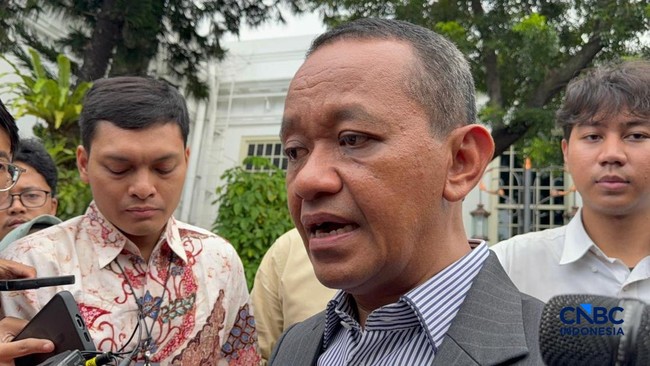
Energy and Mineral Resources Minister Bahlil Lahadalia reported the status of national energy security to President Prabowo Subianto. In his report, Bahlil emphasised that Indonesia does not import finished petroleum fuel products from the Middle East region.
The report was presented by Bahlil during a plenary Cabinet session at the State Palace on Friday, 13 March 2026.
Bahlil explained that energy supplies sourced from the Middle East consist only of crude oil, representing approximately 20% of total imports. Meanwhile, finished petroleum products such as petrol are sourced from neighbouring Southeast Asian countries.
“What we actually import from the Middle East is crude oil. We do not import finished products from the Middle East. What we import from the Middle East is the crude oil itself. The crude oil is indeed 20% from the Middle East,” Bahlil stated during the plenary Cabinet session at the State Palace on Friday, 13 March 2026.
Bahlil explained that the domestic demand for finished products such as diesel can now be met from domestic sources. This is supported by the biodiesel blending programme and the operation of the newly inaugurated Balikpapan Refinery Development Master Plan (RDMP) project.
The RDMP project is claimed to be capable of reducing petrol imports by 5.5 million tonnes and diesel imports by 3.5 million tonnes.
Currently, the only finished petroleum product that Indonesia still imports is petrol. Bahlil stated that this supply comes from neighbouring countries, namely Malaysia and Singapore.
As for crude oil imports, aside from the Middle East representing 20% of supply, the government sources from various other countries including Angola, Nigeria, Brazil, the United States, and Malaysia.
Going forward, Bahlil targets domestic refinery expansion to ensure that all finished petroleum products can be produced domestically.
“In the future, we have no other way but to develop our refineries and plants to produce everything domestically. If our production capacity does not reach 1.6 million barrels per day, the difference between crude requirements and our production capacity is what we will import. So in the future, we will only need to import crude oil,” he concluded.