
Bahlil Reports to Prabowo on Coal-Nickel: Policies Remain Unchanged
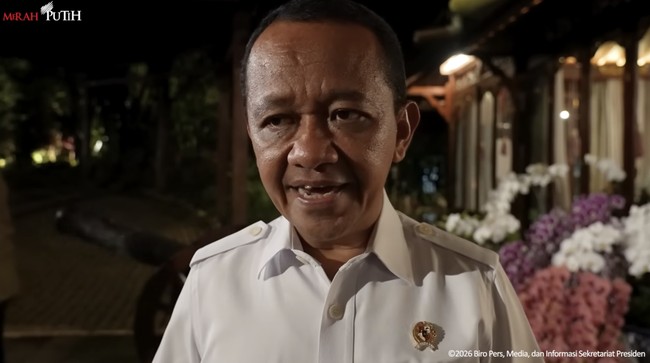
Jakarta, CNBC Indonesia - Minister of Energy and Mineral Resources (ESDM) Bahlil Lahadalia reported to President Prabowo Subianto on the developments in commodity prices and strategies for managing them. He conveyed this during a limited meeting discussing energy sector strategies in Hambalang, Bogor, on Wednesday (25/3/2026). He emphasised that, to date, there have been no policy changes in controlling supply and demand, particularly for coal and nickel commodities. However, the government continues to monitor market dynamics before taking further steps. “Clearly, in terms of controlling supply and demand for coal and nickel, up to today there have been no policy changes from the Minister of ESDM; I already reported this to the President while we observe developments,” Bahlil said after the meeting in Hambalang, quoted on Thursday (26/3/2026). According to him, if commodity prices remain stable, the government is open to implementing measured relaxations on production planning. However, such policies will still consider market balance, as well as supply and demand needs. “If the prices continue to stabilise, that’s good; we will consider how to implement measured relaxations on production planning. So everything remains within the bounds of coordination with the market, and supply and demand needs,” he added. Previously, the rise in global coal prices was seen as an opportunity for Indonesia to increase production amid growing energy needs in the Asian region. Chairman of the Indonesian Mining Experts Association (Perhapi) Sudirman Widhy assessed that current spot market coal prices show an upward trend linked to the oil crisis triggered by conflicts in the Middle East. “As we all know, current coal prices in the spot market are showing an upward trend related to the oil crisis resulting from conflicts in the Middle East,” Widhy told CNBC Indonesia on Wednesday (25/3/2026). In addition, this price increase is also influenced by national coal production restrictions. Considering that Indonesia is one of the major exporters supplying global coal needs, especially in East Asia, South Asia, and Southeast Asia. He then viewed this situation as something the government should utilise to optimise state revenue potential. Widhy encouraged the government to reconsider production restriction policies and open opportunities for increasing coal output. “Especially to fill the market from countries in Southeast Asia such as the Philippines, Vietnam, and Malaysia, which are already facing difficulties in meeting their national energy needs due to the international oil crisis, and they require additional coal supplies to meet their national energy requirements,” he stated.