
Bahlil Prepares Incentives and Concession Revocations to Boost Oil Production
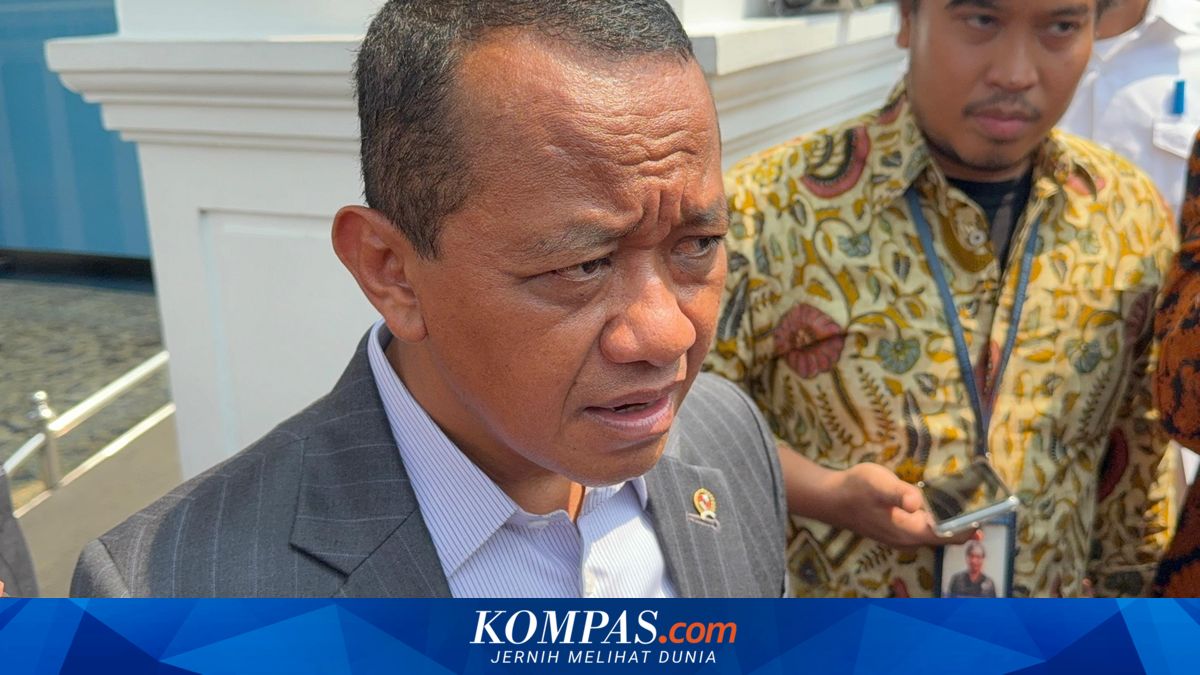
JAKARTA, KOMPAS.com - The Minister of Energy and Mineral Resources (ESDM), Bahlil Lahadalia, is preparing aggressive steps to boost national oil production (lifting), which has been stagnant in recent years.
Bahlil stated that the government is combining an incentives approach for business actors with firm measures in the form of threats to revoke concessions for contractors deemed unproductive.
This effort is being carried out amid a trend of declining lifting over the past few years, which has never met the state budget targets.
“Why has our lifting never increased? As a former businessman, my intuition is that whenever there is a problem, there is an opportunity. So I checked, and it turns out that outside of people’s wells, there are 39,600 wells controlled by KKKS (Contractor Work Cooperation Contractors),” Bahlil said at the IPB Alumni Synergy event in Jakarta on Saturday (2/5/2026).
To address this issue, Bahlil identified several root causes, starting from the dominance of old wells, numerous work areas that have already been approved for development plans (Plan of Development/POD) but not executed, to the lack of new exploration.
“Our wells are 80 percent old wells, some of which we weren’t even born when they were made. There are wells inherited from the Dutch era, which have been running for about 90 or 100 years. Second, there are more than 300 work areas that have completed POD, but there is no execution,” he emphasised.
One policy being pursued by Bahlil is the adjustment of the internal rate of return (IRR) for oil and gas contractors.
The government is setting a more flexible IRR scheme, namely up to 13, 15, and 17 percent for expansion projects, to encourage accelerated production.
In addition to incentives, the government is also taking firm steps against stalled work areas.
He cited the Abadi Masela Block project, which has not progressed for decades.
The government then issued an ultimatum for the project to be executed immediately, with the threat of licence revocation if there is no significant progress.
“We must be bold and firm in making win-win decisions that are mutually beneficial,” he said.