
Bahlil Partners with South Korea to Accelerate Indonesia's Clean Energy Development in Anticipation of Energy Crisis
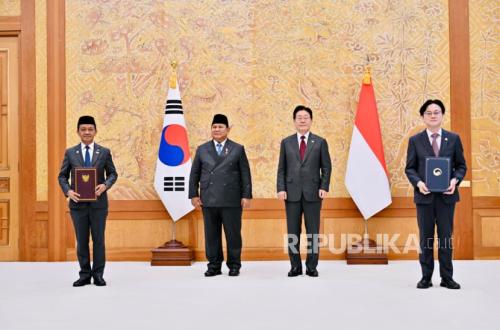
Indonesia’s Minister of Energy and Mineral Resources (ESDM), Bahlil Lahadalia, has agreed on clean energy cooperation with South Korea amid a surge in global uncertainties and energy price volatility. This cooperation is expected to strengthen national energy resilience while accelerating the energy transition.
The agreement was formalised in a Memorandum of Understanding (MoU) signed by Bahlil with South Korea’s Minister of Climate, Energy, and Environment, Kim Sungwhan, during a meeting between President Prabowo Subianto and President Lee Jae-myung at the Blue House in Seoul on Wednesday (1/4/2026) local time.
The cooperation is driven by pressures on fossil fuel prices due to geopolitical conflicts, particularly in the Middle East. “This MoU is important as a foundation for both parties to promote the energy transition, especially clean energy, according to each country’s capabilities. This is good for our future,” Bahlil said shortly after the MoU announcement.
Under the agreement, the two countries will expand collaboration in the renewable energy sector, such as solar, wind, and geothermal power, as well as future energy sources like nuclear and hydrogen. The cooperation also includes strengthening energy storage systems, energy efficiency, and waste processing into energy.
“South Korea is Indonesia’s long-time friend. So we know each other’s strengths and energy potentials. If we complement each other, it can strengthen energy independence,” Bahlil stated.
Additionally, the development of supporting infrastructure such as smart grids, electric vehicle charging stations, and the battery industry from upstream to recycling will be a focus of the cooperation. The government also targets expanding access to clean energy to remote areas.
“This includes support for integrated energy systems on independent energy islands so that the benefits of clean energy can be felt more widely, including in remote areas,” Bahlil said.