
Bahlil Lahadalia Strengthens Downstream Integration of Electric Vehicle Battery Ecosystem
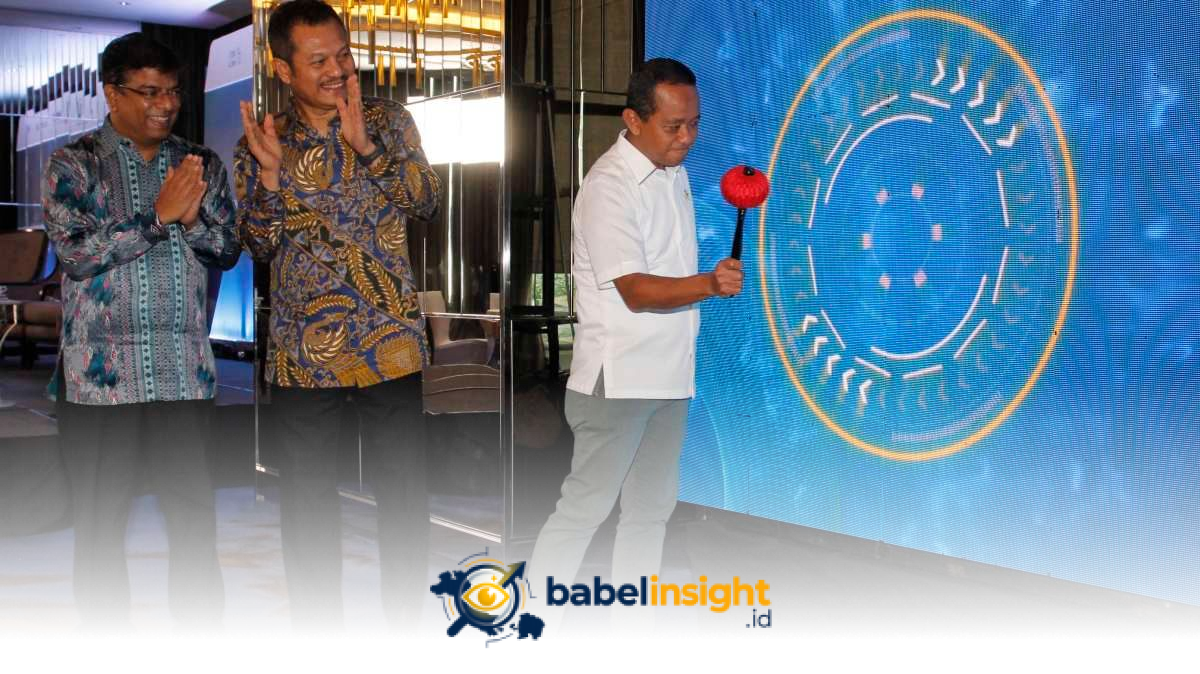
Minister of Investment/Head of BKPM Bahlil Lahadalia emphasised the Indonesian government’s consistency in building an electric vehicle battery ecosystem from upstream to downstream on Tuesday, 29 August 2023. This step is taken to optimise Indonesia’s nickel reserves, which account for 29 percent of the world’s total, amid the global shift towards green energy.
Cited from Investortrust, this strategy aims to promote the added value of domestic minerals and reduce exhaust gas emissions. Bahlil explained that the policy is based on Indonesia’s great potential in the future energy competition map in the European, Chinese, and Southeast Asian markets.
“In Europe in 2019, they already planned that by 2027, 61.7% of cars there will use electric vehicles. In China, it’s even more aggressive, as well as in the Middle East and even including Southeast Asia. That’s the origin of why we formulated, why we are consistent and focused in promoting the downstream policy for the electric vehicle battery ecosystem. That’s the basis of thinking, theoretically,” explained Bahlil Lahadalia, Minister of Investment/Head of BKPM.
The government then invited global manufacturers to invest, starting with an agreement with Hyundai from South Korea. This collaboration became the starting point for electric vehicle production in the country after a competitive lobbying process with other nations.
“In November 2019, I signed the first MOU with Hyundai for the production of the electric Ionic car. That was the first one we signed with Hyundai, even though several other countries lobbied Hyundai, but I don’t want to mention the names of those countries. And that pulling was extraordinary,” clarified Bahlil.
This former HIPMI Chairman acknowledged bureaucratic challenges in the process of entering such large investments. Nevertheless, Hyundai successfully realised a US$1.6 billion investment in Karawang, completed in 2021.
“I don’t want to open that ‘goods’. But honestly, it’s not as beautiful as we imagined,” said Bahlil, referring to the complexity of bureaucracy in Indonesia.
Bahlil emphasised the importance of production cost efficiency because batteries account for 40 percent of the total cost of electric vehicles. The main components of the battery include nickel, manganese, cobalt, and lithium, where almost all of these materials are available in Indonesia except for lithium.
“When we first entered, there was COVID-19, alhamdulillah it was completed in 2021,” he said.
He also compared this situation to Indonesia’s past as an oil exporter that is now an importer due to the lack of downstream integration. Currently, national consumption reaches 1.5 million barrels per day, while production is only 650 thousand barrels.
“It’s very unreasonable when the same industry is built in other countries but can be cheaper and more competitive than us, even though we have lower production costs. Then, I met with President Jokowi. I conveyed to Mr Jokowi, we must be consistent in running the electric vehicle battery ecosystem,” he said.
To create healthy competition, the government partnered with LG from South Korea and CATL from China as key players. LG has agreed to a US$9.8 billion investment through collaboration with the Indonesia Battery Corporation (IBC).
“Already importing, and even subsidising,” Bahlil asserted.
This collaborative project involves various companies such as Antam, IBC, Posco, and Huayou. The production chain is planned to start operating in Karawang, Batang, to North Maluku starting February 2024.
“This is the first collaboration to build an electric vehicle battery ecosystem from upstream to downstream in Indonesia. By a consortium consisting of Antam, IBC, Posco, Huayou, and LG. That’s including the world’s number two. The downstream is already done, but there are still some issues in the upstream,” he said.
Bahlil also ensured that ownership in this ecosystem prioritises the role of the state. As much as 51 percent of shares in the upstream sector are controlled by SOEs, while in the midstream sector, it averages 25-35 percent.
“I just competed. So LG successfully signed an investment agreement with the Indonesia Battery Corporation (IBC) consortium and SOEs worth US$9.8 billion or more than Rp100 trillion. That’s one of the largest investments post-reform that we’ve ever gotten,” explained Bahlil.
The government is also targeting other companies like Volkswagen (VW), BASF, and Foxconn to expand the industry’s reach. This strategy includes considerations for implementing export taxes to maintain the availability of raw materials domestically.
“So the electric vehicle battery ecosystem investment is not controlled by foreigners. But we utilise foreign technology and markets. We also don’t use foreign consultants to design it. But purely the investment team and managers who all don’t have a background in this stuff,” said Bahlil.
Regarding environmental benefits, the increase in electric vehicle use is expected to significantly reduce air pollution, especially in Jakarta. The government provides incentives in the form of Rp7 million subsidies for electric motorcycles and VAT exemptions for electric cars.
“This is trade politics. Including with the global minimum tax. So with various efforts like that,” explained Bahlil.
This subsidy policy is claimed to reduce the long-term fuel subsidy burden. With a motorcycle population of more than 100 million units, the shift to electric power is seen as a solution for state budget efficiency.
“The cause, some say coal-fired power plants, some say vehicles. But what I want to convey is this, like it or not, slowly or quickly, we will leave this,” he said.
Bahlil also emphasised the government’s firm stance against international criticism, including recommendations from the International Monetary Fund (IMF). He rejected interference from external parties regarding Indonesia’s nickel ore export ban policy.
“Now there are more than 100 million motorcycles in Indonesia. How much subsidy per litre for fuel? The current subsidy is Rp2 thousand per