
Bahlil: INPEX's USD 20 Billion Investment Considered to Foster Indonesia
Bahlil: INPEX’s USD 20 Billion Investment Considered to Foster Indonesia
19 Mar 2026 18:39 WIB
Voice of Indonesia
RRI.CO.ID, Jakarta - Indonesia’s Minister of Energy and Mineral Resources, Bahlil Lahadalia, paid a working visit to Tokyo, Japan, in mid-March 2026 to underscore Indonesia’s strategic role in the global energy landscape. During a meeting with the Japanese Minister of Economy, Trade, and Industry (METI), Ryosei Akazawa, Minister Bahlil successfully agreed on two memorandums of understanding (MoUs).
The agreements relate to the critical mineral supply chain and the development of low-carbon nuclear technology. He also encouraged the acceleration of INPEX Corporation’s oil and gas investment at the project of Gas Lapangan Abadi in the Masela Block, valued at IDR 339 trillion.
INPEX is Japan’s largest oil & gas exploration & production company. It also offers joint management of strategic commodities such as nickel, bauxite, copper, and rare earth metals.
The diplomacy includes bolstering cooperation in the coal sector, liquefied natural gas (LNG), and energy transition projects within the Asia Zero Emission Community (AZEC) framework, including the completion of the Legok Nangka Waste-to-Energy Power Plant and the optimization of the Sarulla Geothermal Power Plant.
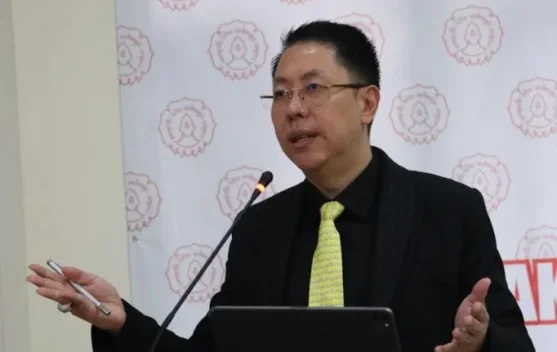
Moreover, Bahlil’s diplomacy received a response from public policy observer Prof. Dr. Henry Indraguna. He described the achievement as a precise legal and economic sovereignty amidst geopolitical uncertainty.
“Indonesia is no longer an object in global power relations, but an active subject defining its own interests,” Henry told the media on Wednesday, March 18, 2026.
The observer believes the government’s actions are an effort to deconstruct the narrative that developing countries only function as suppliers of raw materials. Bahlil Lahadalia’s diplomacy has transformed Indonesia into a key player in global supply chains.
“This is a form of sovereignty which is fluid yet robust. It demonstrates our national law’s ability to adapt to international standards without losing its constitutional identity,” he conveyed.
From a modern economic perspective, Henry views this diplomacy as a form of Endigenous Growth, as formulated by economist Paul Romer. This concept affirmed long-term growth stemming from investments in human capital and technology.
“Mr. Bahlil’s steps to secure nuclear technology and nickel downstreaming are an effort to avoid being trapped in stagnant growth. This will grow from within through sustainable added value,” Henry conveyed.
In addition, he believes that integrating Japanese investment into the national industrial structure will create an economic ecosystem resilient to external shocks. “The legal certainty offered by the Masela project sends a positive signal to the global market that Indonesia is a credible partner,” Henry said.
He further stated that legally, the memorandum of understanding must be monitored to ensure it remains within the protection of national interests and provides a space for mutually beneficial international collaboration.
Thus, according to Prof. Henry, Indonesia has successfully demonstrated its mettle in international negotiations while upholding the principles of legal justice and inclusiveness for all people.
He believes the strengthening of its position in the Indo-Pacific demonstrates that Indonesia has laid a very strong legal and economic foundation to become a new energy powerhouse.