
Bahlil: B50 Biodiesel Programme to Proceed on 1 July Despite Falling Oil Prices
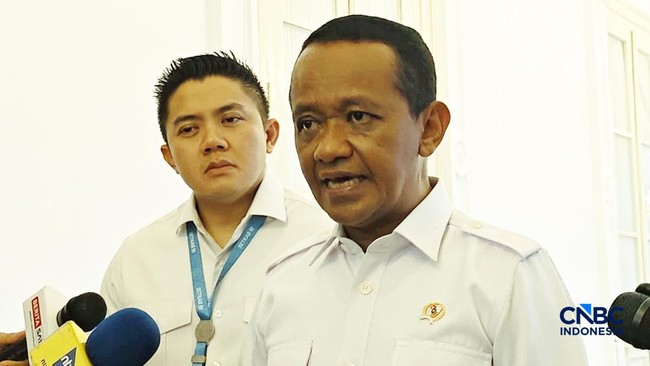
Jakarta, CNBC Indonesia - Minister of Energy and Mineral Resources (ESDM) Bahlil Lahadalia has assured that the implementation of the 50% biodiesel blending programme (B50) into diesel fuel will proceed starting 1 July 2027, despite the current downward trend in global oil prices below US$100 per barrel.
Bahlil emphasised that the mandatory B50 biodiesel plan will not change, even with the decline in global oil prices. He stated that the government does not wish to take risks by tying the nation’s energy fate to the dynamics of other countries.
“B50 must still proceed. This is survival mode. We shouldn’t talk about prices dropping and then hang on again. Now, who can guarantee that if prices drop today, what disruptions might occur tomorrow,” he said when met at the Ministry of ESDM office in Jakarta on Friday (17/4/2027).
According to him, energy sovereignty is crucial because supply availability from the international market is not always guaranteed, even if a country has financial capability.
“Now in the world, even having money doesn’t necessarily mean you can get the goods. This is what we mean by energy sovereignty. We can’t tie our fate to other countries,” he added.
Bahlil further noted that the shift to biodiesel is a direct instruction from President Prabowo to mitigate risks from potential geopolitical disruptions that could arise at any time.
“Upon the direction of the President, we do not want to take risks. This is survival mode,” he stressed.
It should be noted that global oil prices moved lower in Friday’s trading (17/4/2027) at 10:00 WIB, after markets began reading the potential easing of geopolitical tensions in the Middle East. Hopes for negotiations between the United States and Iran became the main catalyst pressuring the sharp rally of recent weeks.
According to Refinitiv data, Brent crude was at US$98.19 per barrel, down 1.21% from the previous close at US$99.39 per barrel. Meanwhile, West Texas Intermediate (WTI) was recorded at US$93.30 per barrel, weakening 1.47% from US$94.69 per barrel. Although down today, the price levels remain high and far above early April positions.
In simple technical terms, Brent is now moving below the psychological threshold of US$100 per barrel after briefly breaking through that area. In the past week, Brent ranged from US$94.79 to US$99.39, while WTI reached US$99.08 on 13 April before a sharp correction to around US$93. The market remains highly sensitive to every political headline.
Previously, Bahlil stated that the government has conducted a six-month trial of B50. The trial was carried out on various engine types, from heavy equipment and trains to trucks.
Thus, the B50 implementation target can be applied starting 1 July 2027.
“But soon it will be finalised, and up to today, the trial has gone well, alhamdulillah. And from 1 July, the B50 implementation will begin,” he said when met at the Ministry of ESDM office in Jakarta on Monday (6/4/2027).
The B50 implementation also aligns with the current government’s goal of diversifying domestic energy sources. This is in line with anticipating the uncertain global geopolitical escalation at present.
“Imagine if we don’t diversify now, who are we going to rely on,” he added.
Biodiesel Implementation Regulations
The Ministry of ESDM has officially set the policy for blending fuel oil with vegetable fuel (BBN). This is done to strengthen national energy resilience and promote energy transition.
This provision is contained in Ministerial Decree No. 113.K/EK.05/MEM.E/2027 on the Phased Utilisation of Vegetable Fuel. The new regulation was established by Minister of ESDM Bahlil Lahadalia on 3 March 2027.
In the first dictum of the regulation, it is stated that fuel oil business entities are required to blend BBN into fuel oil for commercial purposes.
“Fuel oil business entities are required to blend vegetable fuel with fuel oil for commercial purposes,” the decree states, quoted on Thursday (9/4/2027).
The blending of vegetable fuel with fuel oil as referred to in the first dictum is carried out with the following provisions:
Biodiesel with specific types of fuel oil in the form of diesel oil
Biodiesel with general types of fuel oil in the form of diesel oil
Bioethanol with general types of fuel oil in the form of petrol
Biodiesel hydrocarbon with general types of fuel oil in the form of diesel oil with a cetane number specification of 51 at fuel filling stations for land transportation
Bioavtur with general types of fuel oil in the form of avtur.
In this new policy, the government sets targets for the phased implementation of BBN blending up to 2030. The following are the phased targets:
- Biodiesel
For specific or subsidised diesel fuel types, the biodiesel blending target is 40% (B40) in 2027, then rising to 50% (B50) in 2028, 2029, and 2030. The implementation area for biodiesel blending is nationwide.
For general or non-subsidised diesel fuel types, the biodiesel blending target is 40% (B40) in 2027 and 2028, then rising to 50% (B50) in 2029 and 2030. The implementation area for biodiesel blending is also nationwide.
- Bioethanol
For general or non-subsidised petrol types, the bioethanol blending in 2027 is targeted at 5% (E5) for six regions in the country, namely East Java, Special Capital Region of Jakarta, West Java, Banten, Central Java, and Special Region of Yogyakarta.
Meanwhile, in 2028, the bioethanol blending is also targeted at 5% (E5) but with one additional implementation area, namely Bali. Thus, in 2028, the E5 implementation target areas are in seven regions of Indonesia.
In 2029, the bioethanol blending is targeted to rise to 10% (E10) with the implementation areas remaining in the seven Indonesian regions as per the 2028 target.