
Badung Regency Prepares Sites for Storing Compost Raw Materials at Several Locations
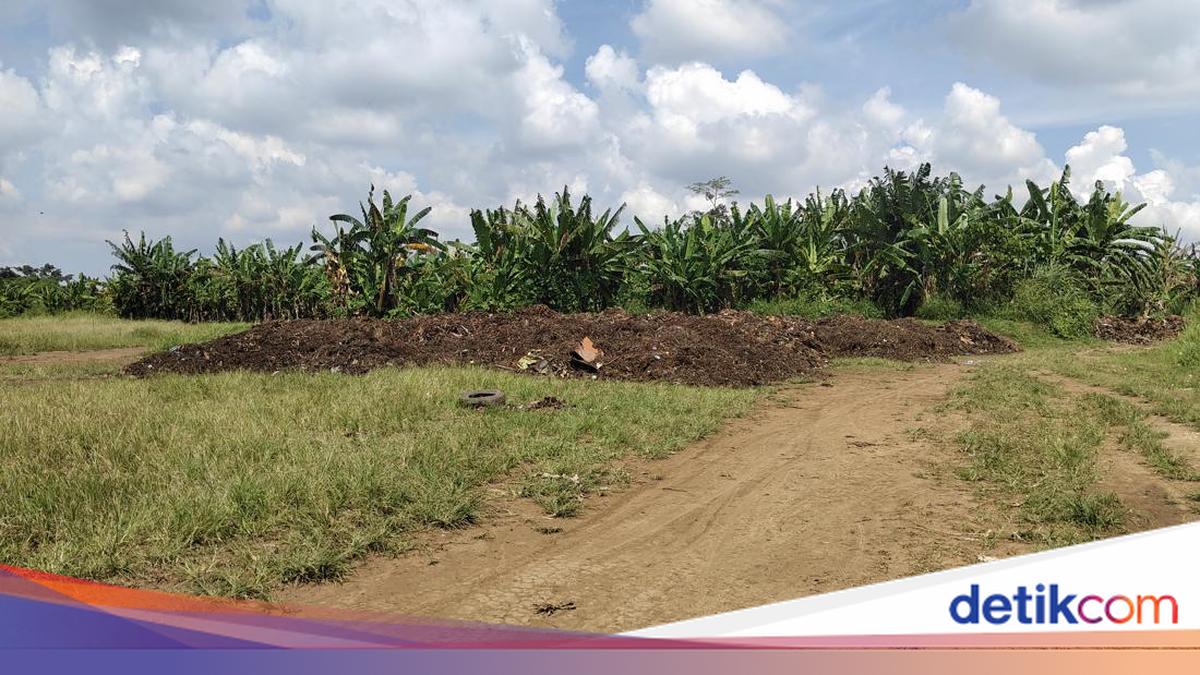
The Badung Regency Government is utilising its own land at several locations as sites for storing compost raw materials. This initiative is aimed at tackling the accumulation of organic waste at the Mengwitani Integrated Waste Processing Site (TPST).
This step is being taken by the Badung Regency Government as a short-term solution following the restrictions on disposing of organic waste at the Suwung Final Disposal Site (TPA) in Denpasar. That policy has led to the emergence of illegal waste disposal sites (TPS) at various points.
The Acting Head of the Environmental and Cleanliness Service (LHK) of Badung, I Made Agus Aryawan, emphasised that the government has already designated several locations for storing compost materials from the processing of organic chaff at the TPST. One of the sites is the former Fish Seed Centre (BBI) land in Sangeh Village.
According to Agus, the land features pits from former fish breeding ponds, which will be filled with compost materials and covered with soil, along with the addition of EM4 to prevent foul odours. Socialisation to residents has been carried out by the Regent of Badung, I Wayan Adi Arnawa, on Saturday (11/4/2026).
“Sangeh is also a tourist village, and that location is planned to become a park. We have received instructions regarding the design of the park to be built,” Agus explained on Sunday (12/4/2026).
The Badung Regency Government has also designated several other temporary sites, such as the Bung Karno Park land in Penarungan Village, the former Canggu TPA, government land at Sentral Parkir Kuta, as well as in Bualu Adat Village and Pecatu Village, Kuta South District.
Agus stressed that the materials brought to the compost raw material storage sites consist of organic waste, such as leaves and ceremonial remnants that have already been sorted, not mixed household waste containing food scraps.
“Once again, apologies, this is not dumping waste, but these are compost raw materials. In this emergency situation, this is what we can do temporarily to reduce the organic capacity that cannot yet all be processed at the TPST,” Agus added.
The designation of the site in Penarungan Village has sparked controversy among local residents. The Badung LHK Service, according to Agus, has already held discussions with community representatives and is preparing further steps to accommodate the aspirations of residents there.
According to Agus, the selection of the future Bung Karno Park land is based on its status as a regency asset. Furthermore, its enclosed position with an installed gate minimises the potential for it to become an illegal TPS due to the risk of people or certain individuals dumping waste indiscriminately there.
“We will certainly guard it well, to prevent it from becoming an open area. Because if there is no gate and it is easily accessible, I am concerned it will become an illegal TPS. The selection of this location is not intended to harm the sanctity of the temple, but because of the land criteria being enclosed and not too close to settlements,” Agus explained.
Technically, the processing will be carried out using a 4-metre deep excavation method, followed by the use of EM4 microorganism liquid to prevent strong odours. This method is claimed not to disturb the surrounding area but rather to enrich the open green space (RTH) at the site.
“So it will be properly excavated, then there will be materials mixed with EM4 to reduce the odour. After being placed, it will be covered with soil and layered continuously so that fermentation occurs quickly. That is what we will do with heavy equipment,” Agus added.
The Badung Regency Government is currently facing technical constraints because the sorting machine at the Mengwitani TPST can only process 40 tonnes of waste per day, far below the current volume of organic waste reaching 200 tonnes. In addition, the operation of the modern incinerator already owned by the region is still held up by laboratory testing and permitting processes from the Ministry of Environment (KLH).
“We actually already have an incinerator with standards that we believe meet the requirements, but the Ministry of Environment has sealed it and not yet permitted operations because laboratory testing must be done first. If it were allowed to be used, I am confident all organic and inorganic waste could be processed even if the Suwung TPA is closed,” Agus revealed.
As a permanent solution, Badung is still awaiting the completion of the Waste Processing into Electricity Energy (PSEL) project in Pedungan, Denpasar, which is expected to be finished by the end of 2027. If it operates, Badung will be required to supply around 500 tonnes of waste, allowing for a lighter operational burden within the region.