
Badung Prepares 5 Compost Collection Sites, Organic Waste Not to Be Dumped Raw
The Badung Regency Government is preparing a breakthrough in handling the chaotic waste issues following the closure of organic waste disposal to the Suwung landfill from 1 April onwards. Rather than mere disposal sites, the Badung Regency Government is preparing five compost material collection sites in each sub-district on a scale far larger than modern compost pit installations or teba systems.
This strategy is adopted to ensure that 60-70% of household organic waste in Badung can be fully processed into useful material, rather than just raw waste piling up. The main focus of this improvement also targets household waste management, which reaches around 500 tonnes per day.
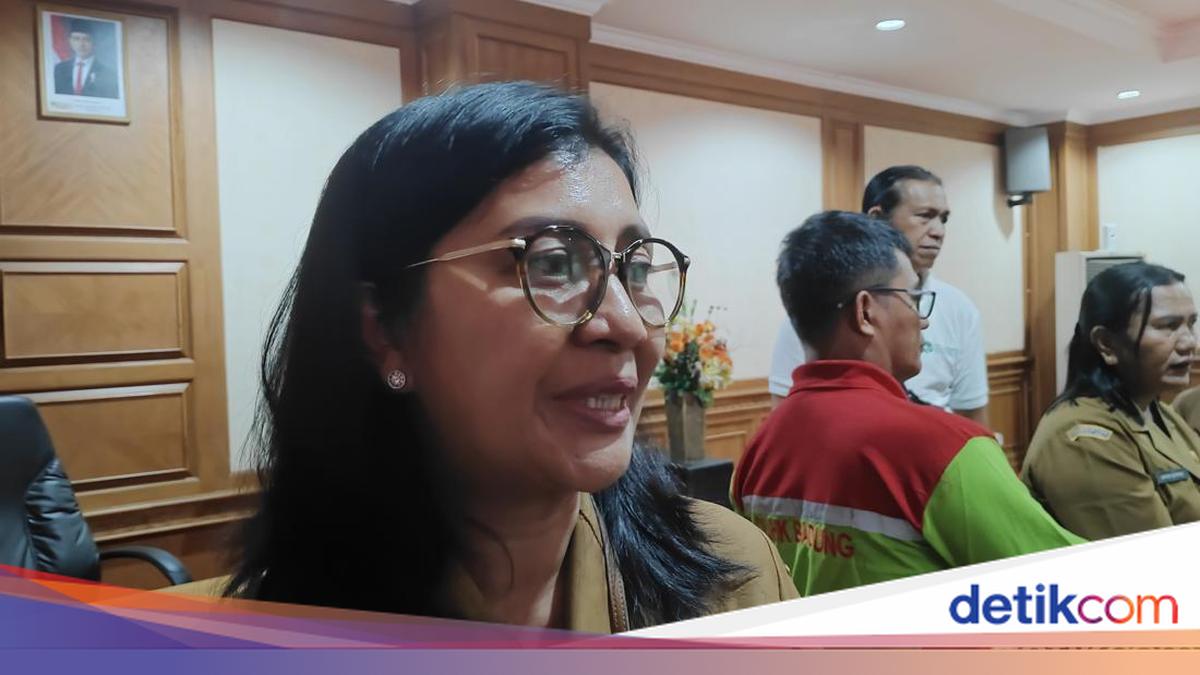
“Household waste alone is around 500 tonnes per day, the rest from services outside households is around 300 tonnes. So total waste in Badung reaches 876 tonnes per day,” said Acting Head of the Environmental and Cleanliness Service (DLHK) Badung, Made Rai Warastuthi, on Monday (30/3/2026).
The government targets organic waste, which comprises 70% of the total daily volume, to no longer be disposed of in raw condition. As a solution, each sub-district will have a compost material collection site on a larger scale than the modern teba system.
“Organic waste is calculated at around 60 to 70%, so it will be managed at TPS3R and TPST. What will be brought there is actually compost material, not raw organic waste, with a working principle similar to modern teba but on a large scale,” said Rai Warastuthi.
The mapping of these compost centre locations includes: Abiansemal Sub-district centred in Sangeh Village, utilising the former Fish Seed Centre (BBI) land. Then in Mengwi Sub-district, centred at TPST Mengwitani.
For North Kuta Sub-district, designated at the former Canggu landfill site, then in Kuta Sub-district utilising land near the central parking area. Finally, in South Kuta Sub-district, the solution is focused on Benoa Ward (land already prepared) and Jimbaran Ward which is still in the land preparation process, considering that Kutuh Village, Pecatu, Ungasan, and Tanjung Ward can already manage independently.
Meanwhile, for Petang Sub-district, the government assesses that no additional compost centre is needed because the TPS3R facilities in that area are deemed capable of thoroughly processing organic waste. This is added to the local culture where residents still have conventional teba at their homes.
Currently, the source-based waste management capacity in Badung only reaches 300 tonnes per day. There are around 19 villages without TPS3R facilities, but all are claimed to be under construction. If all these schemes run, Badung’s waste processing capacity is projected to exceed 900 tonnes per day.
According to Rai, this step is part of a medium-term strategy over the next two years. This is because in the long term, the Badung Regency Government is committed to supporting the Waste Processing into Electricity Energy (PSEL) project.
“These two years, we are implementing this compost centre step. After PSEL operates, Badung must commit to bringing 500 tonnes of waste there per day. So we must succeed in PSEL as a long-term solution,” concluded Rai Warastuthi.