
Badung Deputy Regent Ensures Penarungan Compost Centre Meets Standards
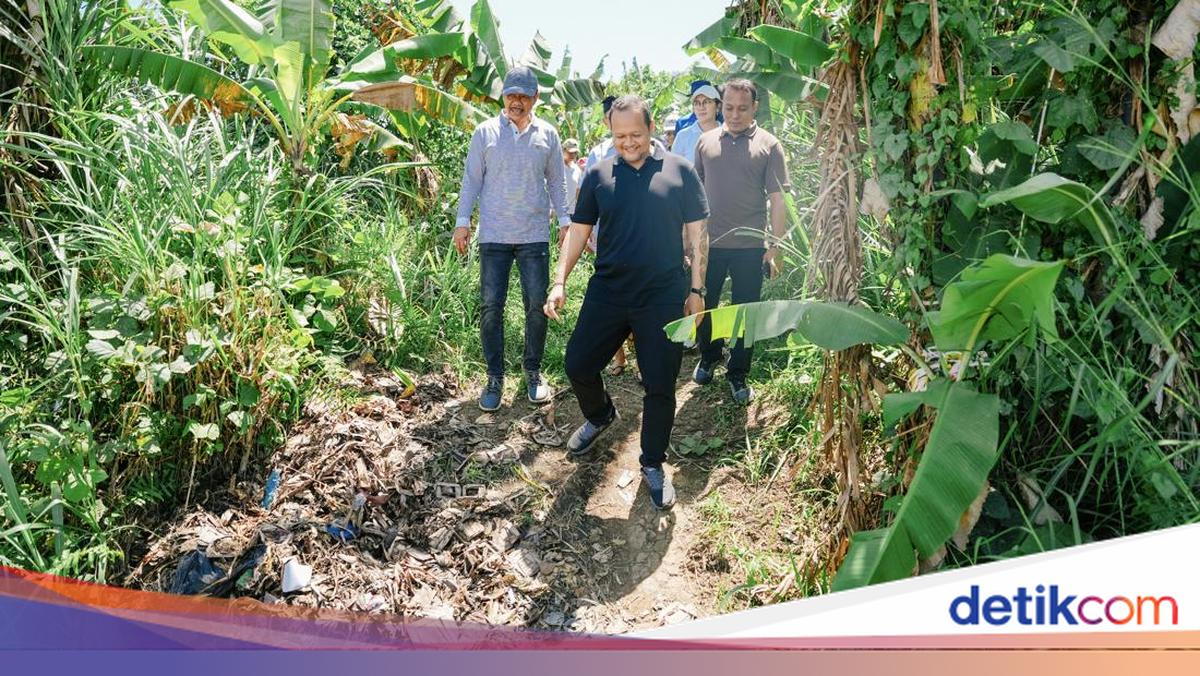
Piles of compost material scraps, previously sent to the land of Taman Bung Karno in Penarungan Village, Mengwi Subdistrict, began to be buried with layers of soil on Sunday (12/4/2026). This step was taken to ensure that the remaining organic waste is processed hygienically and does not pollute the surrounding environment.
Badung Deputy Regent Bagus Alit Sucipta directly inspected the burial process to ensure it complies with DLHK technical standards. His presence at the site also aimed to provide direct explanations to the community about the land’s function as a temporary compost centre.
“This location is not a TPST, but is temporarily used as a compost centre. We adopted this strategy to suppress air pollution and ensure it will not cause a disturbing unpleasant odour,” said Bagus Alit Sucipta at the prospective Taman Bung Karno land area on Sunday (12/4/2026).
The processing method in Penarungan, he said, is carried out hygienically by burying the organic waste into the soil before covering it again with a suitable layer of soil. This area will later be developed into a city park integrated with a through road access to the Badung Government Centre (Puspem).
“We hope that the community and figures in Penarungan will work together to help us handle this waste problem. Infrastructure development here is also expected to boost the tourism sector and new economy,” said the man familiarly known as Gus Bota.
A different situation is seen at the Mengwitani TPST, where the volume of incoming waste now exceeds the maximum machine sorting capacity of 90 tonnes per day. This has caused residue piles, so the government is studying the acceleration of waste incinerator operations.
“The dedication of our field colleagues is extraordinary, but the machine technology here will not be sufficient if waste continues to increase without sorting at the source. We are studying steps to accelerate regulations so that supporting facilities like the incinerator can be operated soon,” Gus Bota emphasised.
As a form of appreciation, the Badung Deputy Regent handed over 1,000 food packages to field officers. His side requested that the community start making waste sorting a culture at the household level as a long-term solution.
“Our sorting capacity is a maximum of 90 tonnes, while the incoming waste exceeds that figure, so the burden on Mengwitani TPST is already very heavy. The sustainable solution is public awareness to sort organic and non-organic waste at their respective homes,” Gus Bota concluded.
The Acting Head of the Badung Environment and Cleanliness Service (DLHK), I Made Agus Aryawan, detailed that the total daily waste consists of 70-90 tonnes of mixed waste and 50-70 tonnes of organic waste. This surge in volume causes the hybrid system combining human labour and machines to still experience long queues.
“We use a hybrid system, a combination of human power and machines, but the surge in waste volume still causes queues. Optimisation of residue handling is currently still constrained by regulations on incinerator operations,” explained Made Agus Aryawan.