
Backing restrictions on under-16s' use of social media, KPAI warns about fake-account runners
The Indonesian Child Protection Commission (KPAI) welcomed the rule restricting access to social media for children under 16. KPAI issued a number of notes to ensure the rule operates as intended.
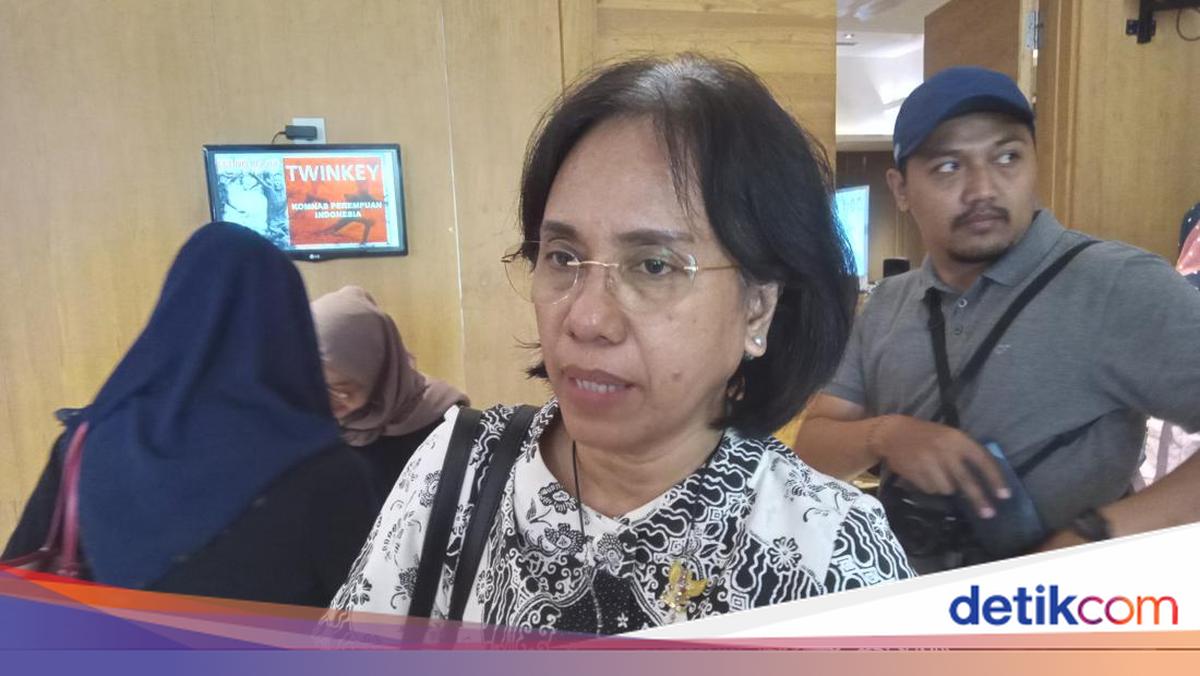
‘We positively welcome Ministerial Regulation No. 9/2026 issued by the Ministry of Communications and Informatics (Permenkomdigi No. 9/2026) which aims to postpone access by accounts of children under 16 on high-risk digital platforms,’ said KPAI Commissioner Sylvana Apituley to reporters on Sunday (8 March 2026).
Sylvana views the regulation as a rapid, temporary government response to address the urgency arising from the ineffectiveness of self-regulation by digital platforms to date. The presence of Permenkomdigi is positioned as a bold preventive step by the government to strengthen child protection in the digital world, including against data exploitation due to the profit-oriented experiments of technology companies, and the threats posed by predatory algorithms.
‘Significantly, Permenkomdigi 9/2026 indirectly protects children’s personal data and upholds the digital sovereignty of vulnerable children, as it reduces the potential for personal data harvesting by technology companies before they reach the legal age to give informed consent,’ said Sylvana.
‘With Permenkomdigi 9/2026, the government also effectively breaks the chain of exposure to adult content and online predators for children whose critical digital literacy skills are not yet mature. In this context, Permenkomdigi should be treated as one of the systemic risk-mitigation measures,’ she added.
However, KPAI notes that Permenkomdigi needs to be complemented by other strategic steps. First, delaying access on high-risk platforms should not mean the total denial of information and digital education rights for children. The government should facilitate the provision of safe harbour digital spaces that are secure and educational, tightly curated, so that children under 16 do not lose their rights to develop in the online world. ‘Moreover, the government should encourage the technology industry and platforms to create child-friendly interfaces under 16 that are safe, free from addictive algorithms and targeted advertising, by applying the safety-by-design principle,’ Sylvana said.
Secondly, children have rights to information and to participate, protected by the Constitution and Law No. 23 of 2002 on Child Protection. The government is expected to facilitate spaces for teenagers to provide input on the implementation of Permenkomdigi.
Additionally, the government should carry out a massive, creative and effective digital literacy programme for children and parents, starting in regions and groups with high vulnerability. This is to mitigate potential distress arising from this policy.
Finally, the government must mitigate three other challenges: the potential emergence of fake-account runners; the risk of migrating to unregistered (underground) platforms or using VPNs to fake location and age, making it harder to supervise and protect children; and urging platforms and service providers (PSEs) to remain fully committed and cooperate effectively to protect Indonesian children from online crime and violence in the digital world,’ she concluded.