
Back to Campus, Back to Learning
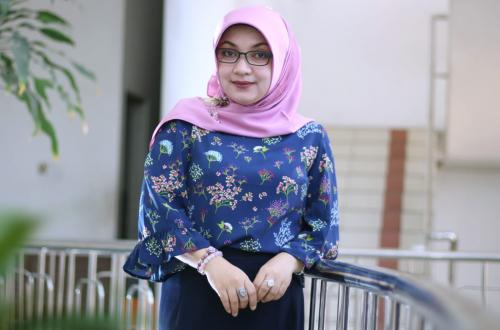
After the Eid holiday, the pulse of life on university campuses is beating again. Students have filled the corridors, classrooms are buzzing with discussions once more, and the academic routine that was paused for a while is slowly finding its rhythm again. However, the developments in the world outside campus never stood still during the break. Wars are still raging in West Asia, and waves of change in the technology world continue to alter the way humans work at a speed we have never witnessed before.
One term that is currently being widely discussed among global software developers is vibe coding. This term was popularised by Andrej Karpathy, one of the founders of OpenAI, to describe a new way of building software. Instead of writing code line by line, developers now simply describe what they want to build in everyday language, then let AI generate its implementation. MIT Technology Review even named this vibe coding as one of the 10 Technological Breakthroughs of 2026. The latest survey shows that 92 percent of developers in the United States now use AI tools daily, and 41 percent of all code written worldwide has already been generated by AI.
These figures are certainly interesting to study, but what is more important are the implications that follow. Karpathy himself aptly formulates this shift by stating that the barriers in software development no longer lie in syntax or memorising commands, but in the clarity of thinking and vision. The role of a software engineer now shifts from someone who writes every line of code to a system designer who directs AI tools, evaluates the results, and ensures everything runs safely and on target. A role akin to a conductor in an orchestra, where they no longer play all the instruments themselves, but determine the rhythm, harmony, and overall direction of the performance.
A similar shift is not only happening in the world of programming. Content creators now use AI to generate scripts, edit videos, adjust writing tones, and automatically schedule content distribution. Data analysts use AI as an assistant capable of cleaning data, building visualisations, and even compiling narratives from complex numbers. Graphic designers, researchers, educators, and writers all face the same reality: AI has become an collaborator that cannot be ignored. In every profession, those who can become orchestrators, who can direct various AI tools synergistically towards a clear goal, will be the most productive and relevant individuals.
However, notes from the DORA 2025 report on AI-assisted software development cannot be ignored. AI does not automatically improve the quality of work; rather, it acts as an amplifier of pre-existing conditions. Strong teams can become even stronger, while weak teams can become even more fragile. AI-generated code may look correct but harbour serious security gaps. AI assistants given full access without supervision can take unintended actions. Human ability to verify, critique, and take responsibility for AI outputs remains the most critical competency.
This is where campuses can play the most relevant role. Universities must become catalysts in the midst of an industry world transitioning from old patterns to new ones so quickly, becoming places where that transition is experienced in a more structured, critical, and responsible manner. At Universitas Amikom Yogyakarta, this change is not just a topic of classroom discussion, but a challenge directly faced by students and lecturers in every research, every project, and every course that is continuously updated. Study programmes from D3 to S3 levels based on Informatics become spaces to build AI orchestrator competencies, not just as passive users.
Returning to campus after Eid is returning to a space where big questions can be asked and answered seriously. In a world changing this quickly, the spirit of continuous learning becomes a necessity. Allah SWT says: “Indeed, Allah will not change the condition of a people until they change what is in themselves.” (QS. Ar-Ra’d: 11). Wallāhu a’lam.