
Back on the Rails: Indonesia's Strategy to Combat Global Energy Crisis Threats
Global Energy Crisis and Indonesia’s Vulnerability
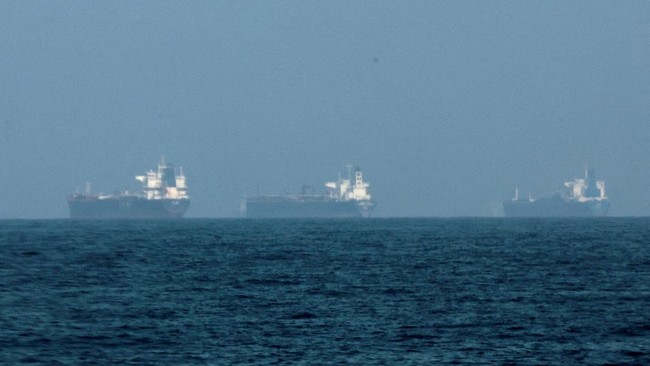
Following the attacks by the United States and Israel on Iran on 28 February 2026, renewed concerns have emerged regarding the stability of global energy supplies. Iran is not only a major oil producer, holding approximately 11 per cent of global reserves, but also controls the Strait of Hormuz, a strategically vital shipping lane through which nearly 20 per cent of global oil trade passes daily.
When military conflict occurs in this region, global energy markets typically react with sharp price spikes. The threat of disrupted oil supplies once again looms over the global economy.
For Indonesia, volatility in global energy prices is not merely an international issue. Rising oil prices could force the government to revise various macroeconomic assumptions in the state budget. The impacts could ripple across multiple sectors, from pressure on energy subsidies to widening budget deficits to weakening of the rupiah exchange rate.
Beyond these short-term economic risks, however, this situation should prompt Indonesia to reassess its national energy security strategy, particularly in the transport sector, which remains heavily dependent on oil.
Indonesia’s Oil Dependency and Trade Imbalance
Indonesia currently depends on imported oil to drive national economic activity. The value of oil imports, both in the form of crude oil and refined petroleum products, is estimated to reach approximately 25 billion US dollars annually.
Meanwhile, Indonesia’s oil exports amount to only about 5.5 billion US dollars, resulting in a substantial cumulative trade deficit in petroleum. This dependency is particularly acute because the transport sector consumes over 40 per cent of total final national energy consumption.
In contrast to the transport sector, Indonesia’s electricity sector is relatively independent of oil. Approximately 65-66 per cent of national electricity is still generated from coal, whilst petroleum-fired power plants contribute only around 4 per cent of total generation capacity, with most located in remote areas. This demonstrates that efforts to reduce oil import dependency should focus on the transport sector.
Coal Resources and Electricity Conversion Strategy
On the other hand, Indonesia possesses abundant coal reserves. In fact, most domestic coal production is allocated for export, generating nearly 30 billion US dollars annually. This energy resource could potentially be utilised more effectively as part of a national energy diversification strategy.
Nevertheless, direct use of coal in transport is clearly not a realistic option. Coal would be far more efficient if first converted into electrical energy. Through this process, the resulting energy could be utilised for various electric transport modes.
In recent years, various electric transport modes have begun to develop, such as electric cars and electric buses. However, the use of electricity in the railway sector remains relatively limited. Currently, railway electrification in Indonesia is only developing in the Jabodetabek region and the Solo-Yogyakarta route. The majority of railway networks outside these areas still use diesel-powered locomotives.
Yet rail-based transportation has significant potential in supporting national energy efficiency. Therefore, the government should consider strategic measures to revitalise the railway sector as part of efforts to reduce oil dependency.
Three-Pronged Railway Development Strategy
Broadly speaking, there are three steps that can be taken in developing national railway infrastructure: electrification, reactivation, and construction of new lines.
First is the electrification of railway networks. The government needs to expand the use of electricity as an energy source for rail traction.
Routes with high mobility such as Greater Bandung, Greater Surabaya, and several inter-city routes should be prepared to use electrical networks to support the operation of electric locomotives.
Second is the reactivation of railway lines that are no longer operational. Many routes from the colonial period are currently abandoned or have even been converted into residential areas.
Although the reactivation process is not straightforward, such efforts should be considered as a preventive measure before congestion in various cities worsens further. The presence of railway networks in urban areas can serve as a mobility solution whilst reducing energy consumption in daily transport.
Third is the construction of new railway lines. The government can continue building rail networks in various regions, including reconnecting railway lines in Sumatra and expanding networks on other islands such as Kalimantan, Sulawesi, and Papua. New lines would not only reduce strain on road networks but also have the potential to lower national logistics costs.
Addressing National Logistics Costs
Logistics costs are one of the factors affecting the competitiveness of Indonesian products. Various studies show that Indonesia’s logistics costs remain around 23 per cent of Gross Domestic Product, significantly higher than developed nations, which typically average below 10 per cent. The reliance of goods distribution on road transport is a major contributor to these high logistics costs.
In developing railway infrastructure, it is important to understand that there are two main interrelated components: railway infrastructure and rolling stock. Infrastructure encompasses all the physical systems enabling railway operations, such as tracks, stations, bridges, signalling systems, and telecommunications networks. Meanwhile, rolling stock refers to all vehicles that operate on rails.