
B50 Implementation Set to Begin in July, Government Faces These Challenges
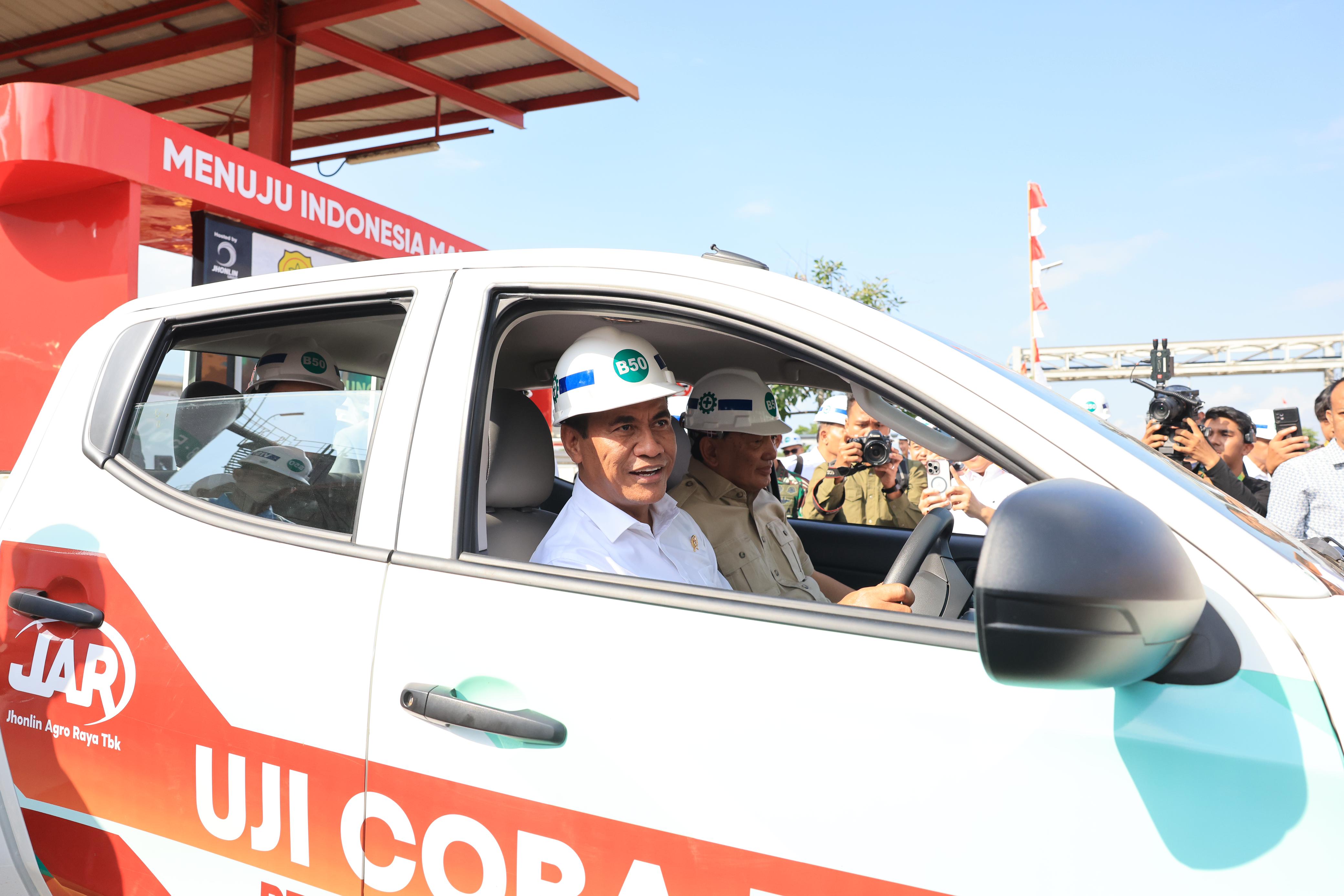
MANDATORY biodiesel B50 is seen as a strategic step by the government to bolster national energy resilience amid geopolitical uncertainty and the global energy crisis. After a series of trials since late 2025, nationwide B50 implementation is targeted to commence on 1 July 2026.
Head of the Biodiesel Funds Disbursement Division at the Plantation Fund Management Agency (BPDP), Zuhdi Eka Nurrakhman, said various tests across several transport modes yielded positive results.
‘For heavy vehicles, road tests covering 40,000 kilometres have been completed with stable results. Light vehicles are targeted to finish by May 2026, while other sectors such as shipping and rail transport are still undergoing testing,’ he said in a webinar on ‘Implementation Supporting Downstreaming and Welfare of Palm Growers’ organised by Tabloid Sinar Tani in collaboration with BPDP, on Wednesday (20/5).
He noted that the biodiesel quality in the tests also met the standards. Of the tests conducted, 99.88% of samples were certified as meeting the maximum water content of 320 ppm.
The government previously ran the biodiesel mandate gradually from B35 in 2023 to B40 in 2025. The realisation of B35 biodiesel supply in 2024 reached 13.14 million kilolitres, while the B40 implementation in 2025 rose to 14.7 million kilolitres.
Nevertheless, the B50 implementation still faces several challenges, particularly related to production capacity, infrastructure readiness, and financing incentives.
According to Zuhdi, increasing the blend could widen the gap between the biodiesel price index (HIP) and diesel, which would in the end increase the programme’s funding burden.
‘The study shows that financing the B50 programme under normal conditions would require funding from export taxes of around 23.8%, while the current applicable rate is 12.5%,’ he said.
BPDP has proposed several policy options, ranging from support from the national budget (APBN), adjusting export tax rates, adjusting blend percentages based on funding capacity, to evaluating consumer prices at the community level.
On the supply side of feedstock, Ani Rahayuni Ratna Dewi, Chair of the Post-Harvest and Processing Sub-Group of the Plantation Downstream Directorate of the Directorate General of Plantations, said palm oil plantation productivity remains the main challenge. Currently, national average palm oil productivity stands at 3.8 tonnes per hectare per year, well below the potential of 5–6 tonnes per hectare.
According to government projections, demand for biodiesel in 2026 is estimated at 20.1 million kilolitres for the B50 implementation, with crude palm oil (CPO) requirements around 18.69 million tonnes. ‘From the production side, CPO is actually ample, but it will affect exports,’ Ani said. To secure long-term feedstock supply, the government continues to push the acceleration of the Rejuvenation of Smallholders Palm Oil (PSR) programme. Gulat Manurung, President of the Indonesian Palm Oil Smallholders Association (Apkasindo), said increasing smallholder productivity is a key factor in the sustainability of the biodiesel programme. He noted that farmers’ palm oil productivity currently averages around 400–800 kilograms per hectare per year, far below the potential of 2.5–3.5 tonnes per hectare. ‘The future of B50 must be built together by government, industry, academia, and smallholders,’ he said. (E-4)
Copyright © 2026 Media Group – mediaindonesia. All rights reserved.