
B50 Biodiesel Mandate to Proceed on 1 July 2026, Here Are Inputs from Experts
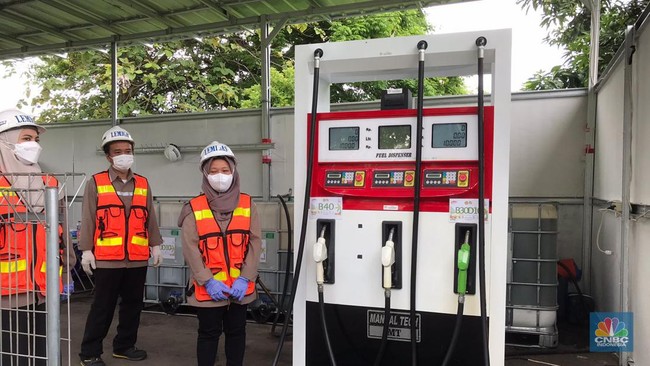
The government is set to realise the mandatory 50% biodiesel blending (B50) programme in diesel fuel this year. Several parties have provided input to ensure the programme’s implementation runs smoothly.
Member of the National Energy Council (DEN), Satya Widya Yudha, views the programme to increase the biodiesel blend towards B50 as part of the grand plan towards Net Zero Emission (NZE) 2060. The programme targets the sectors that contribute most to carbon emissions, namely industry and transportation.
The biodiesel programme has a long journey and has been implemented gradually from B5, B10, B20, B30, B40, and now towards B50. This approach aims to allow the adaptation process in industry, availability of raw materials, and technological readiness to proceed in tandem.
“We are trying to see what can be done so that the programme that has been established and is already in the National Energy Policy (KEN) can be achieved together,” he explained, at the Energy Forum B50 Edition, quoted on Wednesday (8/4/2026).
Satya added that the B50 programme must maintain a balance between two main objectives: reducing carbon emissions through the use of renewable energy and preserving state revenues from exports of crude palm oil (CPO) commodities.
In the same opportunity, Deputy Chairman of the People’s Consultative Assembly (MPR) RI, Eddy Soeparno, views the programme to increase the biodiesel blend from B40 to B50 as an important part of the national energy transition agenda. However, he reminds that the implementation must consider two main basic concepts: energy resilience and national capability and needs.
Fundamentally, biodiesel implementation is aimed at strengthening national energy resilience. Through the programme, Indonesia can reduce diesel imports. In fact, Indonesia can achieve a surplus in diesel fuel.
“Second, capability and needs. So what is our capability like? To increase the blend from B40 to B50. Including the current needs. The needs, for example, whether they will sacrifice other things,” he clarified.
Eddy continued, highlighting the challenges in implementing B50 that demand an increase in domestic palm oil production. The risk is that the programme must sacrifice land if efforts to increase production through intensification strategies cannot yet be carried out optimally.
In addition, the B50 programme also requires adequate oil refinery readiness so that national needs can be met. Another aspect to consider is the impact of the B50 programme on vehicles and transportation that require adjustments or revitalisation so that the engines are suitable for consuming the fuel.
Meanwhile, Executive Director of the Indonesian Palm Oil Entrepreneurs Association (GAPKI), Mukti Sardjono, stated that one of the challenges in implementing B50 is the stagnant national crude palm oil (CPO) production capacity. In the last five years, national CPO production has been in the range of 48 million to 51 million tonnes.
Amid stagnant production, domestic CPO consumption continues to rise, especially since the mandatory biodiesel programme. For illustration, in 2023, CPO consumption for biodiesel already exceeded consumption for food.
When B40 was implemented, CPO consumption to support the programme reached more than 12 million tonnes. If B50 is applied, the CPO requirement for biodiesel will rise to around 16 million tonnes. The impact is that Indonesia must sacrifice CPO exports to meet priority domestic programme needs.
“Energy resilience must be maintained, and downstream energy must also be maintained. Whether we like it or not, exports will be sacrificed. If exports drop, export levy revenues also drop. Export levies have actually been used to subsidise biodiesel all this time,” he said.
Therefore, domestic CPO production must be increased to succeed the B50 programme. If not, there is a possibility that CPO exports will decline again because national production is prioritised for the B50 programme.
So far, constraints in increasing production relate to the availability of land limited by moratoriums or prohibitions on adding new palm oil land.
GAPKI also noted that the government has actively pursued productivity enhancement efforts through the People’s Palm Oil Rejuvenation (PSR) programme since 2015-2016, targeting 180,000 hectares (Ha) per year. However, the realisation has not met expectations.
Then, Mukti suggested to the government to provide special areas designated for palm oil production related to the B50 programme. The land could be managed by state-owned enterprises (BUMN). This is done so that the programme does not disrupt CPO needs for the food sector or exports.
“So it will not affect food needs or export needs. So open the moratorium first, opened but specifically for BUMN,” he said.
On the other hand, General Secretary of the Indonesian Automotive Industry Association (Gaikindo), Kukuh Kumara, hopes that the B50 programme can be implemented through a gradual transition and more comprehensive technical testing. Because every change in mandatory biodiesel policy will directly impact motor vehicle users.
Actually, automotive manufacturers have been involved in initial B50 trials up to more than 10,000 kilometres (km). So far, no major issues have been found in vehicles as occurred during the B35 programme trial. Vehicle performance remains relatively stable.
“Now perhaps the stage is to test in areas with relatively cold temperatures,” he said.
Kukuh reminded that risks to vehicle engine performance remain when biodiesel blending is done at higher levels. In this case, there is potential for a decrease