
AZEC Summit: Coordinating Minister Airlangga Outlines Indonesia-Japan Cooperation to Combat Global Energy Crisis
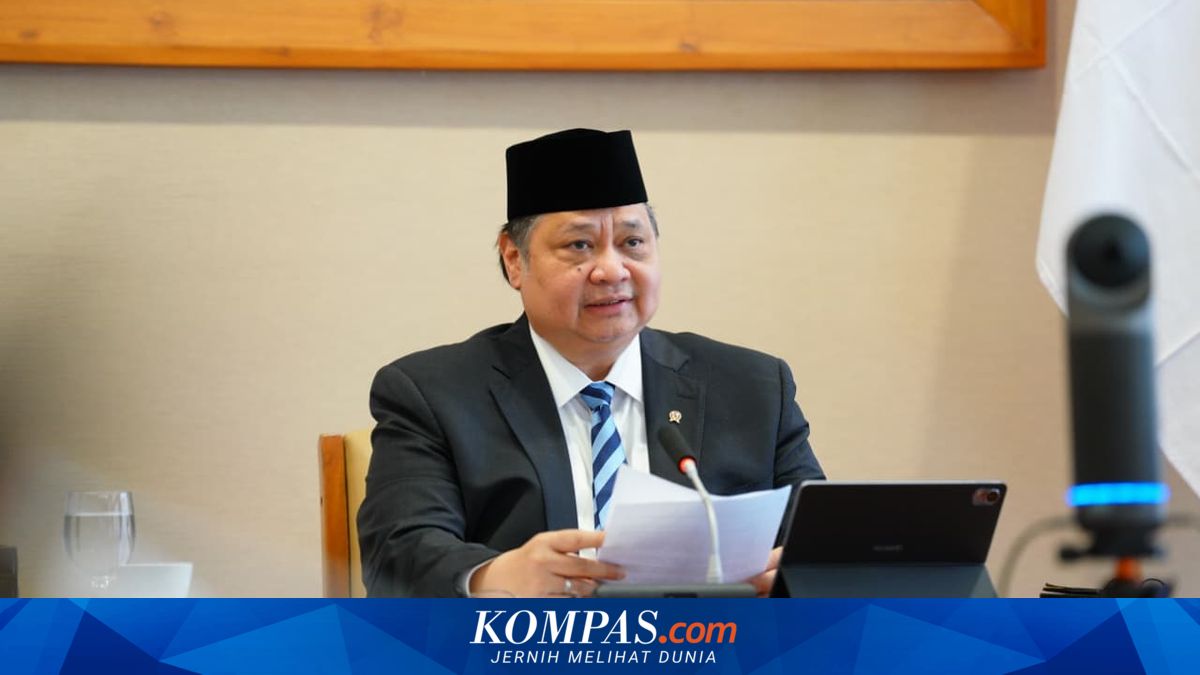
In the midst of escalating conflicts in the Middle East, the Indonesian Government, together with Japan and partner countries in the Asia Zero Emission Community (AZEC), is taking proactive steps by holding the AZEC Plus Online Summit Meeting on Wednesday (15 April 2026).
The online meeting, directly chaired by Japanese Prime Minister Takaichi Sanae, is highly strategic as it involves a broader scope.
In addition to core partner countries, Japan also invited Bangladesh, Timor-Leste, India, South Korea, and Sri Lanka, as well as international institutions such as the International Energy Agency (IEA) and the Asian Development Bank (ADB).
As a concrete response to the ongoing energy crisis, the meeting launched an assistance package plan.
The initiative is designed to agree on strategic steps across various aspects, including short-term emergency mitigation to secure crude oil supplies and energy products.
Coordinating Minister for the Economy Airlangga Hartarto, who attended representing President Prabowo Subianto, appreciated Japan’s swift response in organising the meeting amid rising global energy supply uncertainties.
On that occasion, Airlangga emphasised that cooperation within AZEC must continue to be based on the principle of “One Goal, Various Pathways” to capture the unique economic advantages in each country.
Airlangga also conveyed Indonesia’s concrete steps in mitigating the situation in the Persian Gulf, particularly the Strait of Hormuz.
Those steps, namely the planned implementation of the B50 biodiesel programme in mid-2026 and the completion of the roadmap for 100 gigawatt (GW) rooftop solar power plants (PLTS) in 2026, are the main pillars of enhancing national energy resilience.
The spirit of collaboration was further strengthened at the 3rd AZEC High-Level Conference in Kuala Lumpur on 26 October 2025.
At that meeting, Indonesia and Japan agreed on 21 new memoranda of understanding (MoUs) for cooperation in the energy and sustainable development sectors.
Those agreements cover renewable energy, decarbonisation, and strengthening supply chains involving various institutions and companies from both countries.
To date, AZEC continues to prove its role as an inclusive and adaptive platform in supporting energy transitions that align with the characteristics of member countries.
Meanwhile, Indonesia continues to push for tangible collaboration to strengthen project financing and impacts.
The successful completion of the signing of the Legok Nangka waste-to-energy power plant (PLTSa) agreement serves as further proof of success in AZEC implementation to promote decarbonisation in Indonesia.
On that occasion, accompanying Coordinating Minister Airlangga were Special Staff for Regional Development at the Coordinating Ministry for the Economy Haryo Limanseto and Acting Assistant Deputy for Multilateral Economic Cooperation at the Coordinating Ministry for the Economy Cahyadi Yudodahono.